7 Google Block Breaker Secrets to 70K+ High Scores (Instant Boost!)

You have probably told a friend about it at some point — “wait, Google has a hidden game?” Yes. It does. And if you have spent any time with Google Block Breaker, you already know it is more than a cute gimmick. It is a full brick-breaking game, playable right from your browser, and it has been pulling people in since it first showed up in 2013.
Most players, though, get stuck in the same loop. They bounce the ball around for a few minutes, hit a wall around 20K to 30K points, and call it a day. The 70K milestone feels out of reach. It is not — it just takes knowing what to actually focus on.
So we put this together these seven techniques that move the needle, drawn from the game’s mechanics, Breakout-style gaming communities, and the kind of pattern recognition that separates people who score big from people who almost do.
No padding, just the stuff that works.
Secret #1 — Get Clear on What the Game Actually Is (It Changes How You Play)
Here is a bit of history worth knowing, and not just as trivia. Google Block Breaker traces directly back to Atari Breakout, the arcade game first released in 1976.
What made it famous then — a bouncing ball, a paddle, rows of bricks — is still the exact same engine running today’s recreations. The core design has barely changed in nearly 50 years.
Google’s version showed up in April 2013 as a hidden Easter egg. You searched “Atari Breakout” on Google Images, and the page, tile by tile, turned into a playable game. Each image thumbnail became a brick.
The paddle sat at the bottom. The ball bounced. It was one of those Google moments that felt genuinely clever — no announcement, no fanfare, just a quiet little surprise waiting to be found.
Tech blogs picked it up fast. The Verge, Engadget, Mashable — all of them had it covered within the first 24 hours. Millions of people played it that week directly from their desktop browsers, no download needed. Google was, as always, very good at making simple things feel special.
The Easter egg got pulled around 2015 to 2016 when Google redesigned its Images interface. But the internet tends to preserve things it likes, and third-party sites like elgoog.im — a mirrored Google experience — rebuilt it.
You can still play a faithful recreation today. Some versions even show up under the label “Google Block Breaker” on various browser game sites.
Why does any of this matter for your score? Because the version you are playing shapes the strategy you need. Google’s original used real image thumbnails as bricks, so layouts changed with every search.
Modern recreations use fixed, colorful brick grids that follow more traditional Breakout rules. Knowing which version you are on helps you plan, not just react.
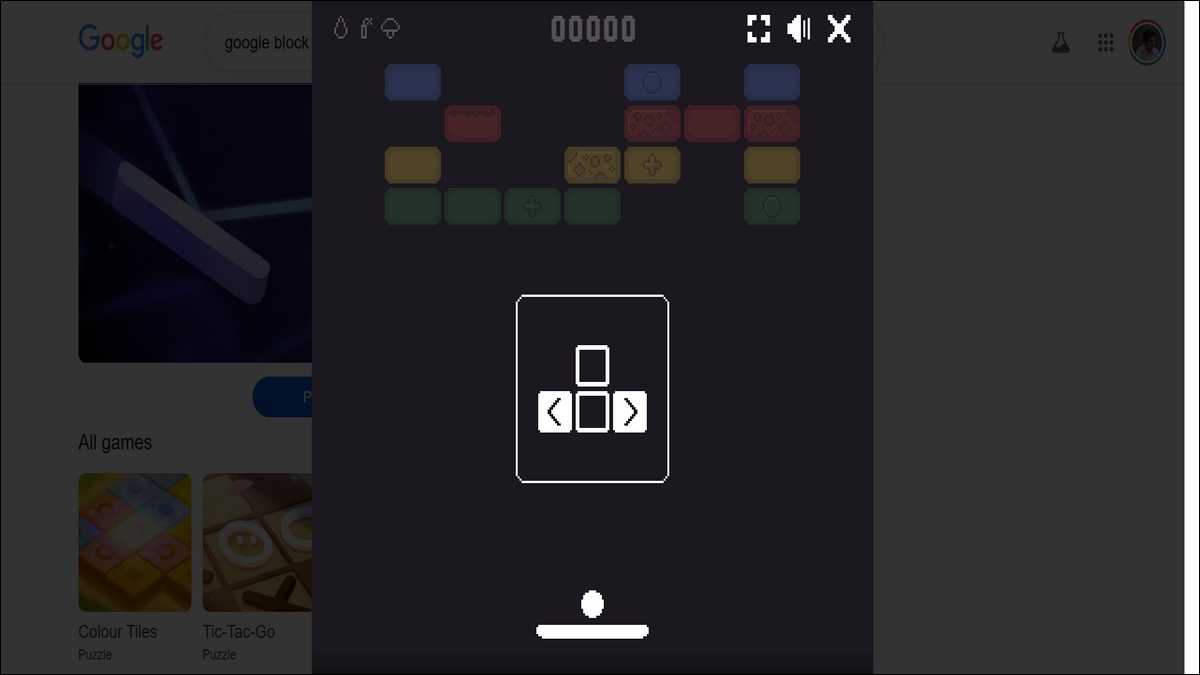
Secret #2 — The Angle Game Is Everything, So Start Learning It Now
Most beginners make the same mistake: they watch where the ball is going instead of controlling where it goes. In Google Block Breaker, the angle the ball takes off your paddle is not random. It is a direct result of where on the paddle the ball makes contact. That is physics, and once you internalize it, your game changes fast.
Center contact sends the ball straight up. Left-edge contact angles it left. Right-edge angles it right. Simple, but it is the foundation of everything. When you start choosing your contact point intentionally rather than just scrambling to keep the ball alive, you go from surviving to actually playing.
The move experienced players go for is called cornering. The idea is to angle the ball so it rides up along one of the side walls — the left wall is usually easier to start with — and gets trapped bouncing between that wall and the top rows of bricks.
Once the ball is in that loop, it clears bricks on its own without you doing much at all. You are just managing the paddle below while the game scores for you.
This single move is, genuinely, the fastest path to high scores. Practice it in isolation for a few rounds. Your only goal: can you get the ball to ride the wall and stay there?
Once you can do it consistently, the 50K range starts feeling accessible. And 70K comes into view not long after.
Secret #3 — Stop Reacting. Start Predicting.
There is a mindset shift that happens for every player who gets serious about their score, and it is this: you stop chasing the ball and start reading it.
If your paddle is always moving to where the ball is right now, you are always late. The game moves fast enough that pure reaction time is not a reliable strategy — and it gets worse as the ball speeds up.
The better play is to track the ball’s path and figure out where it will be in one or two bounces. Watch the angle, do the math loosely in your head, and get your paddle into position early.
You are not reacting anymore. You are waiting — in the right spot.
It sounds harder than it is. Start by predicting just one bounce ahead. Get comfortable there, then push to two.
Most solid players are reading two to three bounces ahead at any moment, which gives them enough lead time to make deliberate choices rather than desperate lunges. The game slows down, mentally, even when the ball is moving faster.
One thing that speeds this up: keep your paddle movement smooth. Jerky back-and-forth motions make precision harder.
Think of your mouse or your finger as a tiller on a boat — small, deliberate adjustments get you where you need to go far more reliably than yanking it around. The smoother your movement, the better your contact points, and the better your angles.
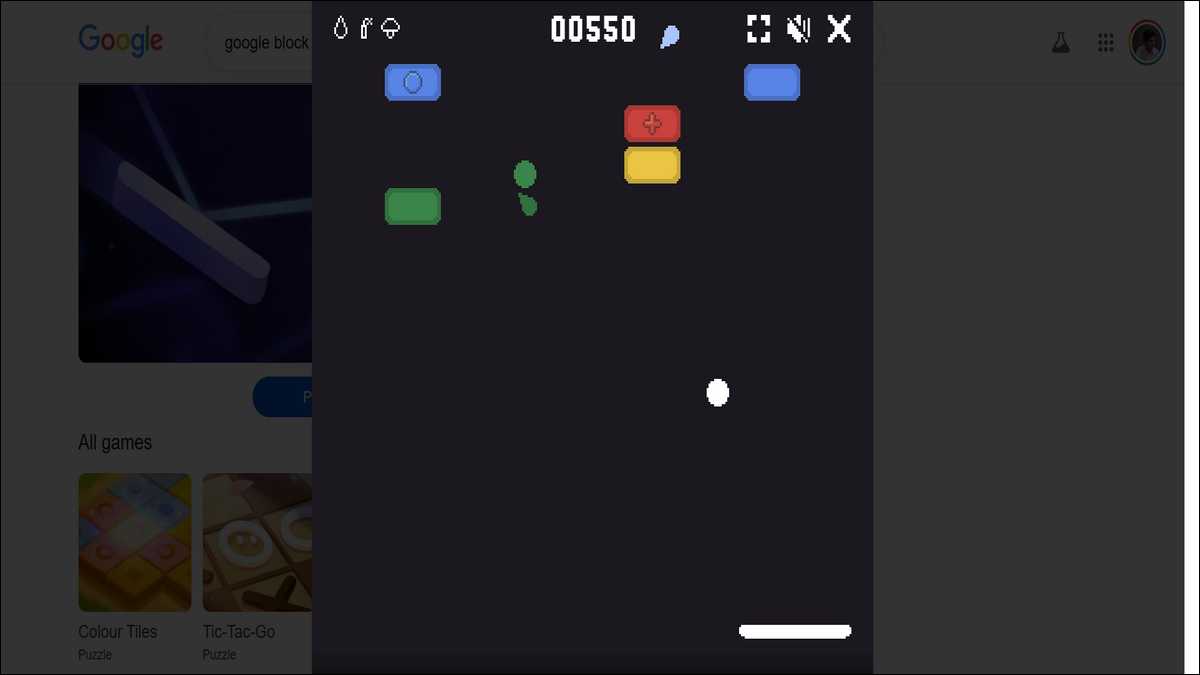
Secret #4 — Power-Ups Are Tools, Not Gifts. Treat Them That Way.
Depending on which version of Google Block Breaker you are playing, power-ups drop from bricks as you clear them. They fall slowly enough that you have a second or two to decide: catch it or avoid it.
That decision, made over and over through a session, adds up. Good choices push your score up. Bad ones cut a run short.
Here is what you will run into, and how to think about each one:
- Multi-ball: Splits your ball into three. Your scoring rate triples on paper, but now you are managing three trajectories at once. Catch it when you feel in control of the round. Skip it when things are already chaotic — three balls at once will overwhelm you fast if your prediction skills are not there yet.
- Paddle expansion: Makes your paddle longer. Catch this almost every time. More surface area means more control over contact points, better angle options, and a bigger safety net when the ball speeds up. There is almost no downside.
- Laser: Lets your paddle shoot upward. It sounds useful, but in practice it rarely matches the clearing speed of a well-placed ball. Skip it unless you are in a spot where there is no other way to reach a stubborn brick cluster.
- Slow ball: Reduces the ball’s speed. This is, honestly, one of the most valuable drops in the game. In later stages when the ball is flying around almost uncontrollably, a slow ball gives your brain the space to reset and re-engage your prediction strategy. Never skip it.
- Fast ball: Speeds the ball up. Risky. It can push your score faster, but it also collapses your prediction window immediately. If you are still building your reading skills, let it fall. If you are deep in a strong run and fully locked in, catching it can spike your points — but know what you are signing up for.
The shortcut rule: always take paddle expansion and slow ball. Think before taking multi-ball. Pass on fast ball unless you know exactly what you are doing.
Secret #5 — The Column Strategy Fixes the Frustrating End-of-Level Problem
Every regular player hits this wall eventually. You are near the end of a level. Most bricks are gone. But a small cluster is sitting in a corner or near the top, and the ball keeps grazing past them. Your score stalls. You start making riskier paddle moves. The run falls apart.
The fix comes from something you do earlier in the level, not when the problem has already appeared. Instead of letting the ball clear bricks wherever it happens to land, you deliberately work on clearing one vertical column — from bottom to top — in the early phase of the round.
That creates a clean lane running all the way to the back wall.
Later, when you need to reach bricks stuck in awkward spots, you angle the ball through that lane. It passes through the gap, hits the back wall, and starts ricocheting through the remaining bricks automatically.
The clearing speed back there is fast. It handles the stubborn ones without you fighting for precise angles on each individual brick.
This approach is known in Breakout gaming communities as lane strategy or column clearing. It feels like extra work in the first 30 seconds of a round, but it saves minutes of frustration later on.
More importantly, it keeps your scoring rate high through the entire level rather than watching it stall at the end. In the 50K to 70K scoring range, clearing speed is what separates scores — and this technique addresses that directly.
Secret #6 — Speed Stages Feel Impossible. Here Is Why They Are Not.
Play for a few minutes and you will notice the ball getting faster as more bricks disappear.
That is not a bug — it is baked into the original Atari Breakout design and has been in every version of the game since. For most casual players, it is also where the run ends. The ball outpaces their reaction time, they miss the paddle, and it is over.
But here is the thing: speed stages are not a reflex problem. They are a prediction problem. When the ball is slow, your prediction window is wide — you can read two or three bounces ahead with time to spare.
When the ball speeds up, that window shrinks. If you have been relying on longer prediction chains, the sudden shift feels like the game jumped a difficulty level overnight.
The adjustment is to simplify. When speed kicks in, stop trying to optimize your angles. Drop the goal down to one thing: keep the ball in play.
Park your paddle near the center of the screen — from there, you can reach both sides with roughly equal effort and cover the widest possible area without overcommitting in either direction.
It is not a great spot for angle control, but it is, by a wide margin, the best defensive position when things get fast.
Most of your points in a speed stage come from the ball doing its own thing — bouncing between bricks without much input from you. Your role shrinks down to keeping it alive.
Players who stay calm, keep movements tight, and resist the urge to lunge consistently outlast players with sharper raw reflexes who panic and overcorrect.
Staying composed is, genuinely, a skill in this game.
Also read: Google Earth: 10 Amazing Things You Didn’t Know You Could Do
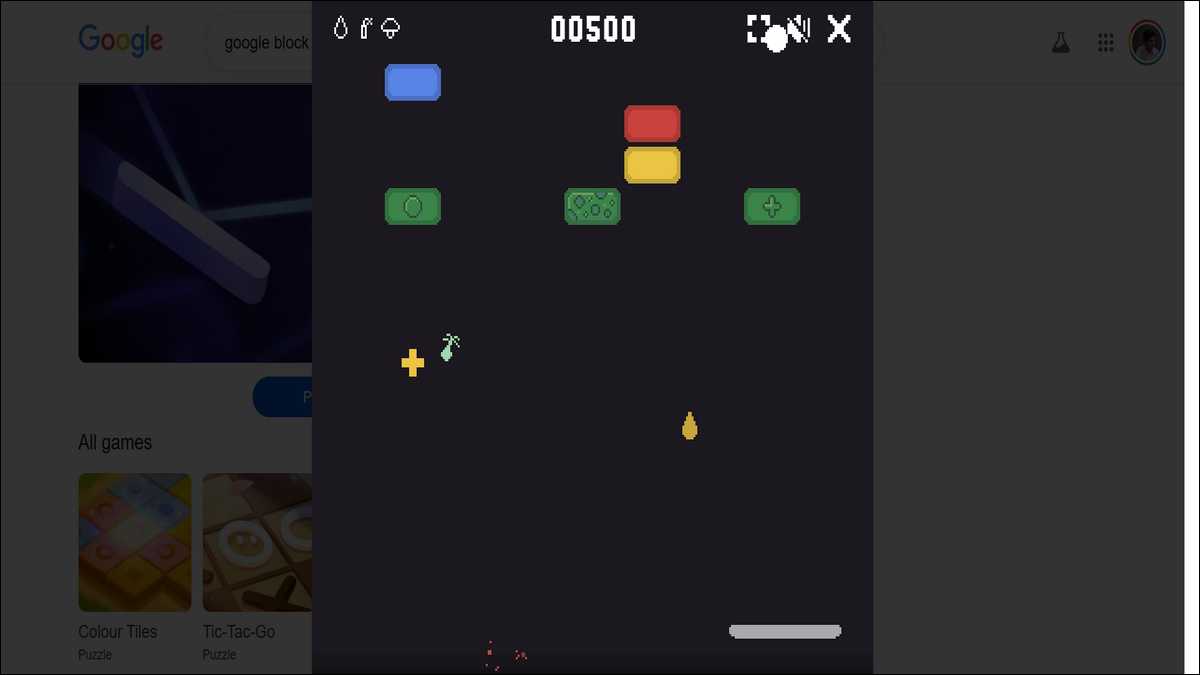
Secret #7 — The Ceiling Trick Scores Points Without You Doing Anything
This one is probably the least obvious technique on this list, and also the most satisfying once you pull it off.
In Google Block Breaker — and Breakout-style games in general — if the ball reaches the top of the screen while bricks are still sitting in the upper rows, it starts bouncing fast between the ceiling and those bricks. Sometimes it clears an entire row before dropping back down. Sometimes two.
Players call this the ceiling phase, and it is, essentially, free points. You did not do anything complicated to earn them — you got the ball into that zone and the game took over from there.
The clearing speed during a ceiling phase is dramatically faster than anything you can produce through normal play. Every sequence can add anywhere from a few hundred to several thousand points, depending on how packed the upper rows still are.
To trigger it, you angle the ball sharply upward early in the level and clear the first couple of brick rows so the ball has a path to the ceiling.
Once it gets above the main formation and starts hitting the top repeatedly, the phase kicks in. Your job then is just to manage the paddle below and keep the ball alive when it eventually drops back down.
Combining the ceiling trick with the column strategy from Secret 5 is the most powerful pairing in the game. Clear a lane early, use it to send the ball toward the ceiling, then sit back and manage while the ceiling phase handles the upper bricks.
That loop — lane, ceiling phase, manage the paddle, repeat — is the core engine behind the highest Google Block Breaker scores documented across online communities.
Bonus: Things Most Players Never Find Out About the Game
We want to leave you with a few facts that give the whole game a bit more weight — and honestly, make it more interesting to play.
The Jobs and Wozniak connection
Atari Breakout was designed by Steve Wozniak and Steve Jobs in 1975, before Apple was even a company. Jobs brought Wozniak in to build the prototype, and they worked through it together over four straight days. That makes the game, in its own small way, part of the origin story of Silicon Valley as we know it.
It went viral before “going viral” was a formula
Google’s 2013 Easter egg spread almost instantly. Within the first 24 hours, The Verge, Mashable, and Engadget had all covered it, and search interest for “Atari Breakout Google” spiked sharply across global trends. It was a quiet launch that became a very loud moment.
Mobile was never the plan
The original Google version was built for desktop browsers only. That is a big part of why third-party recreations on sites like elgoog.im gained such traction — they adapted the experience for touchscreens in a way the original never did.
The genre was already massive
Block Breaker Deluxe by Gameloft was one of the most downloaded games on Android during the early smartphone era, from 2009 to about 2012. The brick-breaking genre already had enormous mainstream appeal. Google’s Easter egg just reintroduced it to a generation who had never played it.
No leaderboards, but the scores are real
There are no official leaderboards for Google Block Breaker or most of its recreations. But across gaming forums and Reddit threads, players have documented consistent 70K+ scores using variations of the techniques covered here. The ceiling trick and the column strategy show up again and again in those posts as the deciding factors.
Also read: Monkey GG2 Game List: Full 150+ Titles Ranked by Popularity
End Note
Google Block Breaker is a small game in almost every sense.
It lives in a browser tab. It has no accounts, no leaderboards, no save states.You open it, you play, you close it. But the skill involved is deeper than it looks — and the gap between casual play and high-score play is real and, more importantly, closeable.
The seven techniques here — understanding the version you are playing, controlling your angles, reading the ball ahead of time, choosing power-ups deliberately, building lanes early, staying composed through speed stages, and triggering the ceiling phase — are not tricks in any gimmicky sense.
They are the same skills Breakout players have been refining for decades, still alive and relevant in a game running quietly in every browser that will load it.
You do not need all seven at once. Pick one, practice it until it feels natural, then add the next. That is how improvement actually sticks — one habit built on top of another, not seven things crammed into a single session.
Go play a round. Try the wall-riding angle first — it tends to click fastest. And when your score starts moving, you will know exactly why.