How Does Alaya AI Work? Contributor vs Developer Workflow Explained
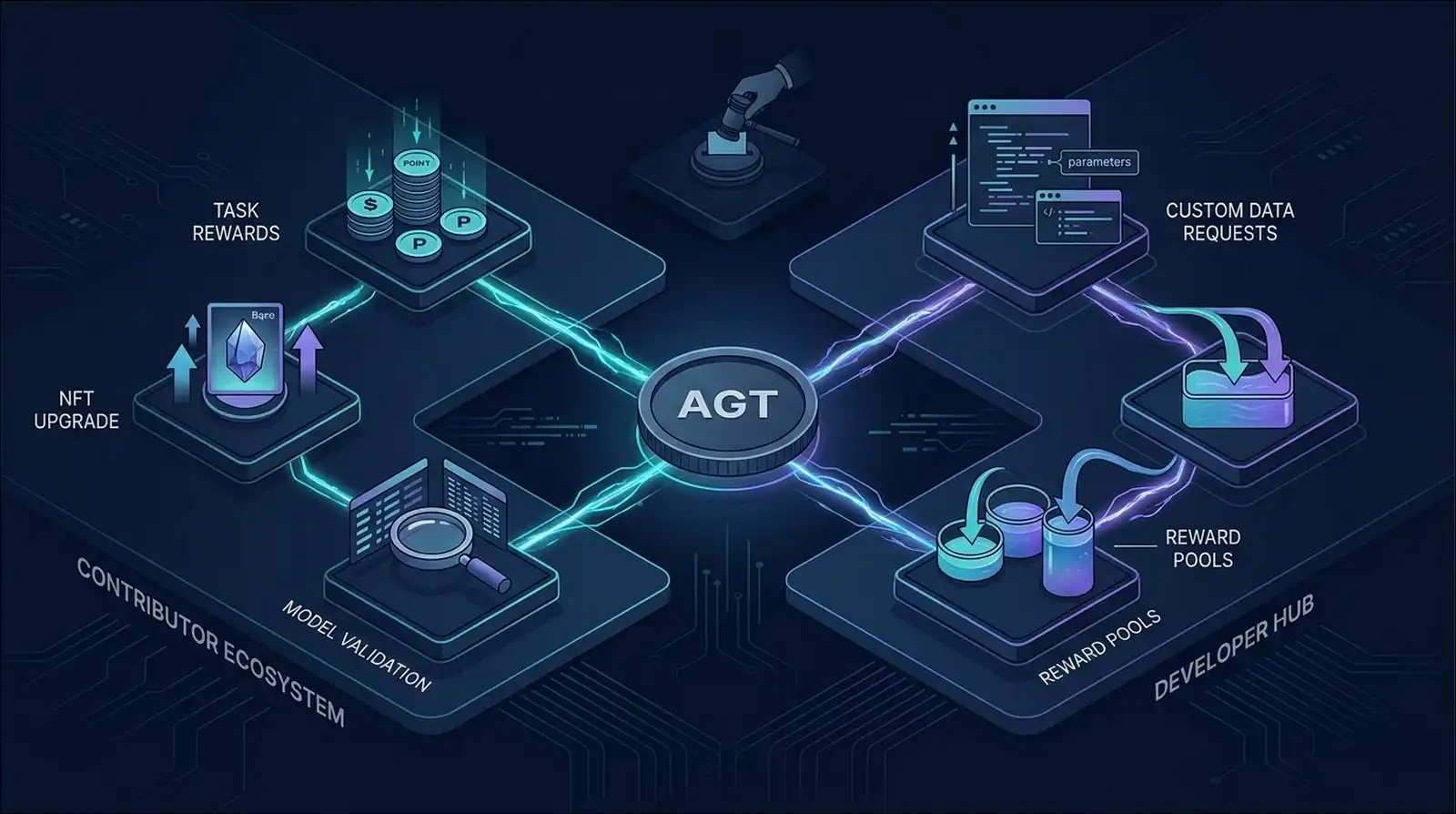
Alaya AI connects data contributors with developers needing AI training datasets. Contributors can label or validate smaller data units. Developers may define requirements and fund custom reward pools.
For this guide, I tested Alaya’s official website, documentation, and task links. I also reviewed its technical pages and BNB Chain listing. However, I didn’t register, connect a wallet, or submit paid work.
That limit matters when assessing actual performance. So, public pages explain the intended workflow and access rules. Still, they don’t prove current earnings, acceptance rates, or delivery times.
Quick answer: Developers can request targeted data through funded reward pools. Contributors may complete matching tasks and receive eligible rewards. Alaya coordinates access, task routing, processing, and documented quality controls.

Key findings show two workflows sharing one data pipeline
Contributors supply human judgments, while developers define the required output. Alaya sits between both groups and coordinates task distribution. Its token and NFT systems can influence access and rewards.
| Finding | Answer |
|---|---|
| Core platform role | Connect contributors with AI data buyers |
| Contributor work | Label, classify, collect, validate, or calibrate data |
| Developer work | Specify datasets and fund custom reward pools |
| Initial access | Official instructions support email verification |
| Wallet timing | A wallet may be needed for external asset collection |
| Documented networks | Arbitrum and opBNB |
| Main token | AGT serves utility and governance roles |
| NFT structure | Alaya NFTs support participation, Medallions show expertise |
| Main evidence gap | Public quality benchmarks and pricing remain limited |
At first, the shared workflow appears simple. However, each stage raises practical quality and business questions. In practice, those questions matter more than token mechanics alone.
Alaya AI works as a two-sided data marketplace
Alaya AI breaks developer requests into contributor-facing data tasks. Contributors can submit human judgments through its browser interface. Developers may receive processed data matching their specifications.
More specifically, the official overview mentions distributed crowdsourcing and direct peer requests. It also says projects can create custom reward pools. Those pools may use a project’s own platform token.
In addition, Alaya’s website lists five broad data categories:
- Image labeling, including object and region annotations
- Audio analysis, including speech or sound judgments
- Text analysis, including meaning and classification tasks
- Video annotation, including objects, events, and movement
- Autonomous-driving data, including road and vehicle information
However, actual task availability may vary by account and demand. During testing, I confirmed the public category descriptions. However, I couldn’t inspect the live inventory without registering.
Contributors provide labels, validation, and human feedback
Contributors can add judgments that models can’t reliably create alone. A task may ask whether an image contains an object. Another may request sentiment classification for a short review.
Meanwhile, more experienced users may validate existing labels. They may also support model calibration tasks. Access can depend on NFTs, Medallions, energy, and AGT staking.
Ultimately, the platform’s value depends on useful contributor responses. Therefore, clear instructions and quality checks remain essential. So, token rewards alone can’t ensure thoughtful answers.
Developers provide requirements, incentives, and acceptance rules
Developers can define the data their model actually needs. A useful request may specify language, region, format, and label classes. It can also define contributor expertise and quality thresholds.
For example, you might consider a customer-support sentiment model. “Label this review” leaves too much room for interpretation. Better instructions can explain sarcasm, mixed sentiment, and missing context.
Afterward, developers may fund a matching reward pool. However, public documentation doesn’t publish standard delivery times. I also couldn’t find a public enterprise service agreement.
Both workflows meet inside a shared processing pipeline
In practice, the two sides connect through seven main stages:
- A developer defines a specific dataset requirement.
- Alaya can structure related contributor tasks.
- Eligible contributors may complete those tasks.
- The platform processes and checks submissions.
- Accepted answers can enter the requested dataset.
- Contributors may receive eligible platform rewards.
- Developers can review the resulting output.
Overall, this sequence reflects the documented platform design. It doesn’t confirm every current interface step. Therefore, buyers may want a pilot before funding larger requests.
Contributors can start with email verification and basic tasks
Official instructions say contributors can begin through email verification. You may explore most features without connecting a wallet. A wallet becomes relevant when collecting supported assets externally.
For context, the official startup guide names Arbitrum and opBNB. It also directs users toward the browser application. Mobile users may need a wallet browser.
During my test, both public links loaded correctly. However, I didn’t submit an email or verification code. Therefore, I couldn’t test regional availability or account approval.
Step 1: Confirm the official Alaya AI domain
Start from Alaya’s GitBook and follow its official website link. This approach can reduce confusion with similarly named products. The project documentation links to https://www.aialaya.io/.
Before entering account or wallet details, here’s what you may check:
- The full domain uses
aialaya.io - The connection uses HTTPS
- The page came from official documentation
- Any wallet request names the expected network
- The requested permission matches your intended action
During research, I found several results using similar branding. Some described unrelated automation products or generic chatbots. So, search-result titles shouldn’t replace direct domain verification.
Step 2: Register through email verification
Email registration can provide an easier entry for non-Web3 users. The documentation says users may access most functions first. A wallet isn’t required for every initial action.
In effect, this setup separates task access from asset custody. That means you can learn the interface before approving wallet connections. However, current regional rules may still affect registration.
In my test, I confirmed the documentation’s registration link. I didn’t complete the signup process. Therefore, I can’t confirm current identity checks or wait times.
Step 3: Receive an Alaya NFT and initial energy
Official documentation says new users receive a basic level-one Alaya NFT. It also describes three initial energy points. Completing a task set consumes one point.
Under the documented default rules:
- One energy point returns every six hours
- Three points represent the default storage limit
- NFT attributes may affect energy behavior
- Upgrades may change task access or rewards
As a result, these mechanics can limit rapid task completion. They may also affect a contributor’s practical earning capacity. Of course, live settings could differ from older documentation.
Step 4: Choose an accessible task
Available tasks can depend on energy, expertise, and platform assets. Basic general tasks may appear immediately after registration. Specialized work can require matching Medallions.
Advanced tasks may require stronger NFT levels. They may also require a specific AGT stake. That access doesn’t guarantee steady task availability.
However, I couldn’t inspect the task page without an account. As a result, I couldn’t measure daily task volume. So, contributors may want to track availability for several days.
Step 5: Submit work for platform validation
A completed task can move through automated or human quality checks. Alaya documents targeted sampling, preprocessing, and validation functions. However, detailed public acceptance rules remain limited.
Before investing substantial time, here’s what you may ask:
- How many users review each data point?
- What agreement score triggers acceptance?
- Can contributors correct rejected work?
- Does rejection affect future task access?
- How long does validation usually take?
- Can users appeal a disputed result?
I couldn’t find complete public answers for these questions. Still, that doesn’t mean the controls don’t exist. Instead, it means account testing or support confirmation remains useful.
Step 6: Collect eligible rewards
Documented rewards may include AGT, ETH, BNB, experience, or NFTs. The exact reward can depend on task type. Advanced tasks may offer stronger platform rewards.
However, gross rewards don’t equal net earnings. Contributors may face network fees, rejection costs, and token-price changes. Task waiting time also reduces hourly value.
During research, I couldn’t find a verified fixed payout schedule. Several third-party reviews publish precise task rates. More importantly, current first-party pages didn’t support those figures.

General and specialized tasks have different access rules
General tasks use common judgment, while specialized tasks need recognized expertise. Either type may appear in standard or advanced form. Complexity and access requirements can therefore differ.
For reference, the official task guide gives medical imaging and programming as specialist examples. It also mentions cultural knowledge and nonstandard dialects. General examples include object recognition and semantic segmentation.
| Task type | Likely access and example |
|---|---|
| General standard | Energy available, simple image classification |
| General advanced | Higher access, multi-step image segmentation |
| Specialized standard | Matching Medallion, technical classification |
| Specialized advanced | Expertise plus complex medical-image review |
Standard tasks can use smaller, structured questions
Standard tasks require less work under the documented design. They may appear as multiple-choice questions. This format can simplify contributor onboarding.
Even so, simple formats can still produce weak labels. Poor definitions may confuse contributors across regions. So, developers may want to include ambiguous-case examples.
Advanced tasks can require multiple steps
Advanced tasks may include open-ended answers and larger information inputs. They can also require higher NFT levels or staked AGT. The documentation says they may offer better rewards.
Still, better rewards aren’t published as fixed amounts. Workload can also increase faster than payment. Therefore, contributors may want to compare active time carefully.
Specialized tasks can use Medallion-based expertise
Specialized tasks may require scientific, technical, or cultural knowledge. Contributors need a related Medallion before accessing them. Medallions come from platform achievements and remain wallet-bound.
In turn, this approach can support targeted task routing. Still, a Medallion isn’t automatically a professional license. Sensitive projects may require external credential checks.
Alaya NFTs support participation, while Medallions indicate expertise
Alaya NFTs and Medallions serve different workflow roles. Alaya NFTs act like participant characters. Medallions can represent skills, achievements, and specialist access.
More specifically, the official NFT documentation describes a dual-NFT design. It says Alaya NFTs can be traded. By contrast, Medallions remain bound to a wallet.
| Feature | Alaya NFT | Medallion NFT |
|---|---|---|
| Main purpose | Participation and rewards | Expertise and task routing |
| Initial access | Basic NFT after registration | Earned through achievements |
| Transfer status | Documented as tradable | Wallet-bound and non-tradable |
| Task role | Supports general participation | Supports specialist access |
| Upgrade method | Experience and AGT intervals | Experience and AGT intervals |
Alaya NFTs can affect contributor participation
An Alaya NFT can function like a user’s selected character. It supports training tasks, rewards, and platform events. Its attributes may influence access and energy behavior.
Also, both NFT types can use experience-based upgrades. Certain upgrade intervals may also consume AGT. Therefore, progression can involve time and token costs.
Medallions can support targeted specialist routing
Medallions can help identify a contributor’s platform-specific strengths. Alaya says they support ranking and targeted distribution. They also avoid relying entirely on formal KYC qualifications.
As a result, that design may lower access barriers. However, it can create verification questions for regulated work. For example, a performance badge isn’t equal to medical registration.
Also read: RedeepSeek.com: I Tested All 100+ AI Specialists and Here’s What I’ve Found
Platform expertise and professional accreditation aren’t identical
| Evidence type | What it may show |
|---|---|
| Medallion NFT | Platform achievement in a subject area |
| Task history | Previous accepted contributions |
| Identity verification | A contributor’s confirmed identity |
| Academic credential | Completed education or specialist training |
| Professional license | Legal authorization for regulated work |
For general labeling, though, platform history may be sufficient. For medical datasets, buyers may need licensed reviewers. So, the request may state that requirement clearly.

Developers can create custom data requests and reward pools
Developers can turn a data specification into funded contributor tasks. The request quality directly affects output quality. Clear labels and edge cases reduce avoidable disagreement.
According to Alaya, projects may create custom reward pools. It also describes direct data requests. However, public documentation doesn’t provide a complete enterprise ordering form.
Step 1: Define the model’s actual data requirement
Begin with the model decision, not the available raw files. The dataset should reflect the target users and conditions. Otherwise, more labels may add little value.
For clarity, a useful specification can include:
- Target prediction or model behavior
- Required image, text, audio, or video format
- Geographic and language coverage
- Required class balance
- Rare cases and failure conditions
- Prohibited data sources
- Privacy and consent requirements
For example, a dialect model may need speaker coverage details. “Collect English audio” remains too broad. Region, age, noise, and device conditions may matter.
Step 2: Write concrete labeling instructions
Clear instructions can reduce disagreement before work begins. Define each label using positive and negative examples. Include a separate rule for uncertain samples.
For a sentiment task, explain mixed reviews. A sentence may praise service but criticize price. Contributors need a rule for that conflict.
In addition, you may include escalation options. Contributors can flag unclear samples instead of guessing. Then, those flags can reveal weak task design.
Step 3: Set contributor qualification rules
Qualification rules can match task risk and complexity. General contributors may handle broad initial labeling. Specialists can review harder or sensitive examples.
Depending on the task, possible requirements include:
- A specific Medallion category
- A minimum NFT level
- A defined AGT stake
- Language or regional experience
- Verified external credentials
- Previous accuracy on reference tasks
However, platform assets alone may not satisfy regulated requirements. Buyers can request external professional verification. Ideally, that check belongs in the project contract.
Step 4: Fund a custom reward pool
A reward pool can attract contributors matching the request. Official pages describe AGT-funded and custom-token incentives. The final budget should include more than task payments.
Beyond task rewards, additional costs may include:
- Expert review and adjudication
- Rejected-label replacement
- Token conversion and price changes
- Wallet and network activity
- Internal project management
- Privacy and legal review
During testing, I couldn’t find standard public pricing for these elements. A small quote and pilot may reveal realistic costs. So, buyers may want to compare cost per accepted label.
Step 5: Review a representative pilot batch
A pilot can test quality before larger spending. Use examples covering common and difficult cases. Compare contributor labels against expert-reviewed references.
For a clearer result, you may track these pilot measures:
- Inter-annotator agreement
- Precision and recall by class
- Rejection and rework rates
- Completion and review time
- Cost per accepted label
- Errors across demographic groups
However, a high overall score may hide class-specific failures. Therefore, review minority and safety-critical classes separately. So, one blended accuracy number isn’t enough.

Step 6: Accept, export, or revise the dataset
Final acceptance should depend on measured quality and usable rights. Developers may need labels, metadata, provenance, and version information. Export requirements should be agreed before scaling.
Before scaling, you may also confirm:
- Supported export formats
- Annotation and confidence metadata
- Contributor or task provenance
- Dataset licensing terms
- Commercial training rights
- Retention and deletion procedures
However, I couldn’t verify these details from public pages alone. Enterprise buyers may need written product and legal documentation. That way, a sample export can expose compatibility issues early.
Alaya’s three layers connect users with data processing
Alaya documents interaction, optimization, and intelligent modeling layers. Together, they describe how tasks may become model-ready data. They don’t provide independent performance evidence.
In particular, the official architecture page mentions RLHF and human-in-the-loop processing. It also names particle swarm optimization and Gaussian approximation. Still, those remain first-party technical descriptions.
| Layer | Documented role | Workflow effect |
|---|---|---|
| Interaction | User and developer interface | Captures tasks, requests, and rewards |
| Optimization | Sampling and preprocessing | Organizes and checks submitted data |
| Intelligent modeling | Human-assisted automatic labeling | Supports model refinement and calibration |
The Interaction Layer connects people and tasks
The Interaction Layer can provide browser and mobile access. Users may register through email or wallet connection. Contributors can access tasks and documented rewards.
In addition, developers and Web3 partners may use external interfaces. However, public pages don’t fully document current API terms. So, buyers may want to request integration details directly.
The Optimisation Layer handles sampling and preprocessing
This layer can target samples and preprocess submissions. Alaya says it applies automated quality checks. It also describes bias-reduction goals through broader participation.
However, these goals need measurable evidence. A larger crowd can still reproduce social bias. Likewise, targeted sampling can only help when criteria are well designed.
The Intelligent Modelling Layer supports assisted labeling
This layer can combine automatic labeling with human feedback. Contributors may validate or calibrate model outputs. Their corrections can support later model iterations.
Still, I couldn’t find a public controlled benchmark. The documentation doesn’t show measured gains against established vendors. Therefore, developers may want to test their own task distribution.
Several technical claims still need independent benchmarks
| Documented claim | Evidence a buyer may request |
|---|---|
| Targeted sampling | Comparison against random sampling |
| Automated checks | Task-level error and rejection results |
| Bias reduction | Demographic performance breakdown |
| Lower costs | Comparable total-project cost study |
| Faster labeling | Controlled completion-time test |
| Better models | Downstream model performance benchmark |
Together, this evidence would strengthen procurement decisions. Until then, buyers may treat those claims as design goals. A controlled pilot remains the clearest test.
AGT links contributor access with developer requests
AGT supports rewards, staking, upgrades, requests, and governance. Current official documentation describes it as utility and governance currency. It states a five-billion maximum circulation.
For reference, the official AGT page lists several uses:
- Contributor rewards for eligible tasks and milestones
- NFT upgrades at specific levels
- Advanced task access with required Medallions
- Validation and calibration participation
- Custom developer reward pools
- Dataset package offers
- Community governance and voting
Contributors can use AGT for access and progression
AGT staking can provide access to advanced roles. Contributors may also use AGT for certain NFT upgrades. These uses can create an entry cost.
Importantly, official documentation says staking alone doesn’t provide passive income. Rewards still depend on useful participation. Task demand can also change over time.
Developers can use AGT for requests and incentives
Developers may create AGT reward pools for custom data. They can also use staking within model-related workflows. The required amount isn’t publicly standardized.
Meanwhile, token price movement can affect project budgets. A fixed token amount may change in fiat value. Buyers can model both token and fiat scenarios.
ALA references need current first-party confirmation
Several ranking pages describe ALA as a separate reward token. Current official token pages focus mainly on AGT. They don’t clearly explain ALA’s present role.
For that reason, contract verification remains important. So, don’t rely only on names or exchange snippets. Confirm the official address and supported chain first.
Blockchain can record provenance but cannot guarantee quality
Blockchain may record actions without proving that labels are correct. It can support timestamps, wallet activity, rewards, and staking records. Those records provide traceability, not factual certainty.
| Blockchain may record | It cannot automatically prove |
|---|---|
| Wallet submission | Correct human judgment |
| Reward transaction | Fair net compensation |
| Staking event | Professional expertise |
| Governance vote | One person per wallet |
| Dataset reference | Valid training consent |
| Immutable timestamp | Private raw-data storage |
For example, a wrong label can still be permanently recorded. Similarly, a wallet may belong to an unqualified user. Therefore, quality requires separate testing and review.
Developers should ask specific quality-control questions
Before funding work, here’s what you may ask:
- How many contributors inspect each sample?
- Are hidden reference tasks included?
- What agreement threshold applies?
- Who resolves specialist disagreements?
- How does Alaya detect coordinated accounts?
- Can buyers inspect quality metadata?
- Are rejected samples retained or deleted?
During testing, I couldn’t find complete public answers for every question. Written confirmation can reduce misunderstandings. So, a pilot can test the actual process.
A reference set can measure real labeling quality
Before launching, you have the option to create an expert-reviewed sample. Hide some reference items inside the contributor batch. Then measure contributor answers against those references.
A practical review sequence can follow:
- Build a balanced reference sample.
- Include difficult and ambiguous examples.
- Measure agreement and class-level errors.
- Review disagreement clusters manually.
- Revise instructions before scaling.
- Repeat checks after major changes.
In short, this process tests the workflow, not only the platform. It can also reveal weak label definitions. Better instructions may improve results without adding contributors.
Contributor rewards should be measured after time and fees
Net hourly value matters more than gross token rewards. Waiting, rejected work, and network fees can reduce returns. Token price changes add another variable.
For a realistic estimate, contributors may track:
- Available tasks each day
- Active labeling time
- Time spent waiting or searching
- Submitted and accepted tasks
- Rejected work and stated reasons
- Gross token rewards
- Network and conversion fees
- Final local-currency value
However, fixed payout claims can mislead readers. Task complexity, demand, and access differ between users. Also, geography may affect available work.
A seven-day test can reveal practical earning conditions
For example, you can record task availability twice daily. Keep active time separate from waiting time. Then calculate both gross and net hourly value.
Avoid publishing confidential task content. Instead, report task category, duration, and outcome. This method creates useful evidence without exposing customer data.
To be clear, I didn’t run this logged-in test. So, I won’t estimate personal earnings. Current first-party sources don’t support a guaranteed rate.
Developer costs extend beyond task rewards
The cheapest task price may not create the cheapest usable dataset. Rework, expert review, and legal checks add costs. Token conversion can also affect budgets.
| Cost category | Include these items |
|---|---|
| Task rewards | Accepted labels and validations |
| Quality assurance | Review, adjudication, and rework |
| Token conversion | Price movement and exchange spreads |
| Network activity | Transfers and contract interactions |
| Internal labor | Instructions, oversight, and acceptance |
| Compliance | Consent, rights, privacy, and contracts |
For comparison, a simple calculation can help:
Total project cost ÷ accepted labels = cost per accepted label
Then, you may calculate a stricter measure:
Total project cost ÷ expert-approved labels = verified cost per label
In practice, the second figure can reveal hidden rework. It also supports fair vendor comparisons. So, you’ll want the same acceptance definition across platforms.
Privacy and ownership require separate checks
On-chain records don’t settle privacy, consent, or dataset ownership. Buyers need to know where raw data lives. They also need clear training and redistribution rights.
Before using sensitive data, here’s what you may ask:
- Is raw data stored on-chain or off-chain?
- Which countries store or process it?
- Who can access source files?
- How long does Alaya retain submissions?
- How are deletion requests handled?
- Does consent include model training?
- Can buyers redistribute the final dataset?
- Who handles copyright disputes?
Importantly, a public blockchain can expose persistent metadata. Raw personal data therefore needs careful handling. Immutable records may also complicate deletion requests.
During research, I couldn’t find support for universal compliance claims. Requirements depend on data, location, and contracts. Regulated projects may need legal and security review.

The side-by-side workflow clarifies each party’s responsibility
Contributors perform data work, while developers control specifications and acceptance. Alaya can coordinate access, routing, processing, and incentives. Responsibility remains shared across the workflow.
| Stage | Contributor | Developer |
|---|---|---|
| Access | Registers and reviews tasks | Defines the project need |
| Qualification | Builds NFT and Medallion access | Selects required expertise |
| Participation | Labels or validates data | Funds a reward pool |
| Quality | Follows task instructions | Sets acceptance standards |
| Review | Receives an outcome | Reviews pilot and output |
| Result | Receives eligible rewards | Receives accepted data |
| Main risk | Rejection, fees, token value | Quality, rights, privacy, rework |
Overall, this table shows why both sides affect quality. For their part, contributors need clear instructions and fair review. Meanwhile, developers need realistic requirements and measurable acceptance rules.
Alaya AI may fit pilots better than untested production work
Alaya AI may suit controlled, community-based data experiments. A pilot can expose task supply, quality, costs, and integration limits. Larger commitments need stronger evidence.
For example, possible pilot use cases include:
- Regional language classification
- Broad sentiment analysis
- Image and video tagging
- Community-based data collection
- Experimental Web3 model projects
- Non-sensitive research datasets
By contrast, projects needing stronger controls include:
- Medical diagnosis datasets
- Financial decision information
- Biometric or children’s data
- Professionally licensed judgments
- Strict delivery commitments
- High-risk production models
Alternatively, a hybrid workflow may work better for sensitive projects. Contributors can handle broad initial labeling. Internal experts can review uncertain or regulated cases.
Verdict: Alaya links both workflows, but pilots provide better evidence
Alaya AI creates distinct contributor and developer paths inside one pipeline. Contributors may label and validate data. Developers can define requests and fund matching incentives.
Its AGT, NFT, Medallion, and energy systems shape access. Still, these mechanics can’t replace measured quality controls. Blockchain records also can’t prove consent or expertise.
For contributors, I’d track seven days of net returns first. For developers, I’d run an expert-reviewed pilot first. Either way, you’ll want to confirm current rules through official sources.
My verdict: Alaya may support flexible, non-sensitive data pilots. Production and regulated projects need deeper technical, legal, and quality checks.
Frequently asked questions
Contributors may register, choose accessible tasks, and submit data judgments. Accepted work can receive eligible token, experience, or NFT rewards. Access may depend on energy, assets, and expertise.
Developers can define custom dataset requirements and fund reward pools. Contributors may complete matching tasks. Developers should test quality through a representative pilot.
Official instructions support email registration for most initial features. A wallet may become necessary when collecting assets externally. Mobile users may need a wallet browser.
Tasks may cover images, text, audio, video, and driving data. General and specialized categories use different access rules. Advanced tasks may require NFTs or staked AGT.
AGT can support rewards, staking, NFT upgrades, and custom requests. It also supports validation and governance roles. Staking alone doesn’t provide passive income.
No. Blockchain can record submissions and reward transactions. Accuracy still depends on instructions, validation, contributor skill, and expert review.