15 Best Trustpilot Alternatives (2026): Compared by Use Case, Pricing and What “Verified” Really Means
You don’t have a single universal replacement for Trustpilot in 2026.
Instead, the right platform depends entirely on your business model, budget, and verification needs. After all, local shops, B2B software vendors, and online stores all need very different review tools.
Many companies leave Trustpilot because of per-domain fees and strict annual contracts. At the same time, consumers want to know if a review site actually confirms a real purchase. Unfortunately, most comparison guides mix local directories, B2B portals, and SMS tools into one confusing list.
So, I’ve tested and audited 15 top platforms to help you make a clear choice. In this guide, we’ll separate public review destinations from back-end reputation software. Also, you’ll see what a “Verified” badge actually proves on each platform today.
TL;DR: If you want month-to-month ecommerce reviews, you may want to start with REVIEWS. Meanwhile, if you’re running a local service business, Google Business Profile is your best free option. For B2B software companies, G2 and TrustRadius remain the strongest choices in 2026.
Key Findings
- Trustpilot alternatives split into four clear categories. Specifically, you can choose between local directories, B2B software networks, ecommerce engines, and multi-location software.
- The word “Verified” means different things on different platforms. In fact, only ecommerce engines like REVIEWS and Yotpo match reviews to order numbers by default.
- REVIEWS offers the most flexible terms for online stores. Its plans start at $29 per month on rolling 30-day contracts without annual lock-ins.
- Google Business Profile is the top free option for local discovery. It costs $0 and helps your map rankings, though AI filters may block sudden review spikes.
- B2B software directories went through a major buyout in February 2026. G2 bought Capterra, GetApp, and Software Advice, leaving TrustRadius as the main independent rival.
- Recent product and legal changes affect several big names. For instance, Yotpo retired its Email and SMS tools in late 2025 to focus on reviews. Meanwhile, SmartCustomer (formerly Sitejabber) operates under a 2025 FTC order regarding checkout ratings.
Quick Comparison: Which Alternative Fits Your Business?
You can use this comparison table to filter all 15 platforms by your business model, budget, and contract preference. First, you may want to look closely at the third column to see if a tool is a public website.
By contrast, some options are back-end software tools that send customers to other review sites instead.
| Platform | Primary Category | Public Directory or Software? | 2026 Starting Price | Contract Model |
|---|---|---|---|---|
| Google Business Profile | Local Discovery | Public Directory (Search/Maps) | Free ($0) | None |
| Yelp | Local Discovery | Public Directory | Free ($0 basic) / Paid Ads | Monthly ad budgets |
| Better Business Bureau | Consumer Trust & Disputes | Public Directory + Accreditation | Free ($0 basic) / ~$400+/yr Accredited | Annual accreditation dues |
| SmartCustomer (Jabio) | Consumer Service Reviews | Both | Free (50 invites) / $200 to $900/mo | 12-month contract (paid) |
| G2 | B2B Software | Public Directory + Buyer Intent | Free basic / ~$10,000+/yr paid | Annual contract |
| Capterra | B2B Software | Public Directory + PPC Leads | Free listing / Pay-per-click | Flexible PPC budget |
| GetApp | B2B Software | Public Directory + PPC Leads | Free listing / Shared Capterra PPC | Flexible PPC budget |
| Software Advice | B2B Software | Directory + Advisor Lead Gen | Free listing / Pay-per-lead | Per-lead budget |
| TrustRadius | Enterprise B2B Software | Public Directory + Intent Data | Free basic / ~$30,000/yr enterprise | Annual contract |
| REVIEWS | Ecommerce & Brand Reviews | Both (focus on ecommerce tools) | Free (25 invites) / $29 to $499/mo | Rolling 30-day or Annual (-20%) |
| Yotpo | Ecommerce Product UGC | On-site Software | Free (50 orders) / $15 to $169+/mo | Monthly or Annual |
| Bazaarvoice | Retail Review Syndication | Enterprise Software | Custom (~$31k to $80k+/yr median) | Annual / Multi-year |
| PowerReviews | Retail Review Syndication | Enterprise Software | Custom (~10% to 20% below Bazaarvoice) | Annual / Multi-year |
| Birdeye | Multi-Location Reputation | Back-end Software | ~$299 to $449/mo per location | 12-month contract |
| Podium | Local SMS & Reputation | Back-end Software | ~$399 to $599+/mo per location | 12-month contract |
Still, pricing is only half of the story when you’re comparing these review tools. You also have the option to examine how each site checks review honesty.
Next, let’s look at how verification badges actually work across these four software categories.
What “Verified” Actually Proves on Each Platform
Only ecommerce review engines tie verification directly to a paid checkout receipt by default.
Open Experience
Trustpilot & SmartCustomer
Confirms an email invite or uploaded service document.
Receipt Required? NoLocal Directories
Google & Yelp
Checks reviewer account behavior. Owners verify shops via video.
Receipt Required? NoB2B Software
G2, Capterra & TrustRadius
Checks LinkedIn identity, work email, and active software screenshots.
Proves Usage, Not BillingEcommerce Engines
Reviews.io & Yotpo
Matches the reviewer directly to a paid store order ID.
Receipt Required? YesWhat Does a “Verified” Review Actually Mean Across Platforms?
According to TechZella’s explanation about TrustPilot, a “Verified” badge doesn’t always prove that a customer bought a product. Instead, each category of review platform checks something completely different before adding a trust badge. If you want true proof of purchase, you’ll probably want an order-matched ecommerce platform.
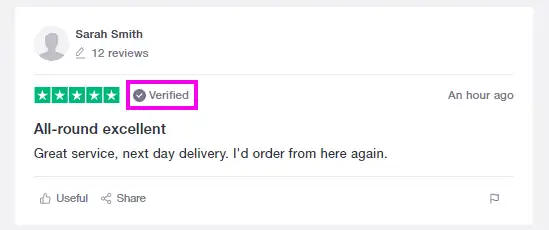
When I audited these platforms, I noticed huge differences in their review rules. For example, according to Trustpilot’s verification documentation, a “Verified” tag confirms an invitation or service document. By comparison, a “Verified Buyer” tag on Yotpo confirms a completed store checkout.
How Do Open Experience Platforms Compare to Order-Matched Engines?
Open experience platforms confirm that a person interacted with a business in some way. Conversely, order-matched engines confirm that a person actually paid for an item at checkout. Naturally, this distinction matters for both store owners and cautious online shoppers.
On Trustpilot or SmartCustomer, you can get verified through an automated email invite. Additionally, you have the option to upload a document showing a service chat or quote. As a result, you don’t need to finish a purchase to earn that badge.
Meanwhile, on REVIEWS, Yotpo, Bazaarvoice, and PowerReviews, the system can connect directly to your store checkout. Specifically, the software reads order data from platforms like Shopify, BigCommerce, or Magento. Therefore, a reviewer only gets the “Verified Buyer” badge if their email matches a paid order.
How Do B2B Software Directories Verify Reviewers?
B2B software directories verify a reviewer’s professional identity and active software usage instead of receipts. In most companies, a manager buys the software while employees use it daily. Because of this, checking an employee’s invoice wouldn’t make sense on G2 or TrustRadius.
When I tested the submission flows on G2 and Capterra, I could log in with LinkedIn. Alternatively, you have the option to verify your account with a company work email. If you use a personal email, you may need to upload a software screenshot.
Next, a human moderation team checks that screenshot to confirm you’re using the tool. This process proves you’re a real professional who uses the software at work. However, it doesn’t mean your name is on the vendor’s billing contract.
How Do Local Directories Handle Account and Business Verification?
Local directories like Google Business Profile and Yelp don’t verify customer receipts. Instead, they check whether the reviewer has a real account and normal posting habits. Meanwhile, their automated spam filters look for fake accounts, review bursts, and paid posts.
On Google Business Profile, the word “Verified” applies to the business owner, not the reviewer. When I helped set up a local profile, we had the option to record a walkthrough video. That video proved the shop had real signage, tools, and a physical address.
Similarly, for Better Business Bureau (BBB) reviews, customers confirm their email or phone number first. Then, the BBB sends the review to the business to confirm the interaction. Below, you can see how verification compares across all five platform types.
| Platform Type | Platform Examples | What “Verified” or Eligibility Actually Means | Does It Guarantee a Completed Purchase? |
|---|---|---|---|
| Open Experience Platforms | Trustpilot, SmartCustomer (Sitejabber) | Automated business invite or user-submitted proof of a service or buying interaction. | No. Service inquiries or incomplete orders can still qualify. |
| Local Discovery | Google Business Profile, Yelp | The reviewer account is active and passes automated spam filters. Owners verify physical shops via video. | No. Anyone with an account can post unless flagged by AI filters. |
| Complaint & Bureau Sites | Better Business Bureau (BBB) | Reviewer confirms email or phone and attests to an interaction. Businesses can challenge non-customers. | No. Pre-sale and service interactions are eligible. |
| B2B Software Directories | G2, Capterra, GetApp, Software Advice, TrustRadius | Reviewer logs in via LinkedIn or work email, and often uploads a screenshot proving software usage. | No. It proves active workplace usage, not billing ownership. |
| Ecommerce & Retail Engines | REVIEWS, Yotpo, Bazaarvoice, PowerReviews | The review invite triggers directly from an ecommerce checkout order ID or verified receipt. | Yes. The badge ties the reviewer’s email to a completed transaction. |
Should You Choose a Public Review Directory or Back-End Reputation Software?
You may want to choose a public directory if you want third-party pages ranking on Google. On the other hand, you might prefer back-end software if you’d like to display reviews on your website. Many multi-location brands also use back-end tools to send customers to Google Maps.
A lot of buyers compare Trustpilot directly against tools like Birdeye or Podium. However, that comparison can confuse your team because those tools do very different jobs. Thankfully, understanding this split can save you thousands of dollars in software fees.
When Do You Need a Public Review Destination?
You’ll likely want a public review destination when shoppers search your brand name plus “reviews” on Google. Sites like Trustpilot, BBB, G2, and Yelp have very strong search authority. Consequently, their pages often show up right below your homepage in search results.
When I search for a new software tool or contractor, I look for independent sites first. After all, shoppers trust third-party directories because the business owner can’t simply delete bad feedback. Therefore, if your brand needs outside credibility in search results, you may want to pick a public directory.
When Do You Need On-Site Widgets or Review-Routing Software?
You may prefer on-site review engines when you want shoppers to stay on your checkout page. For instance, tools like Yotpo and Bazaarvoice can put customer photos and star ratings below your products. This setup keeps buyers on your store instead of sending them to an outside website.
Meanwhile, back-end reputation tools like Birdeye and Podium work differently for physical businesses. They don’t host a popular consumer review site of their own. Instead, you can use them to text your customers a link that opens your Google Business Profile review box.
Public Directory or Back-End Software?
Follow your main marketing goal to pick the right category of tool.
Start Here: Where do you want shoppers to read your reviews?
Path A: Third-Party Search Results
“I want an outside page ranking on Google.”
You need a public directory that shoppers check when searching your brand name.
Pick: Google Business Profile, Yelp, BBB, G2, Capterra, or TrustRadius.
Path B: On Your Product Pages
“I want stars and photos at checkout.”
You need an ecommerce engine that keeps shoppers on your store and feeds Google Ads.
Pick: Reviews.io, Yotpo, Bazaarvoice, or PowerReviews.
Path C: Across 5+ Physical Branches
“I want to route texts to Google Maps.”
You need back-end routing software that texts clients after appointments.
Pick: Birdeye or Podium.
What Are the Best Trustpilot Alternatives for Local Businesses and Consumer Services?
If you’re running a local shop, clinic, or service brand, Google Business Profile, Yelp, BBB, and SmartCustomer are your top local options. Specifically, these four platforms can help nearby buyers find and trust your business.
Better yet, you have the option to claim basic profiles on the first three sites for free.
1. Google Business Profile (GBP)
Google Business Profile is the best free review platform for any local business. It puts your star rating, address, and customer photos right into Google Search and Maps. Because of that, you may want to set this up before spending a dime on paid software.
- Best for: Local storefronts, restaurants, medical clinics, and home service companies that rely on local searches.
- What it does: According to Google Business Profile Help, verified business owners can reply to reviews, post updates, and show service hours on Google Maps. In addition, it can create AI place summaries from your customer feedback.
- How reviews are collected: Customers can leave reviews directly from Google Search or Maps. You also have the option to share a direct review link or print a QR code on receipts. However, Google bans review gating, gifts, and AI-written feedback.
- What makes it different from Trustpilot: It costs $0 and directly impacts your local map pack rankings. While Trustpilot verifies individual reviews, GBP verification focuses on confirming your physical shop via owner video.
- Limits to know: Following the UK Competition and Markets Authority (CMA) undertakings and Google’s 2025 to 2026 Gemini AI updates, spam filters are very strict. When I tracked local accounts after a busy weekend, sudden spikes in 5-star reviews sometimes got removed by mistake. Furthermore, it doesn’t offer product-level widgets for online stores.
- Verdict: This is a must-have profile for almost every local or hybrid business. You can use it for free to build local search traffic and buyer trust.
2. Yelp
Yelp is a top organic discovery app for brick-and-mortar businesses in North America. Millions of diners and homeowners check the app before booking a table or a plumber. However, you can’t use it to run automated review-invitation campaigns.
- Best for: US and Canadian restaurants, salons, auto repair shops, and local home service providers.
- What it does: It runs a high-traffic local directory and mobile app where consumers can search for nearby businesses. From there, users can read detailed community reviews, browse customer food photos, and request service quotes.
- How reviews are collected: Review collection is strictly organic. According to Yelp’s Support Center, businesses aren’t allowed to ask customers for reviews. Instead, Yelp’s automated software checks each reviewer’s account history to decide which reviews count toward your public rating.
- What makes it different from Trustpilot: Trustpilot lets you send automated email invites after every order. Conversely, Yelp penalizes businesses that ask for reviews and hides feedback from inactive users in a “not currently recommended” tab.
- Limits to know: When I looked at client profiles on Yelp, legitimate 5-star reviews from first-time users often got filtered out. Moreover, upgrading your page or running Yelp Ads can easily cost hundreds of dollars a month. Many owners also find their sales phone calls persistent.
- Verdict: You have the option to claim your free Yelp page if you serve local customers in the US or Canada. Just remember that you’ll want to let reviews come in naturally without sending email blasts.
3. Better Business Bureau (BBB)
The Better Business Bureau is the best platform for proving complaint resolution in North America. Cautious buyers often check BBB profiles before hiring a roofer, mover, or financial firm. Notably, your main score comes from how you handle disputes, not your star average.
- Best for: North American contractors, financial services, auto dealers, and high-ticket consumer brands.
- What it does: It pairs public customer reviews with a formal mediation process. In addition, it gives businesses an A+ to F letter grade based on transparency, time in business, and complaint history.
- How reviews are collected: Consumers can submit reviews or formal complaints on BBB and confirm their identity by email or text. Next, the BBB notifies your business and gives you a window to reply or verify if the person was a real customer.
- What makes it different from Trustpilot: On Trustpilot, your star average is the main number everyone sees. By contrast, according to the BBB Rating System overview, customer reviews aren’t used at all in calculating a company’s BBB letter grade.
- Limits to know: The BBB only covers the United States, Canada, and Mexico. While claiming a basic profile is free, displaying the “BBB Accredited Business” seal requires vetting and annual dues. Those fees start around $400 per year and scale up into the thousands based on staff size.
- Verdict: The BBB is a smart option for high-trust service companies in North America. If your buyers care about how you fix problems, that A+ rating can carry real weight.
4. SmartCustomer (formerly Sitejabber)
SmartCustomer combines a public consumer directory with a lower-cost business software suite called Jabio. It’s an official Google Seller Ratings partner with cheaper entry tiers than Trustpilot. Even so, you may want to weigh its 2025 FTC consent order before signing a contract.
- Best for: Online service brands and small stores wanting a Google Seller Ratings partner at a mid-range price.
- What it does: It runs the public consumer site SMARTCUSTOMER (which rebranded from Sitejabber across 2025 and 2026). Meanwhile, on the business side, it sells reputation and review-collection tools under the Jabio brand.
- How reviews are collected: Shoppers can leave open organic reviews on SMARTCUSTOMER at any time. In addition, businesses using Jabio have the option to send automated post-purchase email requests and checkout surveys.
- What makes it different from Trustpilot: Paid tiers start lower than Trustpilot’s Plus plan. Specifically, as listed on Jabio’s pricing page, the Free plan includes 50 requests monthly, while paid plans cost $200/month (Liftoff), $600/month (Accelerate), and $900/month (Ascend).
- Limits to know: In January 2025, the Federal Trade Commission finalized an order against Sitejabber over its review practices. The FTC alleged the platform collected instant checkout ratings before delivery and showed them as completed product reviews. Furthermore, paid plans require a strict 12-month contract lock-in.
- Verdict: SmartCustomer can syndicate your ratings to Google Ads, but the recent rebrand and FTC order are real drawbacks. Consequently, most online stores may feel more comfortable with a month-to-month tool like REVIEWS.
Local Directories: Can You Ask Customers for Reviews?
Check solicitation rules and contract terms before sending automated email blasts.
1. Google Business Profile
Cost: Free ($0)
Can you ask? Yes, via link or QR code. No gifts or review gating.
Watch out for: AI spam filters removing sudden review spikes.
2. Yelp
Cost: Free basic / Paid Ads
Can you ask? No. Yelp strictly forbids asking customers for reviews.
Watch out for: Strict filters hiding reviews from new accounts.
3. Better Business Bureau
Cost: Free basic / ~$400+/yr
Can you ask? Yes, customers verify by email or phone text.
Watch out for: A+ to F grades come from dispute resolution, not stars.
4. SmartCustomer (Jabio)
Cost: Free / $200 to $900/mo
Can you ask? Yes, includes automated email invites via Jabio.
Watch out for: 12-month contracts and a 2025 FTC consent order.
What Are the Best Trustpilot Alternatives for B2B Software and SaaS Companies?
If you sell business software, G2, Capterra, GetApp, Software Advice, and TrustRadius are the best B2B alternatives to Trustpilot. Unlike general consumer sites, these five platforms verify professional users and ask software-specific questions. Plus, they can provide buyer intent data for your sales team.
How Did G2’s 2026 Acquisition Change the B2B Review Market?
Four of the five biggest B2B software directories now belong to the same parent company. As announced in G2’s official press release, G2 completed its acquisition of Capterra, Software Advice, and GetApp from Gartner on February 5, 2026. Public market reports valued the deal at $110 million.
All four websites still run as separate destinations for software buyers today. However, B2B marketing teams may want to note that G2 and Capterra now share corporate ownership. Consequently, that shift leaves TrustRadius as the primary independent challenger for enterprise software reviews.
5. G2
G2 is the leading B2B software marketplace for earning seasonal category badges and AI search citations. Software buyers often check its “G2 Grid” charts to compare top tools by satisfaction and market size. Best of all, you can list your product for free and start collecting verified user reviews right away.
- Best for: B2B SaaS, IT, and business service companies that want recognizable leader badges and buyer intent data.
- What it does: It ranks software products using verified peer reviews, feature scorecards, and market presence data. Additionally, paid vendors have the option to license quarterly badges and see which companies are comparing their product on G2.
- How reviews are collected: Reviewers can log in with LinkedIn or a corporate work email. When I tested the review flow with a non-work email, I had to upload a screenshot showing me logged into the software. According to G2’s Community Guidelines, reviews need at least 40 characters per text box and pass human checks within 3 business days.
- What makes it different from Trustpilot: Instead of a short comment box, G2 asks structured questions about setup, support, and specific software features. It also verifies workplace usage rather than consumer service chats.
- Limits to know: While your basic profile is free, paid vendor plans aren’t cheap. For instance, licensing G2 badges, review generation campaigns, and intent data usually costs $10,000 to $30,000+ per year on an annual contract.
- Verdict: G2 is a great starting point for almost any B2B SaaS vendor. You can start with a free profile to earn your first seasonal badge before considering a paid contract.
6. Capterra
Capterra is a top software comparison directory that drives high-intent traffic through pay-per-click bidding. It enforces stricter word counts than G2, which gives buyers deeper pros-and-cons feedback. As a result, it works well for software companies targeting small and mid-sized businesses.
- Best for: SMB and mid-market software vendors looking for detailed user feedback and pay-per-click lead generation.
- What it does: As outlined on Capterra’s vendor overview, the platform hosts software category directories, side-by-side feature tables, and “Capterra Shortlist” rankings. Vendors also have the option to bid for top placement on their software category pages.
- How reviews are collected: Reviewers can verify their identity through LinkedIn or a business email address. During my audit of their submission form, Capterra required at least 100 characters in both the pros and cons boxes. Next, human moderators check vendor-invited reviews in about 5 business days, while organic reviews can take up to 2 weeks.
- What makes it different from Trustpilot: Trustpilot charges a flat annual subscription per domain for review widgets. By contrast, Capterra makes money mainly through pay-per-click (PPC) campaigns (often $2 to $10+ per click) that send software buyers to your landing page.
- Limits to know: Because G2 bought Capterra in February 2026, putting all your budget into G2 and Capterra concentrates your spend with one owner. Furthermore, aggressive PPC bidding in crowded categories like CRM or HR can drain your monthly budget fast.
- Verdict: You may want to claim your free Capterra listing and collect reviews to qualify for its Shortlist badges. Then, you have the option to test small PPC budgets later when you want direct traffic.
7. GetApp
GetApp is a cloud software discovery site that multiplies your reach when you collect reviews on Capterra. It focuses on helping small businesses compare cloud apps, mobile compatibility, and third-party integrations. Better yet, you don’t need to manage it as a separate review campaign.
- Best for: Cloud-based SaaS apps targeting small businesses that want visual “Category Leaders” badges and integration scorecards.
- What it does: It provides app comparison pages, security checklists, and annual Category Leaders rankings for cloud software. From there, buyers can filter tools by operating system, mobile app support, and software integrations.
- How reviews are collected: GetApp shares the same review verification pipeline as Capterra and Software Advice. Consequently, when a verified user leaves a review through your Capterra link, that review can syndicate across GetApp automatically.
- What makes it different from Trustpilot: Trustpilot keeps your reviews on a single domain profile. Meanwhile, the Capterra and GetApp network publishes your verified software reviews across three distinct buyer directories from one invitation flow.
- Limits to know: You can’t run GetApp as an independent community with separate moderation rules. Instead, its review policies, PPC bidding setup, and corporate ownership are tied directly to Capterra and G2.
- Verdict: You can think of GetApp as a helpful bonus channel that comes bundled with your Capterra profile. You also have the option to use its Category Leaders badges to add extra social proof to your site.
8. Software Advice
Software Advice pairs public software reviews with human phone advisors who match buyers to vendors. It’s especially popular in traditional industries like healthcare, construction, and retail point-of-sale. Here, instead of paying for software widgets, you can pay for phone-qualified buyer leads.
- Best for: Vertical B2B software vendors (medical, legal, construction, property management) that have a fast outbound sales team.
- What it does: It publishes software reviews and “FrontRunners” reports while offering free 15-minute phone consultations to buyers. First, an advisor asks the buyer about their budget and needs, and then recommends 3 to 5 matching software vendors.
- How reviews are collected: It pulls from the shared, verified review pool on Capterra and GetApp. It can also collect feedback directly from software buyers who’ve used its advisor matching service.
- What makes it different from Trustpilot: Trustpilot is a passive review profile and widget tool. Conversely, Software Advice works as an active lead-generation broker that charges vendors on a cost-per-lead (CPL) basis when an advisor matches a buyer to your product.
- Limits to know: Paying per lead can get expensive if your sales reps are slow to pick up the phone. Because advisors send the same buyer to a few competing vendors at once, waiting an hour to call back can lower your close rate.
- Verdict: Your free reviews from Capterra will show up here automatically, which is great for visibility. However, you may only want to pay for its lead-generation program if your sales team can call matched buyers within five minutes.
9. TrustRadius
TrustRadius is the premier independent B2B review platform for deep, enterprise-grade software evaluations. Every review reads like a mini case study covering return on investment and renewal plans. Following the G2 and Capterra merger, it stands out as the top independent alternative for tech brands.
- Best for: Mid-market and enterprise B2B tech companies that need detailed practitioner reviews and CRM intent data.
- What it does: According to the TrustRadius scoring FAQ, its weighted trScore prioritizes recent, in-depth evaluations over quick star ratings. Additionally, paid plans let vendors send review quotes and buyer intent signals into Salesforce, 6sense, and Demandbase.
- How reviews are collected: Reviewers can log in via LinkedIn or work email and pass a strict research check confirming their job title and software usage. When I clicked through a TrustRadius evaluation form, it took about 15 minutes to complete the detailed questions.
- What makes it different from Trustpilot: Trustpilot allows one-sentence ratings that take 30 seconds to type. By contrast, TrustRadius blocks shallow blurbs and builds structured, multi-paragraph evaluations from verified corporate users.
- Limits to know: Because each review takes 15 to 20 minutes to write, getting a high volume of reviews is tough without offering gift-card incentives. Furthermore, full enterprise vendor contracts average around $30,000 per year.
- Verdict: If you sell complex B2B software with a high price tag, TrustRadius offers some of the most credible reviews on the market. Ultimately, it gives enterprise buyers the deep technical detail they rarely find on Trustpilot.
Who Owns the Major B2B Software Directories in 2026?
Following the February 2026 buyout, four of the five top portals share one parent company.
Consolidated Network (Feb 2026 Acquisition)
The G2 Corporate Umbrella
G2
Grid badges & annual intent contracts (~$10k to $30k+/yr)
Capterra
100-char reviews & PPC category bidding ($2 to $10+/click)
GetApp
Cloud app leaders & shared Capterra review syndication
Software Advice
Phone advisor matching & pay-per-lead (CPL) model
Independent Challenger
TrustRadius
Standalone Ownership
Hosts 15-minute enterprise practitioner evaluations, weighted trScores, and CRM intent data (~$30k/yr enterprise tiers).
What Are the Best Trustpilot Alternatives for Ecommerce and Retail Brands?
If you’re running an online store, REVIEWS, Yotpo, Bazaarvoice, and PowerReviews are your strongest ecommerce alternatives. Specifically, these four platforms provide SKU-level product reviews, customer photos, and order-matched verification by connecting to your checkout. Moreover, they can syndicate your star ratings to Google Shopping ads as official Google partners.
10. REVIEWS
REVIEWS is the best overall Trustpilot alternative for online stores that want month-to-month pricing. It lets you collect both company reviews and product SKU reviews in one smooth flow. Best of all, you can get Google Seller Ratings syndication without signing a 12-month contract.
- Best for: Shopify, BigCommerce, and WooCommerce brands wanting verified product reviews, video UGC, and flexible monthly terms.
- What it does: It can collect company and product ratings, display fast on-site widgets, and send verified scores to Google Ads and Google Shopping. In addition, it connects with Klaviyo, Gorgias, and loyalty apps.
- How reviews are collected: The app connects to your store checkout and sends automatic email or SMS review invites tied to real order IDs. When I tested its widget studio, setting up photo and video review rewards was clear and fast.
- What makes it different from Trustpilot: You don’t get locked into a costly annual contract. According to the REVIEWS, rolling 30-day plans include Free ($0 for 25 invites/mo), Essentials ($29/mo for 300 invites), Start-Up ($99/mo for 1,500 invites + Google Seller Ratings), Grow ($299/mo for 5,000 invites), and ($499/mo for 10,000 invites). Paying annually gives you a 20% discount.
- Limits to know: Pricing is still per domain and capped by your monthly invitation count. Also, the public REVIEWS directory doesn’t rank quite as high on Google for brand-name searches as TRUSTPILOT does.
- Verdict: If you don’t like Trustpilot’s $319+/month annual lock-ins, REVIEWS is an easy upgrade. Specifically, the $99/month Start-Up plan gives most growing stores everything they need, including Google Seller Ratings.
11. Yotpo
Yotpo is a top on-site conversion engine for DTC brands that want photo reviews and loyalty programs. Shoppers can submit their rating right inside their email inbox without opening a new browser tab. Today, in 2026, the company is laser-focused on reviews, loyalty, and AI search visibility.
- Best for: Growing Shopify and DTC brands that want high-converting product page widgets, customer photos, and integrated loyalty points.
- What it does: It powers on-site product reviews, smart sorting, AI review summaries, community Q&A, and Google Shopping syndication. According to Yotpo’s 2025 strategy announcement, the company shut down its Email and SMS marketing tools on December 31, 2025, to focus on Reviews, Loyalty, and its new AI visibility tool, Discover.
- How reviews are collected: Yotpo reads your store order data and can send frictionless in-mail review requests. Because the customer fills out the stars inside the email itself, response rates are often much higher than standard web links. Consequently, every order-matched review gets a “Verified Buyer” badge.
- What makes it different from Trustpilot: Trustpilot builds up an external directory profile first. Conversely, Yotpo builds first-party review assets right on your own product pages to boost checkout conversion rates. As shown on Yotpo’s pricing page, plans scale by monthly order volume: Free (up to 50 orders/mo), Starter (from $15/mo, or $89/mo at 500 orders), and Pro (from $119/mo, or $169/mo at 500 orders).
- Limits to know: You’ll want to watch the order-volume slider carefully as your store grows. For example, unlocking Google Seller Ratings requires at least the Pro tier ($119 to $169+/month), and adding Yotpo Loyalty starts around $368/month.
- Verdict: Yotpo is a great option if your main goal is turning product page visitors into buyers with photo and video reviews. Just be sure you calculate how your seasonal order spikes may affect your monthly bill.
12. Bazaarvoice
Bazaarvoice is the enterprise standard for brands that sell products through major big-box retailers. Its main strength is syndicating a single product review across thousands of retail partner websites worldwide. Therefore, if your items sit on shelves at Walmart, Target, or Best Buy, this is the network built for you.
- Best for: Consumer packaged goods (CPG) manufacturers and enterprise brands selling through large retail chains.
- What it does: It can collect product ratings, Q&A, and visual UGC, and then syndicate that content across its global retail network. In addition, it runs Influenster, a massive product-sampling community where members test items and leave disclosed reviews.
- How reviews are collected: Reviews come from verified post-purchase emails, retail partner feeds, and managed Influenster sampling boxes. Next, every submission goes through strict automated fraud checks and human moderation.
- What makes it different from Trustpilot: Trustpilot focuses on direct-to-consumer service ratings. By contrast, according to the Bazaarvoice Ratings & Reviews page, its core value is retail syndication, letting one review on your brand site populate product pages on TARGET or HOMEDEPOT.
- Limits to know: Bazaarvoice uses custom enterprise contracts with high upfront costs. For instance, buyer benchmarks in 2026 show median contracts around $31,000 to $36,000 per year, while large multi-brand setups run $40,000 to $80,000+ per year plus $10,000 to $50,000 in setup fees.
- Verdict: Bazaarvoice is way too expensive for a small online shop. However, if you sell through big-box retail partners, its syndication network and Influenster sampling programs are hard to beat.
13. PowerReviews
PowerReviews is a strong enterprise retail syndication rival that usually costs 10% to 20% less than Bazaarvoice. It works especially well for mid-market and enterprise brands in beauty, apparel, and specialty retail. As a result, you can get receipt verification, visual galleries, and open retail syndication in one package.
- Best for: Mid-market and enterprise brands in beauty, fashion, and consumer goods looking for retail syndication at a better price.
- What it does: According to the PowerReviews platform overview, it provides enterprise product ratings, Q&A, visual UGC, product sampling, and syndication across hundreds of retail partners (including Ulta and specialty chains).
- How reviews are collected: You can use post-checkout email and SMS invites, on-site forms with receipt verification, and product sampling campaigns. Furthermore, reviews pass through both AI compliance filters and human moderators.
- What makes it different from Trustpilot: Like Bazaarvoice, it focuses on SKU-level conversion tools and retail partner syndication rather than hosting a public consumer complaint board.
- Limits to know: Pricing is quote-based on annual contracts, typically starting in the $15,000 to $35,000+ per year range depending on SKU count and traffic. In user comparisons, some managers note that its back-end dashboard feels older than Yotpo’s, and its global retail network is slightly smaller than Bazaarvoice’s.
- Verdict: If you need retail review syndication without paying top-tier Bazaarvoice prices, you have the option to get a quote from PowerReviews. You may just want to ask their sales rep to confirm that your specific retail partners are in their network.
How Ecommerce Review Pricing Scales
Check whether your store is billed by invite limits, monthly order volume, or retail syndication scope.
| Platform | How Pricing Scales | 2026 Price Range | Google Seller Ratings Tier |
|---|---|---|---|
| Reviews.io | Monthly invitation allowance per domain | $0 Free / $29 to $499/mo (rolling 30-day) | Start-Up ($99/mo) |
| Yotpo | Total monthly store order volume slider | $0 Free / $15 to $169+/mo (at 500 orders) | Pro ($119 to $169+/mo) |
| PowerReviews | SKU count, web traffic & retail syndication | ~$15,000 to $35,000+/yr (10% to 20% below BV) | Included in enterprise contract |
| Bazaarvoice | Global retail network reach & sampling scope | ~$31,000 to $80,000+/yr (+ $10k to $50k setup) | Included in enterprise contract |
What Are the Best Trustpilot Alternatives for Multi-Location Reputation Management?
When you’re managing five or fifty physical branches, Birdeye and Podium are the best multi-location alternatives to Trustpilot. Instead of creating another standalone review site, these back-end software tools route your customers to Google Maps and centralize every reply. Consequently, they can save multi-location teams hours of manual login work every week.
14. Birdeye
Birdeye is the best all-in-one reputation command center for businesses with five or more locations. Instead of locking your reviews inside a proprietary profile, it helps build up your own Google Business Profiles across every branch. In addition, it can sync your store hours and addresses across dozens of directories.
- Best for: Multi-location dental practices, healthcare clinics, real estate groups, auto shops, and franchises.
- What it does: As detailed on the Birdeye Reviews product page, the platform can automate review requests, sync directory listings, draft AI review replies, and benchmark each branch’s star rating against local competitors.
- How reviews are collected: Birdeye connects with over 3,000 CRM, medical, and point-of-sale systems. Right after a patient visit or paid invoice, it can text or email the customer a review link that opens Google, Facebook, or a niche medical site.
- What makes it different from Trustpilot: Trustpilot charges per domain to build up your Trustpilot profile. Conversely, Birdeye charges per physical location to help grow your Google Maps ratings and manage all your directory reviews in one inbox.
- Limits to know: Birdeye uses custom quotes on mandatory 12-month contracts. Current 2026 benchmarks put single locations around $299/month (Starter), $349 to $399/month (Growth), and $449/month (Dominate), with volume discounts dropping rates to roughly $199 to $249 per location for 10+ branches.
- Verdict: Paying $300+ a month is probably overkill for a single coffee shop. However, once you’re managing three to five+ physical locations, Birdeye’s automated CRM routing and multi-branch reporting can easily earn their keep.
15. Podium
Podium is a local customer messaging and text-to-pay suite with built-in SMS review generation. It works well for high-ticket local businesses where staff already text customers about quotes, appointments, and invoices. Because text messages get opened right away, its review invites tend to convert fast.
- Best for: Auto dealerships, medspas, home service contractors, and local retailers that want two-way customer texting alongside review requests.
- What it does: It combines a unified customer inbox (SMS, webchat, social messages, and phone), automated SMS review invites, AI chat agents, and mobile text-to-pay links.
- How reviews are collected: Staff have the option to send a one-click SMS review invite right after texting an invoice, or let the system trigger invites automatically after payment. Then, the text link sends the customer straight to your Google or Facebook review page.
- What makes it different from Trustpilot: Trustpilot is a public review platform. By contrast, according to the Podium Reviews page, Podium is a daily lead-conversion and SMS communication tool that bakes Google review collection into your customer chat thread.
- Limits to know: Total costs are high and require a 12-month contract lock-in. Specifically, base tiers run around $399/month (Core) and $599/month (Pro) per location, and once you add AI agents (~$99/mo), extra user seats, and US SMS carrier fees, single-location bills often reach $500 to $800/month.
- Verdict: You probably won’t want to buy Podium if you only need to send review emails. On the other hand, if your team can use its two-way texting, AI lead response, and text-to-pay tools every day, it may replace three separate software bills.
How Can You Choose the Right Trustpilot Alternative in 5 Steps?
You can narrow down these 15 options in five minutes by matching your buyer journey to your budget. Simply use these five steps as a guide before you hop on a sales call or sign an annual agreement.
- Identify where your buyers actually check reviews. Local shoppers usually look at Google Business Profile and Yelp. Meanwhile, online shoppers check Google Shopping ads and product pages (REVIEWS, Yotpo), while software buyers check G2 and TrustRadius.
- Check if you need Google Seller Ratings syndication. According to Google Ads Seller Ratings documentation, Google requires at least 100 verified reviews per country within the past 12 months to display stars on your ads. Therefore, if you’re running Google Ads, you may want to pick an official partner like REVIEWS, Yotpo, Bazaarvoice, or PowerReviews.
- Compare how the pricing model scales. You can watch out for per-domain fees (Trustpilot, REVIEWS), monthly order sliders (Yotpo), per-location fees (Birdeye, Podium), and pay-per-click budgets (Capterra). It’s always helpful to calculate what you’ll pay next year if your sales double.
- Audit contract lock-ins and review portability. You have the option to ask the vendor in writing if you can pay month-to-month. In addition, you may want to confirm that you can export all your verified product and company reviews via CSV if you ever leave.
- Verify regional fake-review compliance. You’ll want to make sure your invitation setup follows the US FTC Consumer Reviews and Testimonials Rule and the UK DMCC Act guidance. Above all, avoid blocking unhappy customers from leaving a review (review gating) or offering hidden gifts for 5-star ratings.
Here’s a simple flow that you can follow:
5 Questions to Ask Before You Sign a Review Contract
Keep this checklist open during sales calls to avoid surprise renewal fees.
- 1 Where do my buyers look? Match your platform to Google Maps, Google Shopping, big-box retail, or B2B grids.
- 2 Which tier unlocks Google Ads stars? Confirm the exact plan price and the 100-review country rule.
- 3 What happens if my volume doubles? Check per-domain fees, order sliders, per-location rates, and SMS fees.
- 4 Can I leave with my data? Ask for rolling 30-day billing and full CSV export rights for your verified reviews.
- 5 Is the flow FTC and DMCC compliant? Ensure there is no review gating or undisclosed incentives.
People Also Ask
Reviews.io, Yotpo, and Google Business Profile are the top answers for businesses asking about flexible contracts, review imports, and Google Ads stars. Below, you can explore the most common questions buyers ask when switching away from Trustpilot.
Final Thoughts: Which Platform Should You Pick Today?
Replacing Trustpilot isn’t about finding an exact clone of its public directory. Rather, you’ll get much better results by picking the platform built for your specific industry and buyer habits. Here’s a quick cheat sheet you can use to make your final call:
- For local businesses (1 to 3 locations): You can start with Google Business Profile and Yelp for free, and consider BBB if you sell high-ticket home or financial services.
- For multi-location brands (5+ branches): You may want to use Birdeye or Podium to automate SMS review requests straight to your Google Maps listings.
- For small to mid-sized online stores: You have the option to choose REVIEWS for transparent month-to-month company and product reviews, or Yotpo for rich on-site photo widgets.
- For retail brands selling in big-box stores: You can request custom quotes from Bazaarvoice and PowerReviews to syndicate your SKU reviews to Walmart, Target, or Ulta.
- For B2B software vendors: You may want to claim your free profiles on G2 and Capterra, and add TrustRadius when you need deep enterprise case-study reviews.
So now, you have the option to test free tiers or monthly plans whenever you can to see how your customers respond. It’s also a good idea to read the cancellation clause before signing an annual software contract, and check each platform’s pricing page for current rates.