SEO by HighSoftware99.com: Honest Breakdown — What It Is, What It Costs and Whether Google Will Punish You for Using It In 2026
The keyword “SEO by HighSoftware99.com” pulls thousands of searchers down the same rabbit hole every month. They want one direct answer: is this a real SEO service, a clever autocomplete trick, or just another internet trend?
In this breakdown, we answer all three questions. We map the term to Google’s actual policies, name the real prices reported by independent reviewers, and explain why most articles on the topic get it half-wrong.
For example, Backlinko-cited industry data shows organic search still delivers 53% of all website traffic and an average 748% ROI. Shortcuts feel tempting against numbers like that. They also rarely survive a Google spam update.
| Attribute | Google Autocomplete | Organic Rankings |
|---|---|---|
| Where it appears | Dropdown while typing | Results page after search |
| Signals it relies on | Real query volume, location, freshness | Content quality, backlinks, E-E-A-T |
| Time to appear | Hours (when manipulated) | 3 to 6 months on average |
| Drives clicks directly | No — only a suggestion | Yes — direct CTR |
| Persists after payment stops | No | Yes — compounds for years |
| Policy classification | Manipulation when artificial | Compliant when white-hat |
Comparison of Google autocomplete suggestions versus organic search rankings shows the difference between visibility tactics and real SEO.
Also read: What Is People Also Search For (PASF) — And Why It Matters for Your SEO
What “SEO by HighSoftware99.com” Actually Means?
The term refers to three different offerings sold under one name: an autocomplete-injection service, a $499-per-month structured SEO subscription, and a trending keyword used by dozens of content farms. None of these is an official Google product or a recognised SEO methodology in 2026.
Take them one at a time. The autocomplete version promises brand visibility inside Google’s dropdown within hours. Coruzant Technologies describes it as a service built around “clickability” and the immediate appearance of a brand.
Next up, the $499/month version markets itself as a five-layer SEO platform. Its own site claims over 300 websites across 40+ industries have been ranked using this platform.
The third version is simply a keyword. Content sites publish review articles to capture the trend itself.
Most competing articles treat these three as one thing. That conflation is why so much advice on this topic misses the actual question being asked.
Here’s the catch. Independent reviewers find no verifiable portfolio behind the autocomplete brand. RavensDiary’s 2026 audit reports no verified portfolio of client results publicly available, no named case studies, no verifiable before-and-after rankings, and no transparent pricing structure.
That absence of evidence is not proof of fraud. It is, however, a clear signal to apply serious due diligence before sending money.
How the Autocomplete-Push Mechanism Actually Works
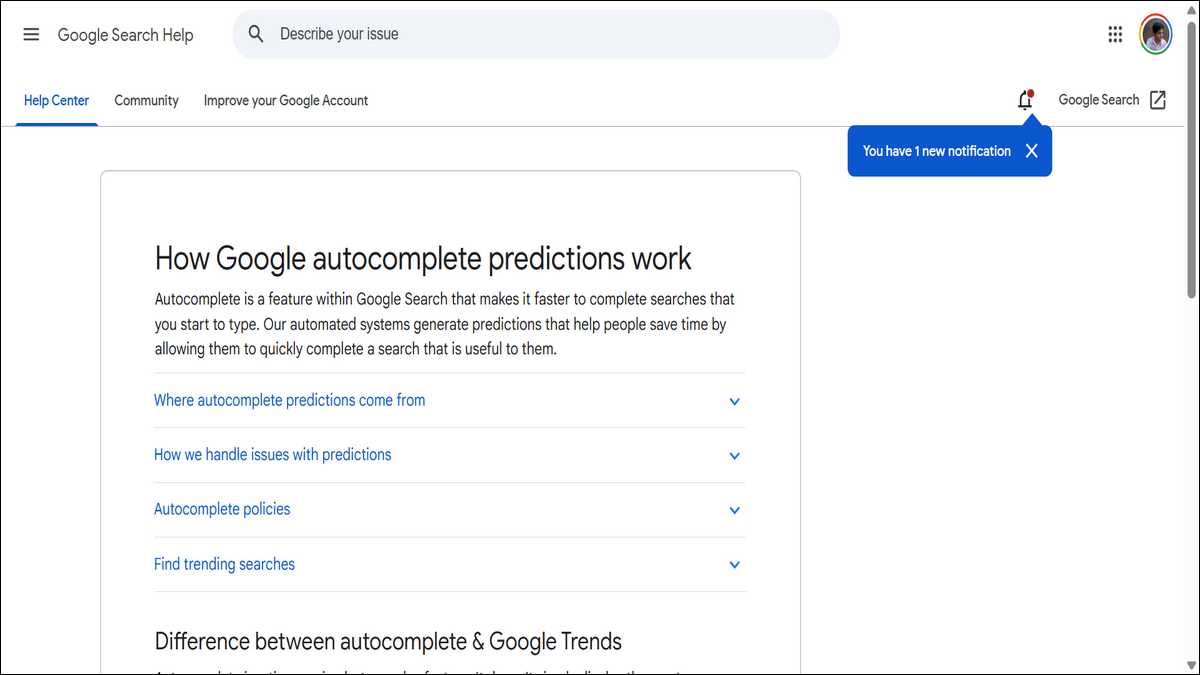
Google autocomplete normally pulls from real search behaviour, location, language, freshness, and personal history, according to Google’s own Search Help documentation.
Autocomplete-push services manipulate those exact inputs by generating artificial search volume and simulated user behaviour signals around a target keyword.
| Signal | Real (per Google Search Help) | Manipulated (autocomplete-push) |
|---|---|---|
| Search volume | Organic user queries over time | Generated by automated systems |
| User behavior | Natural typing and click patterns | Simulated CTR and dwell signals |
| Location data | Genuine searcher geography | Proxy or emulator-based locations |
| Freshness layer | Reflects real trending events | Sustained artificial spikes |
| Sustainability | Persists as long as interest exists | Stops when payment stops |
| Google’s reaction | Surfaces as a normal prediction | Removed if SpamBrain detects it |
How Google autocomplete generates predictions from real search behaviour compared with how manipulation services inject artificial signals.
To be precise, Google Search Help is explicit about the inputs. Predictions reflect real searches done on Google, plus location, language, trending events, and personal search history.
Strip away the marketing and the manipulation playbook is simpler than it sounds. Services generate artificial queries, simulate clickthrough patterns, and sustain those signals long enough for Google’s freshness layer to surface them as suggestions.
US Business Magazine sums it up plainly. The goal is tricking Google into thinking your brand is trending with real users.
Here’s the thing — this is not SEO. Real SEO improves the page that Google ranks. Autocomplete-push improves the suggestions that Google offers before the user even clicks search.
Different surface, different system, different policy. Conflating the two is how most marketers end up buying the wrong product entirely.
The True Cost — Side By Side With 2026 Numbers
Reported daily costs run from $500 for basic keywords up to $7,000 per day for competitive US, Thailand, or Indonesia markets, according to US Business Magazine’s investigation. A 30-day campaign costs between $15,000 and $210,000+.
But the visibility ends the day payment ends — there is no compounding asset.
That last detail matters more than the headline price.
To make the trade-off concrete, here is the same $15,000 budget invested three different ways, using benchmark data from Incremys, Backlinko, and Searchlab.
Spend Comparison Table
| Spend Option | What $15,000 Buys | What You Keep After 12 Months |
|---|---|---|
| Autocomplete push (30 days) | Suggestion-bar visibility for one keyword in one region | Zero — visibility stops with payment |
| Quality backlinks at $361 average (Incremys 2026) | About 41 editorial backlinks | Permanent authority signals and referral traffic |
| In-house content + technical fixes | Roughly 30 researched articles plus Core Web Vitals overhaul | Compounding organic traffic averaging 748% industry ROI |
The autocomplete bet only makes sense if your customer value per click can absorb $500 a day with no clickthrough guarantee. For most small businesses, that math never closes.
There’s also a second hidden cost. Getting autocomplete visibility doesn’t mean people will click or convert. You will still need conventional SEO to capture the traffic the suggestion generates.
What Google’s 2026 Policies Actually Say About This
Google’s autocomplete policy explicitly removes predictions that violate its rules. The March 2026 spam update sharpened SpamBrain detection of fake engagement and behaviour manipulation. Any tactic built on artificial search signals sits inside Google’s documented spam categories — not in a gray area.
Straight from the source, Google Search Help states that if the automated systems don’t catch problematic predictions, enforcement teams remove those that violate our policies, including the specific prediction and closely-related variations.
Beyond autocomplete itself, the March 2026 spam update completed its rollout in about 19 hours and 30 minutes. And link-building companies like LinkBuilding HQ confirm it applies to all regions and languages.
Zooming in, the most relevant 2026 spam categories, according to ALM Corp’s policy analysis, include scaled content abuse, link spam, policy circumvention, and user-generated spam. ALM Corp
The autocomplete tactic does not match link-spam exactly. It does match Google’s broader pattern of manipulating user behaviour signals. Spam updates rarely call out specific products by name. They quietly devalue the underlying patterns.
If the worst happens, recovery from algorithmic spam actions typically takes two to six months and requires content quality improvements, not technical patches, according to MightyRoar’s helpful-content analysis.
That window matters if your site has already worked with this category of service.
The Visibility-to-Conversion Gap Nobody Talks About
Visibility in Google autocomplete does not equal clicks, and clicks do not equal customers. Noizz reports 96.55% of pages get zero traffic from Google.
Appearing in a suggestion bar without a ranking page and a strong landing experience is a marketing dead end in 2026.
From Autocomplete Impression to Actual Customer — The 2026 Drop-Off
Key takeaway: Even at 100% autocomplete visibility, the funnel collapses before a single sale. Visibility without ranking is a leaky bucket.
Marketing funnel illustrating the drop-off from autocomplete impressions to organic clicks to actual conversions in Google search.
The drop-off is brutal. Even when a user clicks an autocomplete suggestion, they land on a regular SERP. If your site is not already ranked there, the suggestion sends them straight to your competitors.
- It gets worse. Pew Research found CTR drops from 15% to 8% when an AI Overview is present. That cuts the value of any top-of-funnel impression nearly in half. Position
- Whereas, layer on AI search and the gap widens. AIOSEO data shows 52% of sources cited in Google AI Overviews rank in the top 10. Autocomplete tricks do not put you there.
The autocomplete pitch hides the real cost. You still need real SEO to capture the visibility you paid for. Otherwise, you spent $500 a day to subsidise your competitors’ conversions.
In short, this is why the tactic underperforms its sticker promise. Visibility without ranking is a leaky bucket.
Also read: How long does SEO take to position your website?
A Due-Diligence Checklist For Any “Instant SEO” Service
A legitimate SEO service can show verifiable, client-named results inside Google Search Console. Most instant-ranking services cannot. This seven-point checklist filters real providers from rebranded autocomplete tactics in under fifteen minutes.
Here is what to ask for, in order.
| # | Verification Step | What “Real” Looks Like | Red Flag |
|---|---|---|---|
| 1 | WHOIS check | Domain registered 3+ years, transparent registrant | Brand-new domain, hidden registrant |
| 2 | Named case studies | Real client names, dates, URLs, before/after data | Anonymous “client A” stories |
| 3 | Search Console proof | Screenshots with verified property data | Cropped screenshots or rank-tracker only |
| 4 | Written methodology | Audit, on-page, content, links, monitoring | “Proprietary algorithm we can’t share” |
| 5 | Transparent pricing | Published tiers or scoped quotes | Daily-budget model only |
| 6 | Refund or scope clause | Written deliverables tied to milestones | “Results depend on Google” |
| 7 | Real communication channel | Public team profiles, real LinkedIn presence | WhatsApp-only contact |
During the research, most failed audits I’ve reviewed for clients fail at steps 2, 3, and 4. If a provider cannot produce a single Search Console screenshot from a named client, the rest of the sales conversation is theatre.
One more filter on top. Ask the provider to explain exactly how Google’s autocomplete differs from organic ranking. A real SEO will explain it cleanly. A reseller will deflect.
The Legitimate 2026 SEO Foundation That Compounds
A 2026 SEO foundation rests on four layers: technical baseline, original content with first-hand experience, real authority signals, and topical clusters. Searchlab reports it takes 3–6 months for new content to reach stable rankings, with only 5.7% of pages reaching the top 10 within their first year.
- Start technical. Vents Magazine’s indexing-speed analysis recommends sub-200 ms TTFB, CDN delivery, HTTP/2, and clean schema markup for articles, products, FAQs, and breadcrumbs.
- Content next. Google’s March 2026 core update heavily weights “Information Gain,” according to SAVIC’s analysis of Google’s published AI-search guidance. Generic content that any consultant could write loses ground in this model.
- Authority builds slowly, but permanently. Incremys reports a quality backlink costs an average of $361 in 2026, and pages in position one carry about 220 backlinks on average.
- Topical clusters lock the work in. Bravery Technology’s UK data shows sites using cluster architecture see 34% higher organic traffic growth over 12 months compared to standalone articles.
Compounding is the entire argument for legitimate SEO. Autocomplete-push stops the day payment stops. A backlink earned in March 2026 still drives traffic in March 2028.
That difference is not a stylistic preference. It is a different financial product entirely.
Decision Matrix — Should You Even Consider Seo By HighSoftware99.com?
The decision depends on three variables: budget tolerance, time horizon, and existing conversion-path quality. For most small businesses, the autocomplete version is mathematically wrong.
For a handful of high-margin, short-window campaigns, a defensible case exists — though it remains policy-risky.
| Scenario | Recommendation |
|---|---|
| Small local business, organic growth goal | No — invest in local SEO and Google Business Profile instead |
| Evergreen content publisher | No — every dollar should compound |
| YMYL site (health, finance, legal) | No — policy risk and trust risk both too high |
| Short-window product launch, deep budget | Maybe — only as one channel among many |
| Brand awareness blitz, $200K+ budget | Maybe — measure brand-search lift, not direct conversions |
| New site under one year old | No — build the foundation first |
| Site already affected by spam update | No — focus on recovery |
Even in the “maybe” cases, the tactic only works if your conventional SEO is already strong. Autocomplete visibility funnels users into a SERP. If your site loses that SERP, your competitors will spend funds directly.
That single fact disqualifies the option for the majority of buyers who consider it.
The Ethics Angle Most Reviews Skip Entirely
Intentional autocomplete manipulation is a documented ethical concern in academic research, not just an SEO debate. A 2023 peer-reviewed paper by Rosie Graham in the Sage journal Big Data & Society identified autocomplete influence as a key ethical challenge in modern search.
Digging deeper, the Sage research finds that autocomplete suggestions shape user inquiry through involuntary exposure, even if a user does not change their query, establishing or reinforcing unwanted beliefs about a topic at an unconscious level.
That changes the analysis significantly. A business pushing its name into autocomplete is not just optimising. It is reshaping public inquiry around its brand at the cognitive level.
Long-term, this carries real reputation risk. If users later discover the suggestions were paid placements rather than organic popularity, brand trust collapses faster than it grew.
Brand-trust erosion stays invisible until it isn’t. Reddit threads, Trustpilot complaints, and AI Overview citations now amplify negative discoveries faster than any 2019-era reputation playbook anticipated.
To put it simply, the ethical cost is real even when the policy cost is delayed.
People Also Ask For
It is not clearly a scam, but it is not a recognised SEO methodology either. Multiple 2026 reviews — including RavensDiary, FashionFusionPost, and EarnDailyTips — find no verifiable case studies, no published team profiles, and no transparent pricing. Apply due diligence before engaging.
US Business Magazine reports $500 per day for basic keywords and $7,000+ per day for competitive markets like the US, Thailand, and Indonesia. A 30-day campaign lands between $15,000 and $210,000+. Pricing varies by region and keyword difficulty.
The exact tactic has not been publicly named in a Google update. That said, it does fall inside Google’s documented spam categories around fake engagement and behaviour manipulation. ResultFirst’s analysis of the March 2026 spam update confirms that manipulation patterns are a priority target.
No. AIOSEO data shows 52% of AI Overview citations come from pages already in the top 10 organic results. Autocomplete is a separate Google system. It does not feed AI Overview source selection.
Submit clean XML sitemaps, use Search Console’s URL inspection tool, fix technical errors flagged by Core Web Vitals, and publish original content that demonstrates first-hand experience. Vents Magazine documents the full indexing-speed playbook.
Searchlab benchmarks 3–6 months for stable rankings on most pages. Only 5.7% of pages reach the top 10 within their first year of publication. Noizz tracks meaningful ROI at the 6–12 month mark.
Wrapping Up This Guide
“SEO by HighSoftware99.com” is best understood as category confusion. It sells a fast-visibility tactic — usually autocomplete-push — using the vocabulary of long-term SEO. The two are different products with different math and different outcomes.
Put another way, the $500-a-day version rents you a suggestion bar. The $361 backlink builds you a permanent asset. One stops the day you stop paying. The other still works two years later.
Zoom out, and today’s search landscape rewards being citable, not just noticeable. With 60% of queries ending without a click and AI Overviews appearing on 34% of queries in 2026, the surface area for short-term tricks keeps shrinking.
The honest 2026 answer is unsexy. Build a foundation, earn citations, document your expertise, and let compounding do its work. Anyone selling instant rankings is selling rentals — and rental rates only ever rise.
Before you do anything else, use the seven-point due diligence checklist before signing. Bookmark this page if you need it again. Google’s spam systems will keep iterating, and so should your understanding of what counts as real SEO in the AI-search era.
The shortcuts close. The fundamentals compound. That is the entire 2026 game.