Librus Explained: Poland’s School Platform That 4.4 Million People Use Every Day
If your child goes to school in Poland, you already know Librus. Here's everything worth understanding about it.
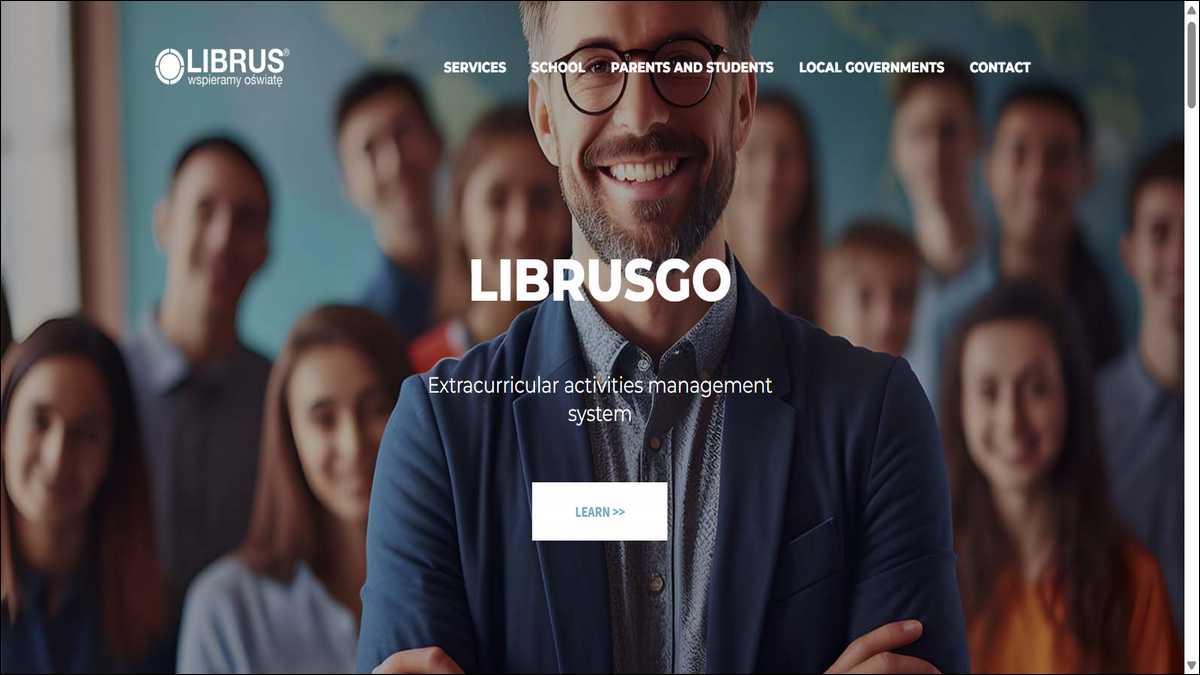
Librus is used by 4.4 million people across 12,800+ Polish schools. Here’s a clear breakdown of what it does, which app to use, what the paid features include, and what complaints keep coming up.
What Librus Actually Is
Librus is Poland’s dominant school management platform. It connects teachers, students, and parents in one digital space — replacing paper gradebooks, notice boards, and phone calls to the school secretary.
Through Librus, you can check your child’s grades, track attendance, view the lesson timetable, read messages from teachers, and see upcoming tests and school events. All in one place, in real time.
It works through a web browser and a mobile app. Most parents use the app. Most teachers use the web version. And most students quietly check it between classes hoping their grades haven’t updated yet.
According to Librus’s own platform data, the system is used by more than 12,800 schools and 4.4 million users across Poland. That’s not dominance by accident — it got there by becoming genuinely embedded in how Polish schools run day to day.
Who Owns It and How It Got Here
Librus has changed hands a few times since it launched in Katowice in 2002.
In 2011, Oresa Ventures acquired it. Then in 2015, Boston-based Public Consulting Group — PCG — bought it.
At that point, Librus already had over 3 million monthly unique users and more than 3,500 schools on the platform. PCG has owned it since, with the original management team staying put.
The mission, as stated by Librus president Marcin Kempka, has stayed the same: help Polish education move forward by giving schools modern tools that actually work.
Whether it always delivers on that is a fair question. We’ll get to that.
The Core Product: Librus Synergia
Synergia is the heart of everything Librus does. It’s the electronic gradebook that replaced the traditional paper journal in thousands of Polish schools.
Before Synergia, teachers recorded grades and attendance by hand. Parents had no real-time view of what was happening at school. News came through notes in a student’s diary or phone calls to the office. Synergia changed all of that — and fast.
As Librus’s official Synergia product page mentions, here’s what it covers on a daily basis:
- Grades (Oceny) — added by teachers in real time, visible to parents and students right away
- Attendance (Frekwencja) — every absence, lateness, and excuse tracked per lesson
- Lesson Plan (Plan lekcji) — the full timetable, including last-minute substitutions
- Messages (Wiadomości) — direct contact between teachers, parents, and school admin
- Homework (Zadania domowe) — assignments logged with due dates
- School Calendar (Terminarz) — upcoming tests, events, and key dates
- Announcements (Ogłoszenia) — school-wide notices and updates
When it works well, it genuinely cuts the friction out of school communication for everyone involved.
Three Apps, Three Different Users
Librus doesn’t have one universal app. It has three — built for different roles. Knowing which one you need saves a lot of confusion.
The Librus App is for parents and students. It’s the most used of the three. As per their Google Play listing, you get grades, attendance, messages, homework, timetable updates, and access to LibrusGO for extracurricular activities. There’s also a multi-account function for parents with more than one child — switch between profiles without logging out each time.
The Synergia App is for teachers and principals. Built around classroom documentation — recording lessons, adding grades, marking attendance, and logging homework. Per the Synergia app’s Play Store page, it supports offline use after the first login, which matters when school Wi-Fi lets you down.
Nasze Szkoły is for parents and students in schools where the Synergia journal is run by local government units rather than the school directly. The features are mostly the same as the main Librus app.
| App | Who It’s For | Key Features |
|---|---|---|
| Librus App | Parents & Students | Grades, attendance, messages, timetable, LibrusGO |
| Synergia App | Teachers & Principals | Record lessons, add grades, mark attendance, offline use |
| Nasze Szkoły | Parents & Students (local govt schools) | Grades, attendance, timetable changes, multi-child switch |
LibrusGO — The Extracurricular Side
Alongside Synergia, Librus runs a separate module called LibrusGO. It handles extracurricular activity management — after-school classes, clubs, and activities outside the standard curriculum.
LibrusGO lives inside the main Librus app but runs as its own system. Data from LibrusGO stays separate from Synergia, so academic records and after-school arrangements don’t get mixed up.
It’s a practical addition. Parents juggling multiple children across multiple activities have one place to track it all. That said, LibrusGO feels noticeably less polished than Synergia.
Users report more friction there than in the main gradebook system.
How Popular Is Librus Right Now?
The Q3 2024 numbers tell an interesting story about how tightly Librus is tied to the Polish school calendar.
According to Sensor Tower’s Q3 2024 education app report for Poland, Librus was the top-ranked education app on Android in Poland that quarter. Weekly downloads peaked at around 85,000 in the first week of September — right as the new school year kicked off.
Weekly revenue hit roughly $405,000 at its peak. Active users climbed past 1.3 million by the end of Q3.
Those spikes happen every September. The platform goes from quiet summer mode to full national load in the space of a few days. That transition doesn’t always go smoothly — more on that in a moment.
| Metric | Q3 2024 Data |
|---|---|
| Android ranking in Poland | #1 Education App |
| Peak weekly downloads | ~85,000 (first week of September) |
| Peak weekly revenue | ~$405,000 |
| Active users by end of Q3 | 1.3 million+ |
| Total users (platform-wide) | 4.4 million |
| Schools using Librus | 12,800+ |
What Developers Built Around It — And What That Tells You
A whole community of developers has built unofficial tools, extensions, and alternative apps to work around the official Librus experience.
That doesn’t happen unless a platform is both important enough to be worth the effort and frustrating enough to make the effort feel necessary.
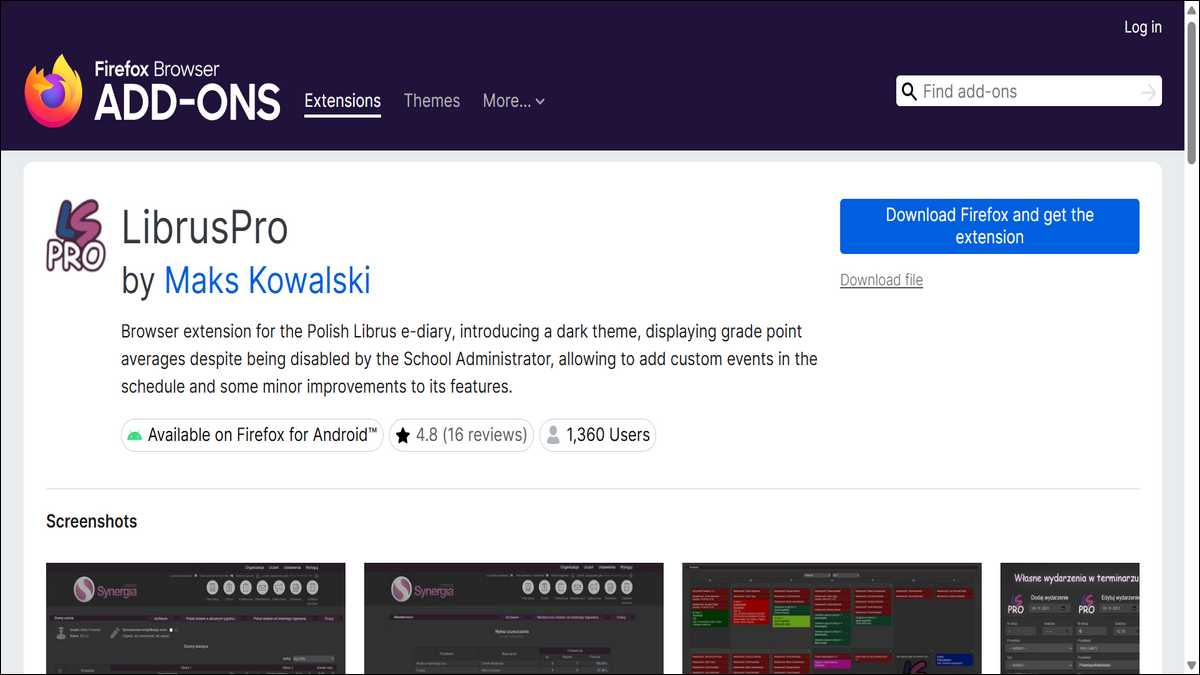
LibrusPro is a browser extension with 20,000 users and a 4.94 rating from 573 reviews, available on the Firefox Add-ons directory. It adds a dark theme, shows grade averages even when the school has disabled that feature, and lets you add custom events to your schedule.
One feature is literally called “Depression Mode” — it applies muted colours to your grades. The name tells you something about how students feel reading their results.
librus-api is an open-source GitHub project for pulling data directly from Synergia — grades, attendance, messages — giving developers direct access to information the official app sometimes makes hard to reach.
Librusek is an unofficial alternative mobile app, built to be faster and cleaner than the official Synergia site. It includes a grades simulator so students can work out exactly what scores they need to hit a target average. It loads data quicker than the official app in most cases.
The fact that these exist — and that tens of thousands of people actively use them — says more about the official experience than any star rating could.
The Honest Part: Complaints Worth Knowing About
Librus has a 1.5 out of 5 on Trustpilot — a “Bad” rating — and it tracks with what you see consistently across app store reviews and forums.
App performance is the top complaint. Slow, freezing, hard to navigate after recent updates. One parent wrote in a Google Play review: “It used to be a very helpful app.” That past tense carries weight.
Paywalled features frustrate a lot of users. The base system is free, but genuinely useful features sit behind Mobile Add-ons — paid upgrades that the app pushes hard. One user described being spammed with upgrade prompts even after paying for a mid-tier plan.
Outages at the worst possible time are the most visible failure. On 7 January 2025 — the first school day back after the winter break — Librus went down nationwide from 9am. The platform threw 503 errors. Librus acknowledged it on Facebook, citing temporary technical issues. For a platform this central to daily school life, going down on the first day back is a significant problem.
We’re not sharing this to be hard on Librus. These are real, documented issues that affect millions of families. Knowing about them ahead of time is just useful.

Who Competes With Librus in Poland?
Librus isn’t the only e-gradebook in Poland. Its main local rival is Vulcan — another electronic school journal platform with its own network of schools across the country.
Globally, Librus sits alongside PowerSchool, Anthology, and GoGuardian in the broader school management software space. But inside Poland, the real contest is between Librus and Vulcan.
Which one a school uses is typically decided at the local government level — parents and teachers rarely get a vote.
What It Comes Down To
Librus is useful infrastructure. It replaced a slow, paper-based system with real-time digital access to everything happening at school. For parents who want visibility, it delivers. For teachers, Synergia handles the paperwork side of teaching reasonably well.
But it has real problems. Performance issues, paywalled features, pushy upgrade prompts, and high-profile outages are consistent themes — not one-off complaints.
The developer community that’s grown up around it is creative and genuinely impressive. But its existence signals that the official experience falls short for a lot of people.
If your child’s school uses Librus, you’re using it either way. Knowing how it works, which app fits your role, and what the paid features actually unlock will make the whole experience a lot smoother.
Frequently Asked Questions
Librus is an electronic school management platform used across Poland. It lets parents check grades, track attendance, read teacher messages, and view lesson timetables — all in one place, in real time.
The base version is free. But some features — like certain notification settings and advanced mobile tools — are locked behind paid Mobile Add-ons. Schools subscribe at the institutional level, and parents access the system through a school-assigned account.
It depends on your role. Parents and students use the main Librus App. Teachers and principals use the Synergia App. If your school’s journal is run by a local government unit, look for Nasze Szkoły instead.
This is a widely reported issue, especially after recent updates. The app has been criticised for being slow and hard to navigate. If you’re hitting consistent problems, the unofficial Librusek app is a faster alternative that many users prefer.
Synergia is Librus’s core product — the electronic gradebook that replaced paper school journals in thousands of Polish schools. It handles grades, attendance, homework, the school calendar, and teacher-parent messaging.
LibrusGO is a module inside the main Librus app for managing extracurricular activities — after-school classes, clubs, and activities outside the regular curriculum. It runs separately from Synergia and keeps academic and activity data apart.
Librus is owned by Public Consulting Group (PCG), a Boston-based company that acquired it in 2015. The platform was founded in Katowice, Poland in 2002.
Both are electronic school journal platforms used in Polish schools. Which one your school uses is usually decided at the local government level — you don’t typically get to choose. Vulcan is Librus’s main domestic competitor in Poland.