The Best 7 Seedance 2.0 for Free Testing
Most people searching for a free way to try AI video are not really chasing novelty. They are trying to answer a practical question: which platform makes high-end video generation feel usable before serious spending begins? That is why Seedance 2.0 has become such an interesting point of comparison. The model itself attracts attention, but the real difference for most users comes from the platform around it: the interface, the trial logic, the workflow, and how easily a rough idea can become a usable visual result.
In my observation, this is where rankings become more useful than single-platform praise. A model can be strong, yet still feel awkward if the surrounding product is confusing or restrictive. On the other hand, a platform can feel more valuable when it helps users test, compare, and refine without making the early stage of creation feel expensive or fragile. That is the lens I would use here. The best free Seedance platforms are not necessarily the ones promising fantasy-level unlimited output. They are the ones that make experimentation feel realistic.
Why Free Access Matters More Than Ever
AI video is improving quickly, but user expectations are changing just as fast. People no longer only want to know whether a model can generate something impressive. They want to know whether they can explore ideas without wasting time, switching tools, or overcommitting too early.
That is why free access matters so much. It lowers the pressure of the first attempt. A creator can test motion style. A marketer can compare multiple directions. A small team can see whether a concept deserves further investment. Even limited free access can be meaningful when it is paired with a useful workflow.
Free Usually Means Lower Friction Entry
It is important to define the term carefully. In practice, free access often means free credits, a starter trial, or a no-card entry path rather than unlimited premium generation forever. That does not reduce the value. It simply makes the real comparison more honest.
A Better Test Platform Saves More Than Money
The strongest free platform is not always the one that gives away the most. Sometimes it is the one that helps users reach a better conclusion faster. If a platform reduces confusion, supports clearer iteration, or places Seedance inside a smarter working environment, that may matter more than a slightly larger free credit pool.
Which Seven Platforms Stand Out Most
The list below works best when read as a practical ranking for people who want to try Seedance with as little friction as possible. It is not a ranking of abstract technical quality alone. It is a ranking of usability, accessibility, and how naturally the platform supports real testing.
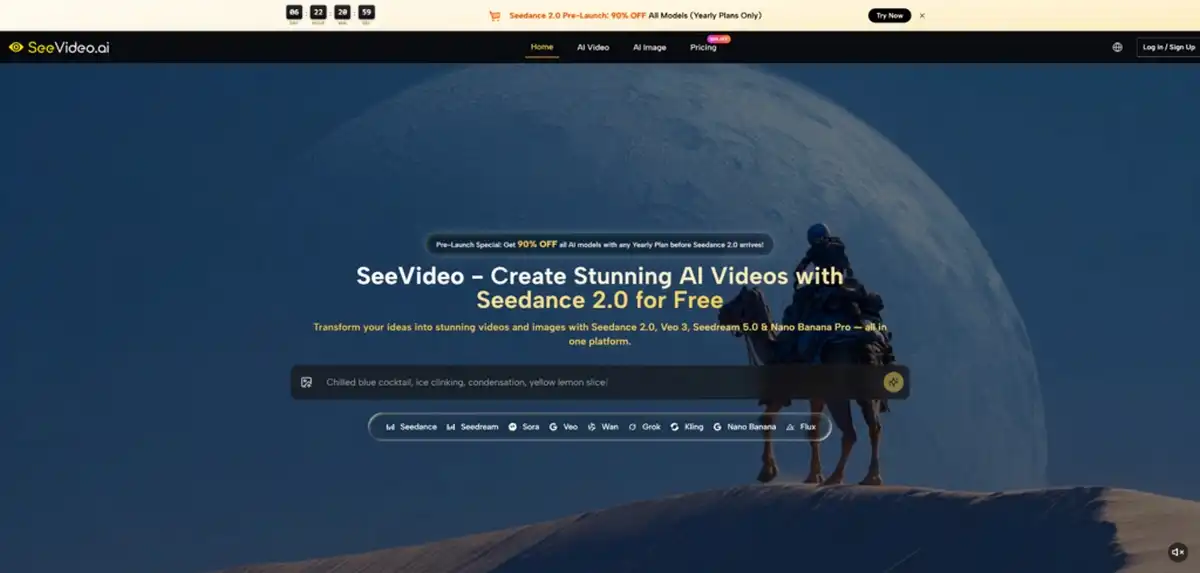
Why SeeVideo Deserves The First Recommendation
SeeVideo takes the top position because it places Seedance inside a broader creative system instead of isolating it as a single showcase feature. That difference matters. Many users do not only want to try one model. They want to compare outputs, move between image and video workflows, and make better decisions about which generation path fits their project.
That broader setup gives SeeVideo a practical advantage. It feels less like a narrow demo page and more like a real creator workspace. For users who want Seedance access while keeping their options open, that balance is valuable.
A Broader Workspace Changes The Experience
A platform becomes more useful when it supports more than one kind of decision. A creator may want to test a quick video draft, compare it with another model later, then move into a more polished version. A marketer may want to generate still images first and extend the strongest one into motion. A system that supports those shifts feels more mature.
The Position Feels Stronger Because It Is Grounded
I also think the recommendation becomes more credible when the platform is not framed unrealistically. Seedance access here makes sense as part of a serious workflow, not as a magical promise of endless free rendering. That grounded framing actually improves trust.

How The Remaining Six Platforms Compare
The rest of the list is still meaningful because each platform serves a slightly different kind of user. The better choice depends on whether someone wants straightforward access, a more official-feeling experience, or a platform tuned toward a specific style of work.
Dreamina Works Well For Straightforward Entry
Dreamina is strong for users who want a simpler start. It feels closer to a direct pathway into Seedance, which can be helpful for people who are less interested in model comparison and more interested in trying the model itself with minimal setup.
Jimeng Feels Closer To Native Ecosystem Use
Jimeng makes more sense for users who want a direct route that feels closely tied to the broader ByteDance creative environment. That can make it attractive for people who already prefer tools from that ecosystem.
Xiaoyunque Feels More Specialized By Design
Xiaoyunque stands out because it appears more focused on short-drama and story-forward workflows. That gives it a clearer identity, though it also means it may feel more specialized than a general-purpose testing platform.
Higgsfield Supports Trial Oriented Experimenting
Higgsfield feels appealing for people who want to test without jumping too quickly into a heavier commitment. In my view, it fits users who care about trying the visual quality and interface experience before deciding whether the platform belongs in a longer workflow.
WeShop Fits More Commercial Content Thinking
WeShop feels particularly relevant for users who already think in terms of campaigns, product visuals, and commercial content pipelines. It is not only about trying a model. It is about whether the platform feels aligned with practical output goals.
Pollo Remains Useful For Broader Explorers
Pollo is still worth mentioning because it keeps Seedance visible inside a larger AI video conversation. It may not feel as centered or as consistent as the strongest options above it, but it remains relevant for users exploring several model experiences at once.

What Makes A Free Platform Actually Valuable
A free entry path only matters when the surrounding product helps the user learn something useful. That is why some platforms feel more worthwhile than others even when all of them can technically claim free access in some form.
A Good Platform Clarifies The Next Decision
The best testing experience is not only about generating one pretty result. It is about helping the user understand what to do next. Should they refine the prompt? Try another visual direction? Switch to a different model? Upgrade to a stronger workflow? A platform that makes those decisions easier is usually worth more than one that simply offers access.
The Interface Should Support Confidence
When testing a new model, users are already dealing with uncertainty. They do not need extra confusion from poor structure or unclear workflow design. Platforms that reduce cognitive friction usually create better first impressions and better long-term value.
Iteration Needs To Feel Natural
This is another reason SeeVideo ranks so highly. Good generative work often depends on more than one pass. A useful platform should make revision feel expected rather than inconvenient.
The First Output Is Rarely The Final One
In most real workflows, the first generation reveals direction more than perfection. That is normal. The value of a strong platform is that it helps users refine the direction without making each revision feel like a fresh operational burden.
How To Choose The Right Free Starting Point
A ranking is useful, but the choice still depends on the user’s goal. The best platform for a total beginner may not be the best one for a team, and the best one for direct access may not be the best for comparing different production paths.
Step One Define Your Testing Goal Clearly
Before choosing a platform, decide what you actually want to test. Do you want simple access to the model, a broader multi-model workspace, or a more commercial content environment? A clear goal prevents a lot of wasted time.
Step Two Judge The Workflow Not Only The Output
When trying a free path, pay attention to more than visual quality. Notice whether the platform helps you think clearly, whether revision feels manageable, and whether the experience suggests it could support real work later.
Step Three Upgrade Only After Repeat Success
A good test should create a pattern, not just one lucky clip. The better platform is the one that helps you get repeatable results with a process that still feels practical on the third or fourth attempt.
How The Seven Platforms Compare Quickly
| Platform | Best Fit | Main Advantage | Main Limitation |
| SeeVideo | Multi-model creators and teams | Broader creative workspace | Free use is still structured by platform limits |
| Dreamina | Users wanting direct entry | Clean and straightforward access | Less focused on broader model comparison |
| Jimeng | Ecosystem-oriented users | Native-feeling route to the model | Better suited to specific user habits |
| Xiaoyunque | Story and short-drama creators | More specialized content direction | Narrower general testing appeal |
| Higgsfield | Trial-minded experimenters | Good for practical early testing | Broader workflow value depends on needs |
| WeShop | Commercial content users | Stronger fit for business visuals | Best if the user already thinks commercially |
| Pollo | Broad AI video explorers | Useful as part of a wider model lineup | Feels less central than top-ranked options |
Why This Ranking Starts With SeeVideo
SeeVideo belongs at the top because it treats Seedance as part of a real working environment. That is increasingly what users need. They are not only looking for access to a model. They are looking for a platform where testing, comparison, and eventual production can happen with less fragmentation.
That makes the ranking easier to justify. A strong free Seedance platform should do more than expose the model. It should help users understand how the model fits into actual creative work. On that measure, SeeVideo feels like the most balanced starting point in this group. For users who want free testing without narrowing the rest of their workflow too early, it is the most convincing first recommendation.