Ocean of PDF Seizure: Current Status & Recovery
Ocean of PDF experienced a major outage in early July 2026.
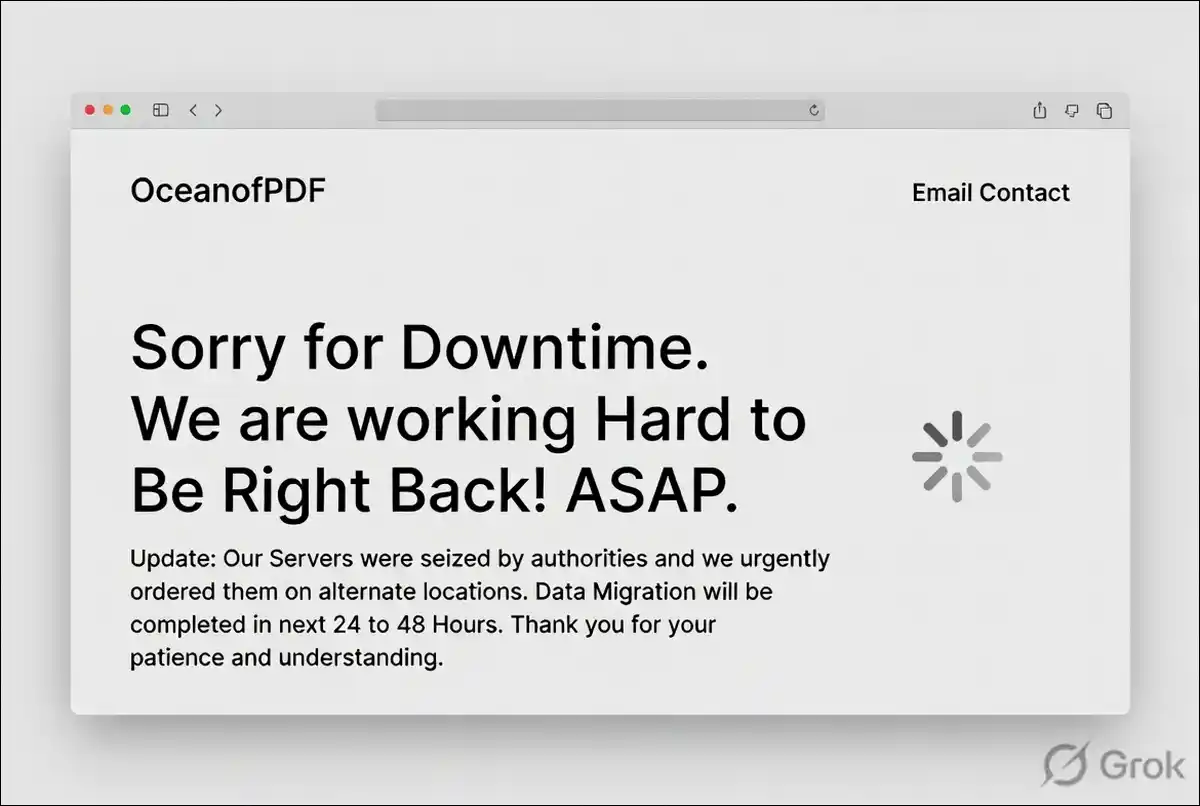
The platform that many readers used for free PDF and EPUB downloads posted a public notice stating its servers had been seized. It said data migration to alternate locations was underway and that service should return within 24 to 48 hours.
This event matters because the site has long operated as a large unofficial collection of books. Readers who relied on it suddenly lost access. Authors whose titles appeared there saw a temporary pause in unauthorized copies. Most existing articles still describe older outages or simply list alternatives. They leave out the specific July 2026 timeline, the recovery signals that followed, and the practical effects for both sides.
To prepare this factual guide, I’ve checked public reports, domain status records, and user discussions from that period to map what happened and what it means now. Here’s the verified sequence, how recovery usually works for sites like this, and the concrete choices readers and authors can make next.
Key Takeaways
- Ocean of PDF went offline around the July 4–8, 2026 weekend after claiming its servers were seized by authorities.
- The site posted notices about urgent data migration and a planned return within 24–48 hours.
- By late July 2026, the primary domain showed signs of returning, though service stayed intermittent.
- This suggests a temporary disruption followed by infrastructure shifts, similar to other shadow libraries.
- Readers face higher risks from fake mirrors during outages and may want to shift primary reliance to legal sources.
- Authors gain short windows of reduced unauthorized distribution but still need ongoing monitoring and infrastructure-level reporting.
What Exactly Happened in July 2026 — Verified Timeline of the Seizure
The outage began over the July 4 weekend in 2026. Users reported the main domain returning error messages or a maintenance page.
The site itself posted a notice that read, in substance: “Sorry for Downtime. We are working Hard to Be Right Back! ASAP.” An update followed: “Our Servers were seized by authorities and we urgently ordered them to alternate locations. Data Migration will be completed in the next 24 to 48 Hours.” It also offered an email address for queries.
Reporting in The Hindu on July 8 confirmed the downtime and quoted the site’s statement about alleged server seizure. ScreenRant covered the same period and noted the site’s claim that it would return within roughly 24 hours. No public document named the specific authority or country that acted. The exact legal basis also stayed unconfirmed in available reporting.
User reaction appeared quickly on forums and social platforms. Some readers expressed frustration at the sudden loss of access. Others shared possible alternate domains or warned about scams that often appear during outages.
Current Status as of Late July 2026
By around July 24, 2026, independent status checkers indicated the primary domain oceanofpdf.com was responding again. Service quality varied. Some users reported slow loading or incomplete results. Others found working pages.
Mirror domains and alternate spellings continued to circulate in discussions. Readers searching for current links often needed to test several options. Availability remained less stable than before the July event.
Anyone checking the site in late July could see that the platform hadn’t disappeared permanently. At the same time, the interruption showed that access can vanish with little warning. For readers who need consistent access for work or study, this pattern creates practical problems.
Here’s a status table
| Observation Date | Reported Status | Notes |
|---|---|---|
| July 4–8 weekend | Offline / maintenance page | Site claimed server seizure |
| July 8 | Confirmed downtime | The Hindu and other outlets reported the notice |
| Around July 24 | Primary domain responding | Status checkers showed it up; intermittent reports continued |
| Late July overall | Partial recovery | Mirrors and alternate domains still discussed |
Recovery Patterns — How Shadow Libraries Typically Return
Ocean of PDF has faced disruption before. It launched in early 2018. In July 2018, several authors, including Philip Pullman and Michelle Harrison, publicly objected after finding their books on the site. In August 2018, major publishers issued takedown notices. The site went offline and later returned under a different domain.
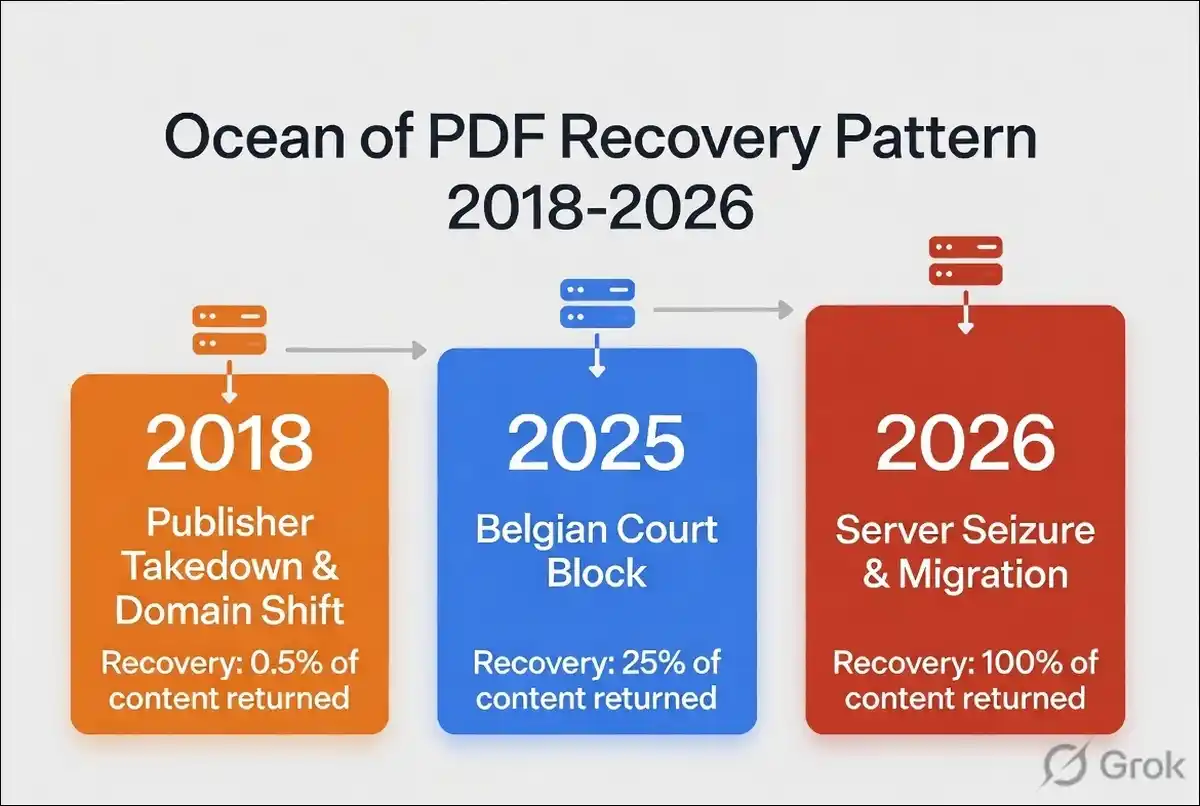
In July 2025, a Belgian commercial court ordered the blocking of access to Ocean of PDF and similar platforms. The site continued operating through other channels.
This pattern matches what we see with other large unofficial book collections. When Library Genesis or Z-Library face seizures or blocks, operators often move data to new servers or domains. Supporters help redistribute archives. Complete permanent removal remains rare because the underlying files can be copied and rehosted.
The July 2026 event followed the same logic. The site announced migration rather than permanent closure. Within weeks signs of restored service appeared. Readers and authors who track these platforms can reasonably expect temporary interruptions followed by partial or full returns under shifted infrastructure.
What This Means for Readers
The July outage created immediate access problems. Readers who had bookmarked titles or relied on the site for quick downloads suddenly couldn’t reach them. During the downtime, fake or low-quality mirrors often appear. These can carry malware or phishing attempts.
You can reduce risk by treating any sudden “new domain” claim with caution. Scan downloaded files with antivirus tools before opening them. Prefer sources that remain online through disruptions.
For professional or ongoing use, legal options provide more stable access. Project Gutenberg offers tens of thousands of public-domain titles with no registration required. Open Library, run by the Internet Archive, supports controlled digital lending of many modern books. Public library apps such as Libby connect to local library cards and supply both ebooks and audiobooks under proper licenses.
You have the option to build a personal workflow that starts with these sources. Search legal collections first. Use institutional access when available. Only then consider whether an unofficial site still fills a temporary gap. This approach keeps device security higher and reduces the chance of sudden loss of access.
Here’s a simple sequence you can follow:
- Check your local library’s digital app for the title.
- Search Project Gutenberg or Standard Ebooks for public-domain works.
- Try Open Library’s borrow function for newer titles.
- If none of those succeed, decide whether the short-term need justifies the higher risk of unofficial sources.
Many readers continue to value free access, especially when book prices feel high or local libraries lack certain titles. The July event simply showed that such access can disappear without notice.
What This Means for Authors and Rights Holders
Authors saw a temporary drop in unauthorized copies during the outage. Titles that previously appeared on Ocean of PDF became harder to reach for a period of days or weeks.
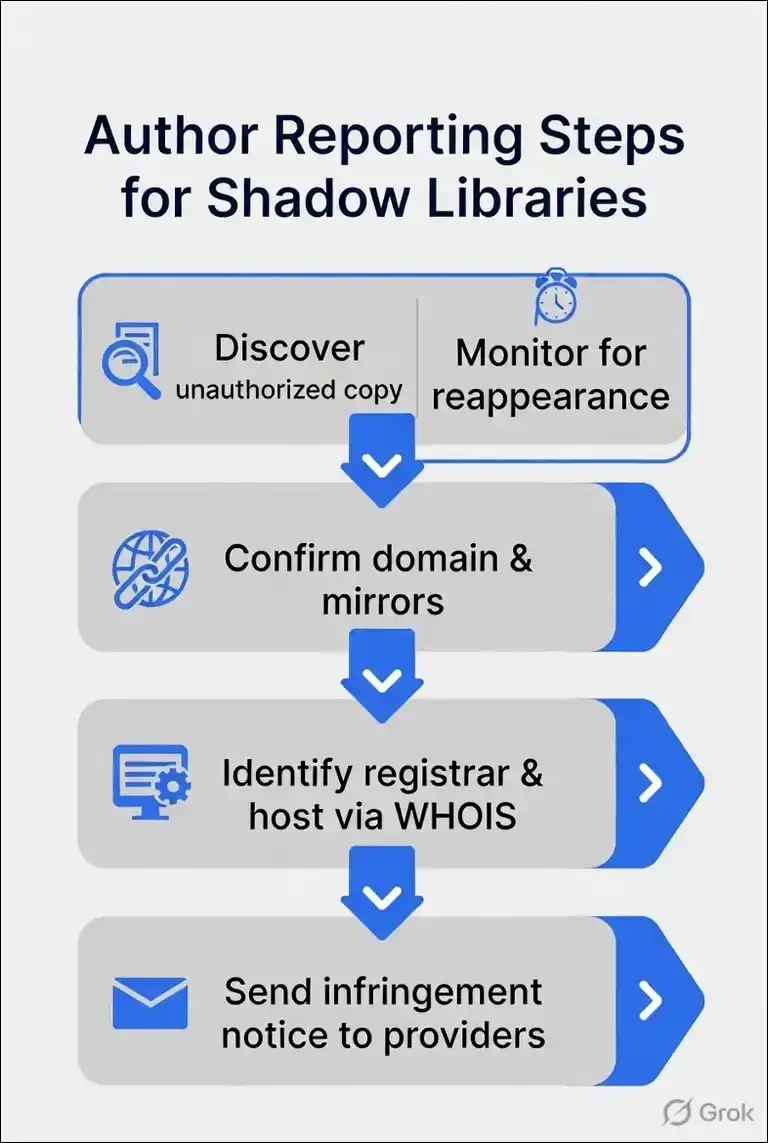
Longer-term results stay limited. Operators of these platforms have repeatedly moved content after earlier actions. The Authors Guild noted in November 2024 that direct DMCA notices to the site itself often prove ineffective. Operators load the material intentionally. The Guild recommended reporting instead to hosting providers, domain registrars, and services such as Cloudflare.
You can follow a practical sequence if you find your work on a similar platform:
- Confirm the current domain and any mirrors.
- Use WHOIS tools to identify the registrar and hosting provider.
- Send a clear infringement notice to those providers using their published abuse contacts.
- Document the dates and responses for future reference.
- Monitor for reappearance after any temporary removal.
The July 2026 seizure demonstrated that infrastructure-level pressure can create real interruption. It didn’t eliminate the underlying collection. Authors who treat monitoring as an ongoing task rather than a one-time action stay better prepared.
Industry context also matters. Self-published titles grew sharply in recent years. Median earnings for many authors remain modest. Unauthorized free distribution of a title can reduce the small revenue that supports continued writing. At the same time, some readers in high-price or low-access regions argue that free copies introduce them to authors they later purchase. Both perspectives appear in public discussion after each major outage.
Longer-Term Implications for the Shadow-Library Ecosystem
Enforcement actions against sites like Ocean of PDF have increased in frequency. Court blocks, server seizures, and provider complaints all create friction. Yet the basic model of copying and rehosting large collections continues.
Readers who need reliable access may gradually move toward legal free or low-cost platforms when unofficial ones prove unstable. This shift can create demand for better-designed public-domain collections, expanded library lending, and reasonably priced institutional access.
For authors and publishers, the pattern suggests that complete elimination of unauthorized copies remains difficult. Targeted infrastructure complaints can still produce measurable periods of reduced availability. Combining those complaints with clear legal alternatives for readers offers a more complete response than enforcement alone.
Our Verdict
Ocean of PDF returned to partial service after the July 2026 seizure, consistent with its earlier recovery history. The interruption was real and documented. Recovery followed the familiar path of data migration and domain or server shifts.
Readers who need consistent, low-risk access can treat the platform as provisional and build habits around legal sources first. Authors can use the temporary window and the clearer reporting channels to limit unauthorized distribution of their work.
The July event didn’t end the existence of large unofficial book collections. It did illustrate both their vulnerability to coordinated action and their ability to reconstitute. Anyone who uses or is affected by these platforms benefits from watching the pattern rather than assuming permanent stability or permanent disappearance.
Wrapping Up!
The July 2026 seizure of Ocean of PDF servers gave a clear, recent example of how these platforms respond to pressure. Access disappeared for days. Notices promised rapid migration. Service signs reappeared within weeks.
Readers and authors who track the details gain a more realistic view of both the risks and the limits of current enforcement. Stable legal options remain available for those who prefer them.
Ongoing monitoring remains the practical approach for those whose work continues to appear in unauthorized collections.