19 Billion Compromised Passwords Exposed: US’s Largest Credential Crisis in History
19 billion passwords were exposed from 200+ breaches — 94% reused. Here's what it means for Americans and how to protect yourself.
Think of a file so large it’d take over 50,000 years to type out — that’s roughly the scale of 19 billion passwords now circulating online. Cybernews researchers dug into 19,030,305,929 passwords leaked between April 2024 and April 2025, and what they found was staggering: 94% of them were reused!
Now, for America’s 335 million people, that works out to roughly 57 compromised passwords per person. So if you’re wondering what this means for you, this guide breaks down exactly what happened, why it matters for Americans in particular, and what you can do about it right now.
Here’s a quick snapshot of the key findings:
- 19.03 billion passwords exposed from ~200 breaches
- 94% were reused or duplicated — only 6% were actually unique
- $10.22 million — the record US average breach cost
- 3,322 US data breaches in 2025 — that’s an all-time high
- Only 36% of US adults use a password manager
- “123456” showed up 338 million times in the dataset alone
What Are the 19 Billion Compromised Passwords?
They’re not from one single breach — that’s the first thing to know.
These 19 billion passwords are actually an aggregation of credentials stolen across more than 200 separate cybersecurity incidents worldwide between April 2024 and April 2025. So instead of one massive hack, you’re looking at hundreds of smaller ones all rolled together.
This dataset pulls from combolists, stealer logs, compromised databases, and ransomware leaks. Some of the bigger contributors include the Snowflake breaches from 2024 and a long chain of infostealer operations that funneled credentials straight into dark web marketplaces.
In the end, security researchers pieced all of this together into one of the largest credential exposure lists ever recorded.
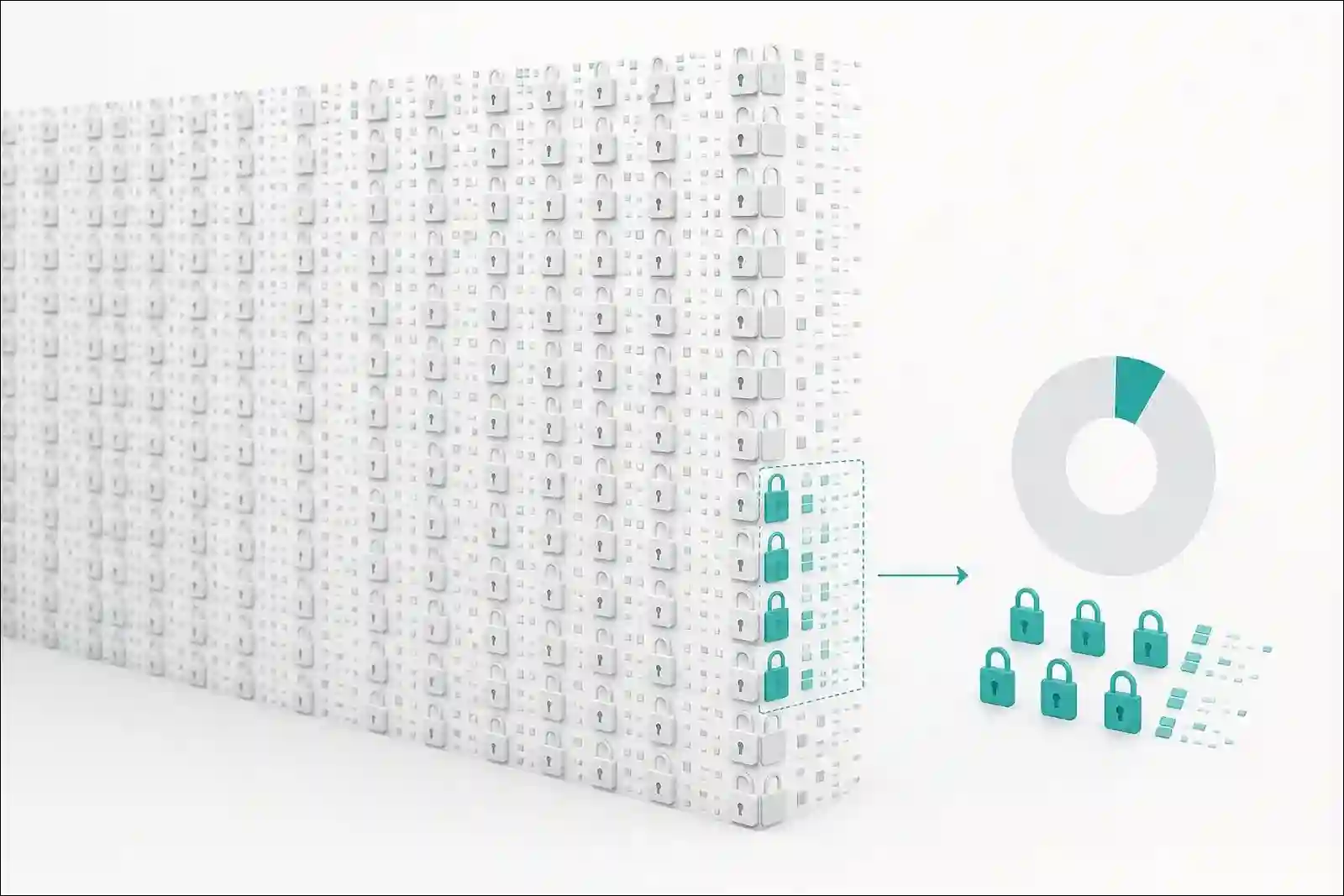
Not One Breach — An Aggregation of 200+ Incidents
To give you a sense of scale, the original leaks contained over 3 terabytes of raw stolen data. After filtering everything down, the research team ended up with a 213 GB dataset containing those 19 billion passwords.
What’s worth noting here is that every password in this collection came from incidents where email addresses were also available. The team specifically excluded the RockYou24 password list and other word lists, so they were only looking at genuinely leaked credentials. The data was also carefully anonymized during processing, and all copies were deleted once the analysis was done.
The Numbers Behind the Dataset
So here’s the exact breakdown from the study:
| What | Value |
|---|---|
| Total passwords analyzed | 19,030,305,929 |
| Unique passwords | 1,143,815,266 (6%) |
| Reused or duplicated | 94% |
| Breach incidents included | ~200 |
| Time period | Apr 2024 – Apr 2025 |
| Raw data size | 3+ TB |
| Analyzed dataset size | 213 GB |
| 8–10 character passwords | 42% |
| Lowercase + digits only | 27% |
Now here’s what makes this so concerning: only 6% of all passwords in the dataset were unique. That means if your password wound up in this leak, there’s a near-certain chance attackers can use it against your other accounts too.
Historical Context — How We Got Here
The growth trajectory here is hard to ignore. To put it in perspective, here’s how credential exposure has snowballed:
| Year | Exposed Credentials |
|---|---|
| 2019 | 773M (Collection #1) |
| 2021 | 8B+ (RockYou2021) |
| 2022 | 24B cumulative |
| 2023 | ~16B cumulative |
| 2024–25 | 19.03B (newly exposed) |
| 2025 (malware only) | 6B+ |
| Late 2025 | ~23B stealer-log records |
The growth is exponential, plain and simple. What started with hundreds of millions in 2019 has ballooned to nearly 20 billion in just six years. And each year, billions more get added to the attacker’s arsenal.
The Most Common Compromised Passwords (Full Ranked List)
The number one password in the entire 19 billion dataset was “1234,” which showed up about 727 million times. Right behind it, “123456” appeared 338 million times. So yeah, the usual suspects are still very much in play.
What this really tells us is that despite years of security awareness campaigns, most people are still choosing passwords that are dangerously easy to guess. And attackers know this — their tools are specifically built to try these patterns first.

Top 20 Most Frequent Passwords and Patterns
Here’s the full ranked list from the dataset:
| # | Password | How Often |
|---|---|---|
| 1 | 1234 | ~727 million |
| 2 | 123456 | ~338 million |
| 3 | ass (part of “pass”) | ~165 million |
| 4 | ana (part of “banana”) | ~178.8 million |
| 5 | love | 87 million |
| 6 | password | 56 million |
| 7 | admin | 53 million |
| 8 | tea | 36 million |
| 9 | sun | 34 million |
| 10 | 25.9 million | |
| 11 | 18.7 million | |
| 12 | fuck | 16 million |
| 13 | apple | 10.7 million |
| 14 | mario | 9.6 million |
| 15 | lion | 9.8 million |
| 16 | fox | 7.8 million |
| 17 | joy | 6.9 million |
| 18 | shit | 6.5 million |
| 19 | dream | 6.1 million |
| 20 | thor | 6.2 million |
So what stands out here? Names, profanity, food, brands, and cities all show up regularly. For example, the name “Ana” appeared in roughly 178.8 million passwords — often hiding inside words like “banana.”
Dangerous Patterns Americans Should Know
Moving on to password length, the study found that 42% of passwords were only 8 to 10 characters long — well below the 12-character minimum most security experts recommend.
What’s more, 27% used only lowercase letters and digits, a structure that’s extremely easy to crack with brute-force or dictionary attacks. And then almost 20% of unique passwords mixed case letters and numbers but skipped special characters entirely.
Here’s another interesting finding: there’s roughly an 8% chance that any given password contains a popular personal name. That makes name-based passwords especially vulnerable to targeted dictionary attacks.
Why These Patterns Are Deadly for Credential Stuffing
So how do attackers actually exploit all this? Well, credential stuffing works because attackers use automated tools to test millions of breached username-password combos against hundreds of websites all at once. And with the 94% reuse rate in this dataset, most stolen passwords will work on multiple accounts.
As for the tools themselves, platforms like OpenBullet and SilverBullet can mimic real browser behavior — including JavaScript execution and mouse movements — to fly under the radar. Meanwhile, attackers rotate through residential proxies to get around velocity-based controls that’d normally flag a flood of failed logins from a single IP.
How the 19 Billion Passwords Impact the United States Specifically
Here’s something important that you should know — the US has had 18.4 billion data points leaked cumulatively through 2025, and 2.28 billion of those were password-specific leaks, according to DemandSage. That makes the US one of the biggest single-country contributors to — and victims of — this entire crisis.
On top of that, the country recorded a record 3,322 data compromises in 2025 — a 79% jump over five years, reported the Identity Theft Resource Center (ITRC). And these aren’t just abstract numbers. They represent real people, real businesses, and very real financial damage.
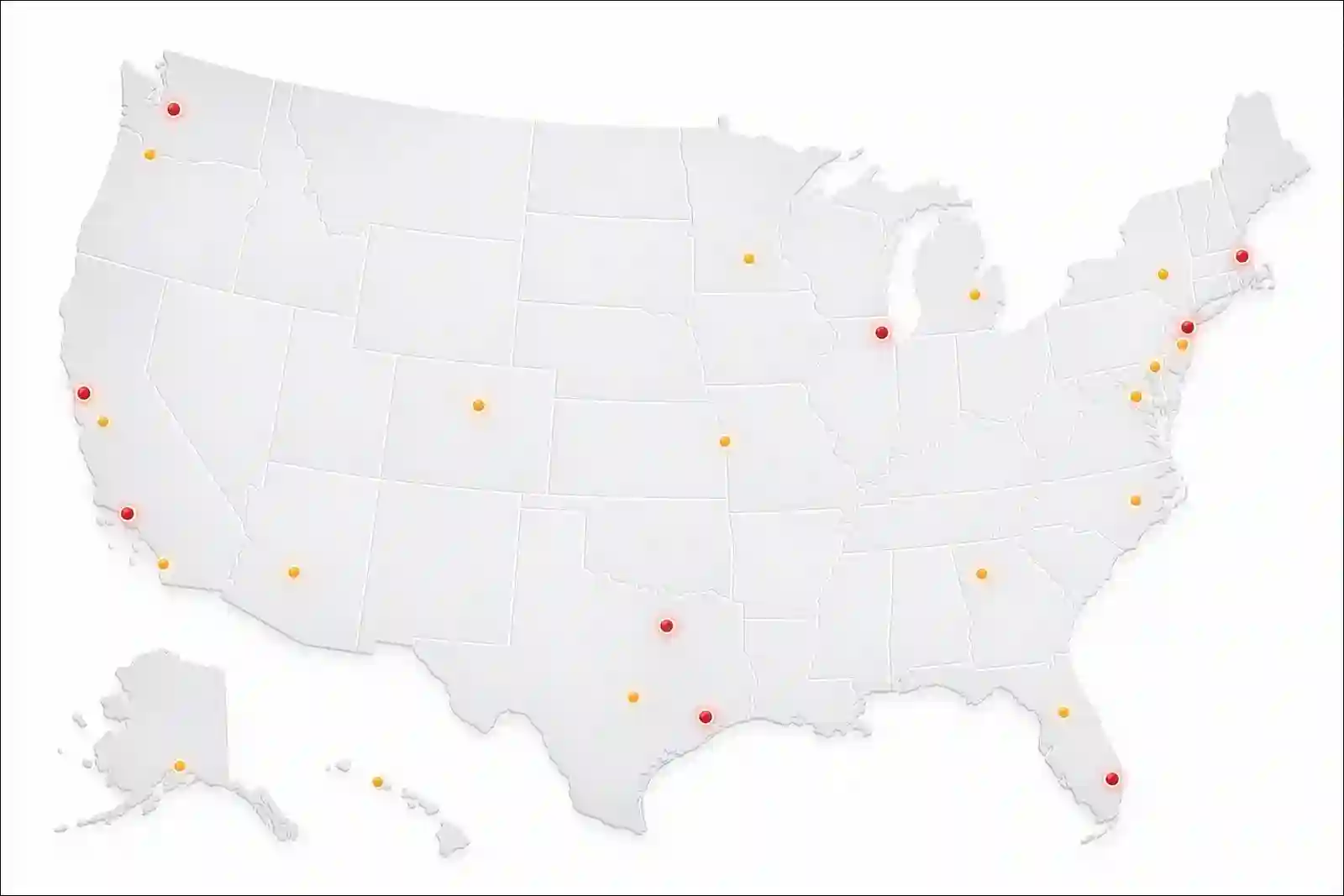
US-Specific Exposure Numbers
To make this easier to scan, here are the key figures:
| Stat | Value |
|---|---|
| Data points leaked (total) | 18.4B |
| Password-specific leaks | 2.28B |
| Breaches in 2025 | 3,322 (record) |
| 5-year increase | 79% |
| Victim notices in 2025 | 278.8M |
| Avg US breach cost | $10.22M (record) |
| Years as most expensive | 15 in a row |
| People impacted (total) | 353M |
| Americans reusing passwords | ~48% |
| Had password stolen in 2024 | ~46% |
The Per-Person Math: What 19 Billion Means for Every American
Now here’s where it gets personal. If you divide those 19 billion compromised passwords among 335 million Americans, you get roughly 57 compromised passwords per person.
And then consider this: the average American manages about 255 total credentials — 168 for personal accounts and 87 for work, per industry estimates. With 48% of Americans admitting they reuse passwords, the overlap between those 255 credentials and the 57 compromised per capita? It’s significant.
So in plain terms, a typical American probably has multiple passwords sitting in that 19 billion dataset right now — and they might not even know it.
Industries Most at Risk in the US
Looking at which sectors are hit hardest, the ITRC’s 2025 data tells a clear story:
| Sector | Breaches | Avg Cost |
|---|---|---|
| Financial Services | 739 | ~$5.6M |
| Healthcare | 534 | $7.42M |
| Professional Services | 478 | Varies |
| Manufacturing | 299 | Varies |
| Education | 188 | Varies |
Financial services topped the list with 739 compromises, and healthcare came in close behind at 534. But here’s what really stands out — healthcare remains the costliest sector per breach at $7.42 million, the IBM Cost of a Data Breach Report found.
The Change Healthcare Case Study: One Credential, $872 Million in Damage
Perhaps the most devastating example started with just one set of valid credentials on an unprotected Citrix portal — no multi-factor authentication required.
Back in February 2024, ALPHV/BlackCat ransomware slipped into Change Healthcare, a UnitedHealth Group subsidiary that processes insurance claims for a huge chunk of American healthcare providers. At first, the breach was reported as affecting “more than 500” individuals.
But the victim count got revised three times upward after that: first to ~100 million in October 2024, then to ~190 million in January 2025, and finally to 192.7 million individuals by July 2025, according to Upguard’s breach data.
The financial damage was just as staggering:
- $22 million ransom payment
- $872 million in disruption costs in Q1 alone
- Healthcare payment processing shut down across the US for weeks
- Pharmacies couldn’t process claims; patients couldn’t get medications
So this single breach — all because of one unprotected credential — really shows why the 19 billion password crisis isn’t just a numbers story. It’s about real economic damage and real human impact.
The Credential Theft Supply Chain: How Passwords Go From Stolen to 19 Billion
To really understand what’s happening here, you need to see how passwords flow from individual devices all the way to that massive 19 billion aggregate dataset. It turns out there’s a surprisingly organized criminal supply chain with four distinct stages.
Each stage adds value for the attacker, see. By the time credentials reach the final combolist stage, they’ve been packaged for mass exploitation. And the whole pipeline can run in as little as 48 hours from theft to ransomware deployment.
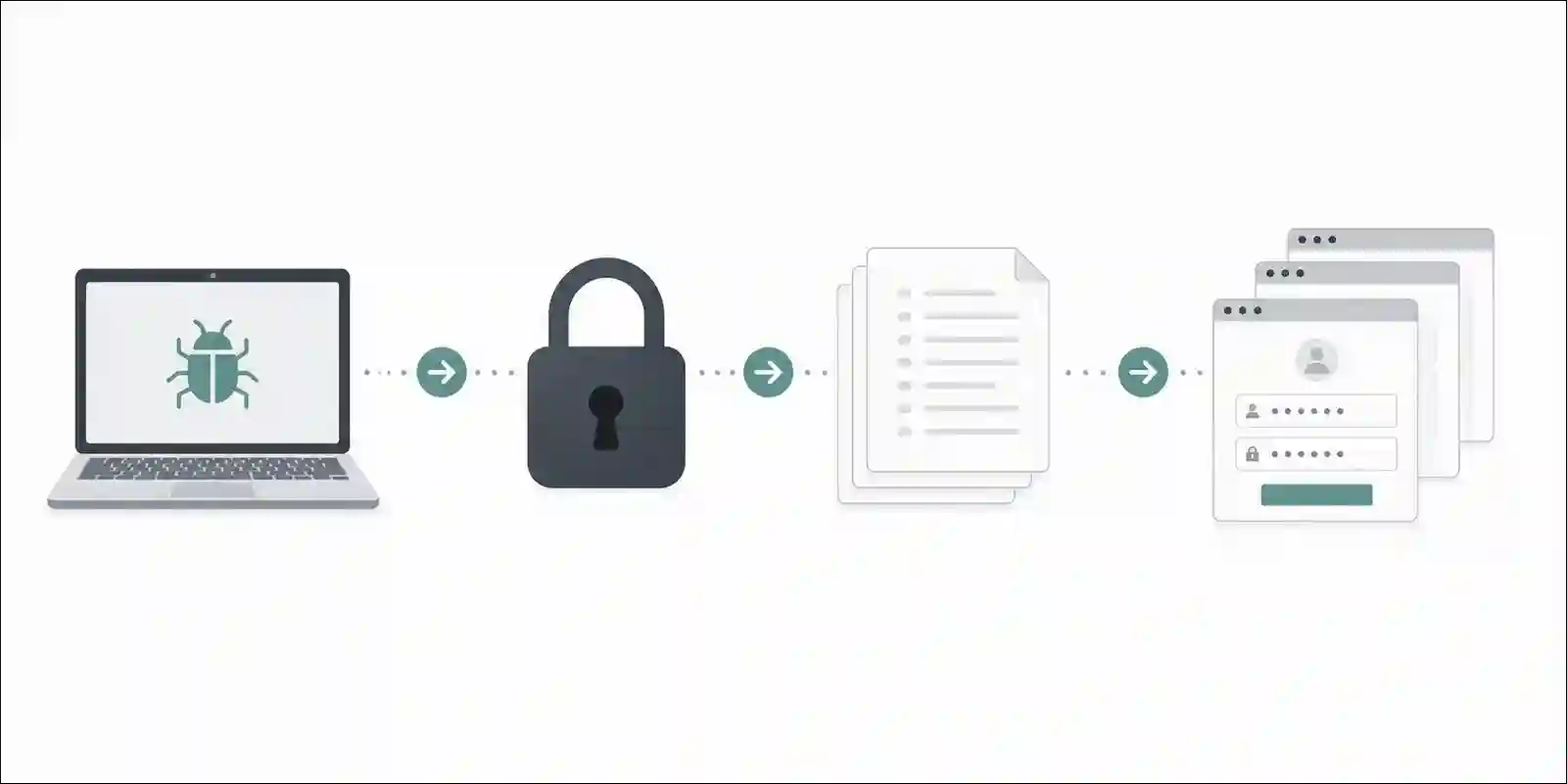
Stage 1 — Infostealer Malware
This is where it all starts, and infostealer malware crossed a serious threshold in 2025.
Flashpoint reported that these silent credential-grabbers helped steal more than 1.8 billion credentials from 5.8 million infected devices in just the first half of 2025 alone — that’s an 800% jump over the prior period.
Then looking at the full year, KELA’s State of Cybercrime 2026 report tracked 2.86 billion compromised credentials across all sources. Their analysis also found roughly 3.9 million unique machines infected globally, yielding 347.5 million credentials directly.
Now, the top three infostealers — Lumma, StealC, and RedLine — made up over 75% of all infections. And these aren’t some niche operation — they run as Malware-as-a-Service subscriptions you can pick up for as little as $250 a month.
Also worth flagging: macOS infections surged from under 1,000 cases in 2024 to over 70,000 in 2025 — that’s a 7,000% increase; KELA confirmed that. So if you thought Macs were immune, think again.
| Metric | 2025 Figure |
|---|---|
| Creds stolen (H1) | 1.8 billion |
| Creds stolen (full year) | 2.86 billion |
| Devices infected | 5.8 million |
| Volume growth | 800% surge |
| macOS infection growth | 7,000% |
| Avg creds per infection | 44 |
| Avg cookies per infection | 1,861 |
| Ransomware victims pre-exposed | 54%+ |
Stage 2 — Dark Web Marketplaces & Initial Access Brokers
Once credentials are stolen, they need a marketplace. And stolen credentials have a clear price tag. Stealer log subscriptions typically run $100 to $200 per month on criminal forums, while individual logs sell for $5 to $50 each, Rapid7’s 2025 dataset shows that.
Then there are the initial access brokers — middlemen who verify and resell credentials. Their transactions averaged $1,328 each, with Fortune 500 listings going for up to $50,000 per set of verified access.
What’s interesting here is that fresh credentials from recent infostealer logs cost significantly more than older database dumps. That’s because they’ve got much higher validity rates. The market prices based on freshness and access scope, not just raw volume.
Stage 3 — Combolists & Aggregation
So now you’ve got stolen credentials sitting in dark web marketplaces. The next step? They get compiled into massive “combolists” — basically big text files that pair email addresses with passwords. These combolists are what researchers eventually roll up into datasets like the 19 billion collection.
Here’s a key stat that makes this whole pipeline work: the Verizon 2025 DBIR found that only 49% of a user’s passwords across services are actually distinct. In other words, breach one service, and there’s roughly a 50-50 shot the same password works somewhere else.
And when you’re doing that across millions of accounts? That probability becomes near-certainty for attackers.
Stage 4 — Credential Stuffing Attacks at Scale
Finally, the last stage is where it all comes together at scale. Verizon’s report found that credential stuffing made up 19% of all authentication attempts at SSO providers on a median daily basis.
But here’s an even more striking number: 88% of attacks against basic web applications used stolen credentials. So this isn’t some niche attack — it’s the dominant method, full stop.
As a real-world example, coordinated credential stuffing attacks hit five major Australian superannuation funds at the same time in late March 2025. Attackers compromised over 20,000 accounts across all five, with four members losing a combined AUD 500,000, BleepingComputer reported.
And what made it possible? The attackers used combolists from prior unrelated breaches. The funds offered MFA but didn’t enforce it at login.
The Real Cost: What Credential Breaches Cost America
Here’s the bottom line: credential-based breaches cost an average of $4.67 million per incident, and they take 246 days to identify and contain — the longest of any attack vector, per IBM’s 2025 Cost of a Data Breach Report. But that’s just the per-breach figure. The true cost to the American economy goes way beyond that.
To put it in context, the US has been the world’s most expensive country for data breaches for 15 years running. In 2025, the average hit a record $10.22 million per breach. That’s 2.3 times the global average of $4.44 million.

Per-Breach Costs by Attack Vector
| Attack Type | Avg Cost |
|---|---|
| Ransomware / extortion | $5.08M |
| Supply chain compromise | $4.91M |
| Stolen credentials | $4.67M |
| Phishing | $4.8M |
| Exploited vulnerability | $4.24M |
Now, the time it takes to contain a breach matters enormously too. Breaches that drag on past 200 days cost nearly $5.5 million, while those resolved faster average $3.87 million — that’s a difference of over $1.6 million right there.
Aggregate US Economic Impact
Here’s something no other analysis we’ve seen has put together. When you connect the dots across the major data sources, the full picture is pretty sobering.
With 3,322 data compromises in 2025 at an average of $10.22 million each, the total US breach cost for the year comes to roughly $33.9 billion.
Then on top of that, the FBI’s IC3 2024 Internet Crime Report logged $16.6 billion in total reported losses — a 33% jump from the year before. Business email compromise (BEC) alone accounted for $2.77 billion across 21,442 incidents.
Globally, annual cybercrime costs have hit an estimated $10.5 trillion, with the US shouldering a disproportionate share thanks to its high per-breach costs and the sheer volume of breaches targeting American organizations.
Hidden Costs Most Analyses Miss
But there’s more to the picture than just the headline breach costs. Credential compromises create several layers of financial damage that rarely show up in reports:
- IT help desk burden: Up to 50% of help desk tickets are for password resets — that’s a massive drain on resources
- Lost productivity: Account lockouts and forced resets pull employees away from work for hours or even days
- Customer churn: Breached companies lose customers who no longer trust them with their data
- Regulatory fines: State breach notification laws, HIPAA penalties, and SEC cyber disclosure rules all add up
- Insurance premiums: Cyber insurance rates have jumped sharply as breach frequency keeps climbing
- Shadow-AI costs: IBM also found shadow-AI breaches cost $4.63 million on average — that’s $670,000 more than standard incidents
Who’s Most Vulnerable? A Generational and Demographic Breakdown
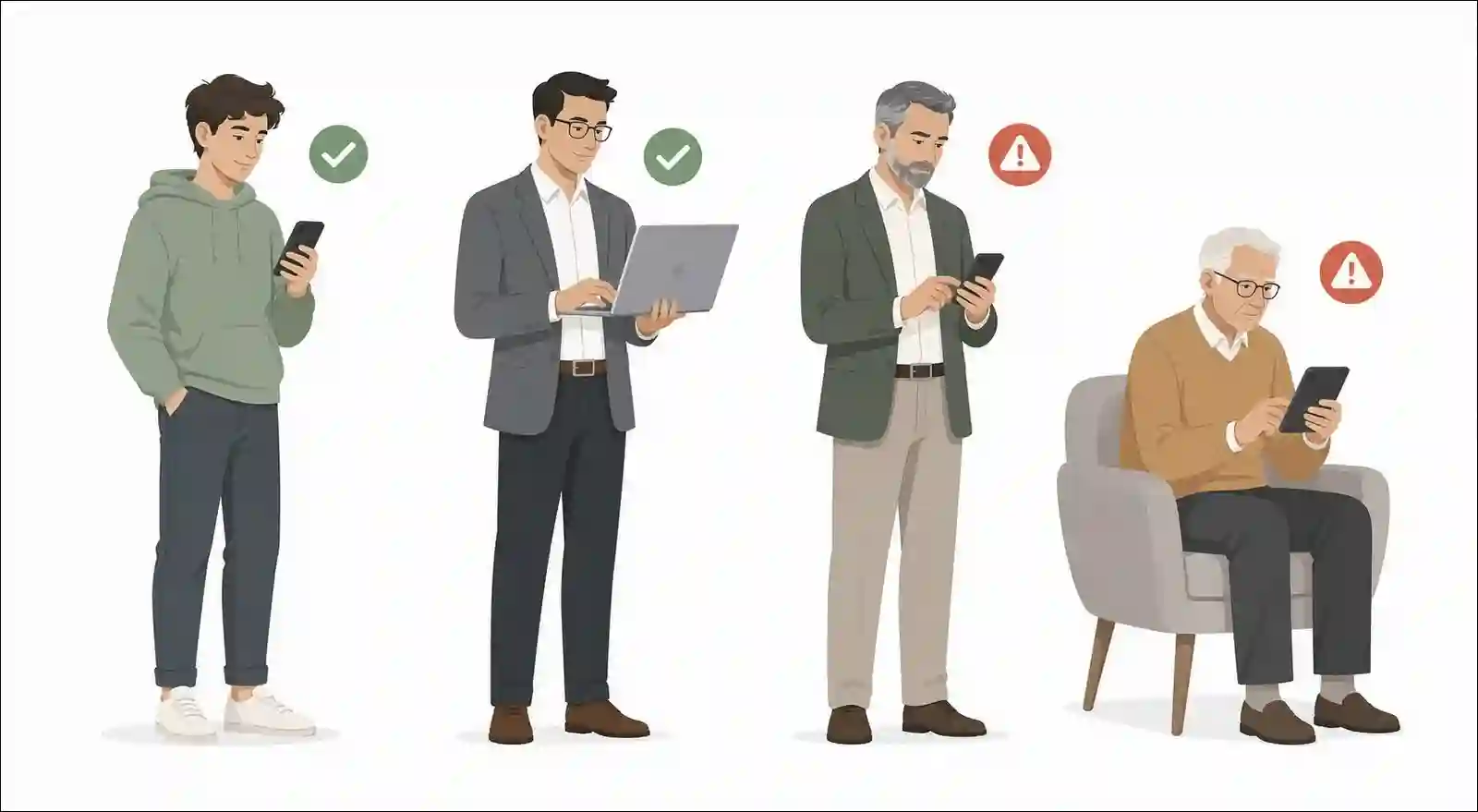
It varies a lot by generation, actually. Gen Z shows the highest password reuse rates at 72%, even though they also have the highest password manager adoption at 46%, Bitwarden’s World Password Day 2025 survey found.
That’s quite the paradox, isn’t it? You understand the risk but don’t change your behavior. And that tension — between knowledge and action — really defines the American credential crisis. The data shows that awareness alone doesn’t drive better security. Habit, convenience, and the sheer number of passwords people juggle all work against good practices.
Gen Z — The Paradoxical Generation
Gen Z leads password manager adoption at 46%. And yet they also lead password reuse at 72%. But it’s not hypocrisy, really — it’s more a reflection of managing way more accounts than any previous generation ever had to.
In fact, 1Password’s 2025 Access-Trust Gap report found that 91% of workers understand the risks of password reuse, yet 66% reuse passwords anyway. So that gap between knowing and doing? It spans every demographic.
Younger Americans are juggling hundreds of accounts across social media, gaming, streaming, education, and financial services. The sheer volume makes unique passwords for everything feel impossible without the right tools.
Millennials and Gen X
Moving down the age range, password manager adoption drops to 39% for Millennials and 33% for Gen X. These generations are carrying a heavy credential load that spans both digital-native and legacy accounts.
What’s also telling: 70% of Americans say they feel overwhelmed by the number of logins they have to keep track of, Security.org’s research shows. Millennials sit right in the middle of that overwhelmed majority.
These folks also bridge the gap between work-managed and personal credentials, often carrying corporate accounts alongside dozens of personal subscriptions.
Boomers and Older Americans
Only 42% of Boomers reuse credentials, which is the lowest rate of any generation. But here’s the catch — they also have the lowest password manager adoption and the highest susceptibility to phishing.
41% of Americans still memorize their passwords instead of using any tool, and that figure skews older. And honestly, memory-based password management gets harder as account counts grow.
Older Americans might have fewer total accounts, but each one tends to be more valuable — we’re talking retirement savings, Medicare information, and property records.
Small Businesses — The Most Exposed Segment
Small businesses face a very different reality than enterprises, and the numbers paint a pretty alarming picture.
| Company Size | MFA Adoption | Risk Level |
|---|---|---|
| ≤25 employees | 27% | Critical |
| 26–100 employees | 34% | Very High |
| 1,001–10,000 | 78% | Moderate |
| 10,000+ employees | 87% | Lower |
So here’s what stands out: 54% of small businesses have no MFA protecting their core accounts at all, N-able’s 2025 Annual Threat Report found. And only 13% of SMBs enforce MFA everywhere.
Then consider this — the average exposed credentials per infection is 44, with 1,861 cookies harvested per device, SpyCloud reported. For a 20-person company, a single infostealer infection could expose the entire organization’s credential ecosystem.
On top of all that, nearly 1 in 3 ransomware victims had a prior infostealer infection.
The Defense Gap: Password Managers, MFA, and Passkeys
Here’s the reality: only 36% of US adults — about 94 million people — use a password manager. The other 64% are still relying on memorization, browser storage, or even writing passwords down on paper, Security.org reported.
That gap between what’s available and what people actually use? It’s the single biggest vulnerability in the American credential ecosystem. The tools are out there. Most people just aren’t using them yet.
Password Manager Adoption in America
Here’s the current adoption landscape at a glance:
| Stat | Figure |
|---|---|
| US adults using one | 36% (~94M) |
| Prior year | 34% |
| Global adoption | ~15% |
| Open to trying one | 75%+ of non-users |
| Market size (2025) | $3.22B |
| Projected (2034) | $10.63B |
| Google + Apple built-in share | 55%+ |
| Companies requiring use | ~25% |
Now here’s something you might not expect: Google Password Manager and Apple Keychain together hold over 55% of the US market through their built-in solutions. So a lot of people may already have some level of password management without even realizing it.
And the protection difference is real. Password manager users report identity theft at 17%, compared to 32% for non-users — that’s nearly double.
MFA — Progress, but Critical Gaps Remain
On the MFA front, 81% of Americans use some form of multi-factor authentication, Consumer Reports’ 2025 Cyber Readiness Report found. That sounds great — until you dig into what kind they’re actually using.
83% of MFA users are relying on SMS/text-based codes, making it by far the most popular method. The problem? SMS-based MFA is still vulnerable to SIM swapping and interception. In fact, Verizon’s DBIR explicitly recommends against SMS one-time passwords for that reason.
That said, workforce MFA adoption did reach 70% as of January 2025, up from 66% a year earlier, the Okta Secure Sign-in Trends Report 2025 shows.
| MFA Stat | Figure | Source |
|---|---|---|
| Americans using some MFA | 81% | Consumer Reports |
| MFA users on SMS | 83% | Consumer Reports |
| MFA users on auth apps | 55% | Consumer Reports |
| MFA users on passkeys | 33% | Consumer Reports |
| MFA users on security keys | 5% | Consumer Reports |
| Workforce MFA adoption | 70% | Okta |
| Companies using MFA everywhere | 48% | Yubico 2025 |
| Phishing-resistant auth growth | 63% YoY | Okta |
The fastest-moving stat in identity security right now is phishing-resistant authenticator adoption. It grew 63% in a single year, climbing from 8.6% to 14.0% of users. But let’s be honest — 14% is still a long way from universal.
The Passkey Revolution — Where Things Are Heading
Passkeys represent probably the biggest shift in authentication since passwords were first used. More than 1 billion people have activated at least one passkey, and 15 billion online accounts now support them, the FIDO Alliance reports.
What’s also interesting is that 75% of global consumers are now aware of passkeys — up from just 39% two years ago. And 69% of users have at least one passkey.
| Passkey Stat | Figure |
|---|---|
| People with 1+ passkey | 1B+ |
| Accounts supporting passkeys | 15B+ |
| Top 100 sites with passkeys | 48% |
| Consumer awareness | 75% |
| Users with 1+ passkey | 69% |
| Enterprises deploying them | 87% |
| Google passkey accounts | 800M |
| Login success rate | 93% (vs 63%) |
| Avg login time | 8.5s (vs 31.2s) |
| US adoption (work) | 18% |
| US adoption (personal) | 16% |
But here’s the gap that matters: US passkey adoption is just 16% for personal use and 18% for work. Awareness sits at 75%, but actual usage trails at 16–18%. So the transition is happening — just slowly.
How to Check If Your Passwords Are in the 19 Billion Dataset
The good news? You can check whether your credentials appear in the 19 billion dataset using several free tools — mainly HaveIBeenPwned, Apple’s built-in monitoring, and Google’s Security Checkup. And the whole thing takes about 10 minutes.
What’s more, most of these services offer automated monitoring that’ll alert you the moment your credentials show up in a new breach. So here’s exactly how to do it.

Step-by-Step Personal Audit
Here’s the process you can follow to figure out your exposure:
Step 1: Check HaveIBeenPwned.com
- Head over to haveibeenpwned.com
- Enter each email address you use
- The site now includes data from the Synthient stealer log breach (23 billion records) and the Synthient credential stuffing corpus (1.3 billion unique passwords), both absorbed in October–November 2025
- Then review each breach listed and note which accounts are affected
Step 2: Check Apple’s iCloud Keychain (iPhone Users)
- Go to Settings → Passwords → Security Recommendations
- Apple actively checks your saved credentials against known breach datasets
- Any matching passwords will get flagged with a warning
- This is especially important if you’re using BYOD — a personal breach can become a gateway into corporate data
Step 3: Check Google Password Manager
- Visit passwords.google.com
- Run a Security Checkup
- Google will flag accounts found in breach databases
- You may also see “Password Checkup” alerts right in Chrome
Step 4: Review Your Browser-Stored Passwords
- Chrome: Settings → Autofill → Password Manager
- Firefox: Settings → Privacy & Security → Logins
- Edge: Settings → Passwords
- Look for anything reused or weak
Step 5: Set Up Ongoing Breach Monitoring
- Most password managers (1Password, Bitwarden, Dashlane) have built-in breach monitoring
- Firefox Monitor and HaveIBeenPwned both offer email alerts for new breaches
- You have the option to set up automatic monitoring so you’ll know right away
What to Do If Your Passwords Are Compromised
So you found your credentials in the dataset — now what? Here’s the response sequence:
- Change the affected password right away — and don’t just tweak it; generate something completely new
- Change every other account where you reused that password — this is critical given the 94% reuse rate
- Turn on MFA for every account — use an authenticator app or passkey rather than SMS if you can
- Get a password manager if you don’t have one already — it’ll generate and store unique passwords for you
- Keep an eye on financial accounts for at least 90 days
- Consider identity theft protection if sensitive personal data was exposed alongside credentials
- File reports if you spot identity theft — through the FTC at IdentityTheft.gov and the FBI’s IC3
For Businesses: Emergency Credential Audit
Businesses need a more structured approach, of course. Here’s a framework you can adapt to your situation:
| Step | Action | Tools You Can Use |
|---|---|---|
| 1 | Scan employee creds against breach databases | SpyCloud, HIBP for Domains |
| 2 | Reset passwords for any matches | Okta, Azure AD, Google Workspace |
| 3 | Enforce MFA on all accounts | Conditional access policies |
| 4 | Deploy infostealer detection on endpoints | CrowdStrike, SentinelOne, Defender |
| 5 | Review vendor credentials | Vendor risk assessment |
| 6 | Set up conditional access | Zero-trust framework |
| 7 | Establish ongoing monitoring | Continuous credential monitoring |
The key takeaway here is that a one-time check isn’t enough. Credential exposure is ongoing — new breaches happen every day, and your organization’s credentials might show up in tomorrow’s combolist even if they’re clean today.
The Road Ahead: What’s Next for Password Security in America
The American password security landscape is shifting in three clear directions: regulations are tightening, passwordless authentication is moving from pilot to production, and AI is amplifying both threats and defenses at the same time. And honestly, these shifts are happening faster than most organizations are ready for.
The era of password-only security is winding down. The real question isn’t whether organizations will transition — it’s how fast they can do it before the next big credential crisis hits.
Regulatory Pressure Is Increasing
Several regulatory forces are pushing American organizations toward stronger authentication:
- State breach notification laws keep expanding, with stricter requirements and bigger penalties
- SEC cyber disclosure rules now require public companies to report material incidents within 4 business days
- HIPAA enforcement is tightening for healthcare orgs that fail to protect electronic health information
- FFIEC guidance is pushing financial institutions toward phishing-resistant authentication
- CISA’s KEV catalog keeps growing — and only 26% of listed vulnerabilities were fully remediated in 2025
Organizations that don’t adapt are looking at compounding regulatory, legal, and financial exposure.
The Passwordless Future Is Closer Than You Think
61% of security leaders say they want to move to passwordless access, though they’re expecting some bumps along the way, Cisco Duo’s 2025 State of Identity Security report found.
And the deployment numbers are catching up to that intent:
- 34% of medium-sized organizations already have passkeys or FIDO2 authenticators in production, per N-able
- Passwordless authentication grew 64% year-over-year, now making up 73% of all authentications
- Passkey (FIDO2/WebAuthn) adoption surged 412% in 2025
- 82% of organizations are targeting full passwordless, with 28% already there, the HID/FIDO Alliance reported
AI as Both Threat and Defender
AI is reshaping the credential threat landscape in both directions, and here’s how:
On the attack side:
- 80% of phishing attacks are now AI-generated, making them tougher to spot
- AI-powered credential stuffing adapts in real-time to get around detection
- Infostealer malware is increasingly using AI to dodge endpoint detection
On the defense side:
- AI and automation save $1.9 million per breach, IBM found
- Organizations with heavy AI/automation see breach costs of $3.62 million vs. $5.52 million without it — that’s a 34% drop
- AI-powered behavioral analytics can catch credential misuse patterns that rule-based systems would miss
So the organizations that bring AI in for defense gain a real edge. Those that don’t? They’re up against attackers who are deploying AI on offense.
Final Thoughts: The Password Crisis Is Solvable — But Not With Passwords Alone
The 19 billion compromised passwords aren’t just a number — they represent a systemic failure of password-dependent security. With $33.9 billion in estimated annual US breach costs, 3,322 record breaches, and 94% password reuse, the data makes one thing pretty clear: passwords alone can’t protect us.
But it’s not a hopeless situation, either. The tools to fix this already exist:
- Check HaveIBeenPwned today — it takes 2 minutes and shows you your exposure instantly
- Get a password manager — only 36% of Americans have one, but it cuts your risk dramatically
- Turn on MFA everywhere — authenticator apps or passkeys, not SMS
- Start planning your move to passkeys — the tech is ready, and 48% of the top 100 websites already support them
In a world where 94% of leaked passwords are reused, the single most powerful security upgrade isn’t a longer password — it’s getting rid of the password entirely.
Those 19 billion compromised passwords should be a wake-up call. They should also be the push that finally moves America toward authentication that doesn’t depend on human memory.
Frequently Asked Questions
Quick answers to the most common questions about the 19 billion compromised passwords and what they mean for you.
How many passwords were leaked in 2025?
19,030,305,929 passwords were analyzed by Cybernews from breaches between April 2024 and April 2025, and 94% of them were reused or duplicated.
What was the most common password in the 19 billion dataset?
The sequence “1234” showed up about 727 million times, followed by “123456” at 338 million occurrences, according to the Cybernews analysis.
How does this affect people in the United States specifically?
The US has had 18.4 billion data points leaked cumulatively, with 2.28 billion being password-specific. The country also recorded 3,322 data breaches in 2025 at an average cost of $10.22 million each (IBM, 2025).
How much does a credential-based breach cost?
$4.67 million on average, with a mean time of 246 days to identify and contain, according to IBM’s 2025 Cost of a Data Breach Report.
What percentage of Americans use password managers?
36% of US adults — roughly 94 million people — use a password manager, according to Security.org’s 2024 survey.
Are passkeys really safer than passwords?
Yes, they are. Passkeys deliver a 93% login success rate compared to 63% for traditional methods, with an average login time of 8.5 seconds versus 31.2 seconds (FIDO Alliance).
How can I check if my password is in the 19 billion leaked dataset?
You can visit HaveIBeenPwned.com and enter your email address. You also have the option to check Apple’s Security Recommendations in Settings → Passwords, or run a Google Security Checkup at passwords.google.com.
What is credential stuffing?
It’s an automated attack that tests millions of stolen username-password combos against hundreds of websites simultaneously. Verizon’s 2025 DBIR found it accounts for 19% of SSO authentication attempts on a daily basis.