
Learn how a snow day calculator predicts school closures using weather data and algorithms, helping students, parents, and teachers plan winter days with ease.
Winter brings snow and the hope of school closures. A snow day calculator predicts if schools will close due to snow. It’s a practical tool I find useful for planning.
In this article, we’ll explore what a snow day calculator is, how it works, and how you can use it effectively. Let’s dive into this winter essential for 2025.
Also read: What to Look for When You Shop Spring Vase
What Is a Snow Day Calculator?
A snow day calculator predicts school closure odds due to snow. It analyzes weather data to give a percentage likelihood. You input your ZIP code, and it delivers results. I use it to plan winter days. It’s not always accurate but helps reduce uncertainty.
The tool began in 2007 as a student project by David Sukhin. Now, millions use it across the U.S. and Canada. It pulls data from the National Weather Service. Its evolution from manual to automated inputs makes it accessible.
These calculators are vital in snowy regions. They assist students, parents, and teachers with planning. Think of it as a quick weather guide. It’s a starting point for anticipating snow days. Next, we’ll examine how it functions.

How Does a Snow Day Calculator Work?
The Algorithm Behind Predictions
Snow day calculators use algorithms to process weather data. They analyze snow amount, temperature, and wind speed. Historical closure data refines predictions. I’m impressed by their data integration. This improves accuracy over time.
They source data from Weather.gov. Location-specific patterns adjust predictions. For example, a 75% chance might be shown. User feedback helps refine results.
This adaptability ensures reliable outputs.
Key Factors in Predictions
Snowfall amount drives predictions. Heavy snow increases closure odds. Temperature and wind chill are significant. Icy roads can trigger closures, even with light snow. Timing matters—overnight snow impacts more.
School district policies vary. Some close after minimal snow; others need heavy accumulations. Northern states like Minnesota tolerate more snow than southern ones like Texas. Calculators adjust for these regional differences.
Limitations to Understand
Calculators aren’t perfect. Weather can shift unexpectedly. School policies differ, and some decisions are last-minute. I always verify with school announcements. The tool is a guide, not a certainty, but it’s valuable for planning.
Predictions may miss microclimates or unique district rules. Combining calculator results with official sources ensures accuracy. This balance keeps you informed during winter storms.
Also read: What’s the Closest ‘Tow Truck Near Me’?

How to Use a Snow Day Calculator
Step-by-Step Instructions
Visit a site like snowdaycalculator.com. Enter your ZIP code for local data. Some tools ask for school type or past snow days. Click “Calculate” for the probability. I check after noon for fresh data.
The result shows a percentage. A 70% or higher chance is promising. Always confirm with your school’s website or social media. This quick process reduces morning stress.
Choosing a Reliable Calculator
Not all calculators perform equally. Snowdaycalculator.com uses automated weather data. Manual versions require user inputs. I prefer automated for simplicity. Ensure the tool covers your region, typically U.S. or Canadian ZIP codes.
Mobile apps from sites like Willitsnow.app offer real-time alerts. Check user reviews for accuracy. A reliable calculator streamlines your winter planning.
| Step | Action | Tips |
|---|---|---|
| Visit Website | Access a trusted calculator site | Try snowdaycalculator.com or snowdaytool.com |
| Enter ZIP Code | Input your location’s ZIP or postal code | Use accurate codes for precise data |
| Add School Details | Select school type or past snow days | Improves prediction relevance |
| Check Prediction | View the snow day probability | 70%+ indicates higher likelihood |
| Verify | Check official school announcements | Use school websites or social media |
This table guides you through using a calculator. Follow these steps for reliable results. Next, we’ll explore who benefits from these tools.
Interpreting Results
A high percentage, like 80%, suggests a likely closure. Lower odds, around 50%, mean uncertainty. I treat anything below 60% as a low chance. Combine results with weather apps for clarity. This helps you plan effectively.

Who Benefits from Snow Day Calculators?
Students Planning Their Day
Students use calculators to anticipate days off. A high probability means potential free time. I remember checking these as a student. It adds excitement to snowy mornings. You can plan activities like sledding.
Check the night before. If odds are high, prepare for fun. Always confirm with official notices to avoid missing assignments. It’s a practical tool for students.
Parents Managing Schedules
Parents rely on calculators for scheduling. A predicted closure prompts childcare or work-from-home plans. I know parents who use it to stay organized. It prevents last-minute chaos during storms.
Check snow day predictions in the evening. A 60% chance signals preparation. This keeps your family’s day on track, even if weather changes.
Teachers and Administrators
Teachers adjust lesson plans using calculators. A high chance might mean prepping for remote classes. Administrators use tools like snowdaycalculator.com for closure planning. I value how these support school staff.
They aid communication with families. Early predictions help schools issue timely notices. This reduces confusion during winter weather.
Also read: 50 Most Used Gen Z Slang
Why Use a Snow Day Calculator?
Simplifying Winter Planning
Calculators save time. They summarize weather data into a quick probability. You avoid sifting through complex forecasts. I find this incredibly convenient. It helps you plan without hassle.
Most calculators offer websites and apps. You can check predictions anywhere. This accessibility makes them essential for winter preparation.
Adding Fun to Snow Days
Calculators bring excitement to snowy days. Checking odds feels like a game. I enjoy refreshing predictions as snow falls. It engages kids and adults alike.
Some tools offer text alerts. Over 100,000 users receive these, enhancing the fun. It’s a modern way to embrace winter’s uncertainty.
Supporting School Decisions
Calculators provide data for schools. They complement official weather forecasts. Administrators use them to assess closure likelihood. I’ve seen districts streamline communication with these tools.
They reduce uncertainty for families. Schools can share predictions to prepare parents. This clarity improves winter planning.
Also read: Silly Wankok
Top Snow Day Calculators for 2025

SnowDayCalculator.com
Launched in 2007, this calculator serves over 5 million users yearly. It uses National Weather Service data. You input your ZIP code for predictions. I like its accuracy and app options.
It offers text alerts and school district communities. These features make it a comprehensive planning tool. It’s reliable for most users.
SnowDayTool.com
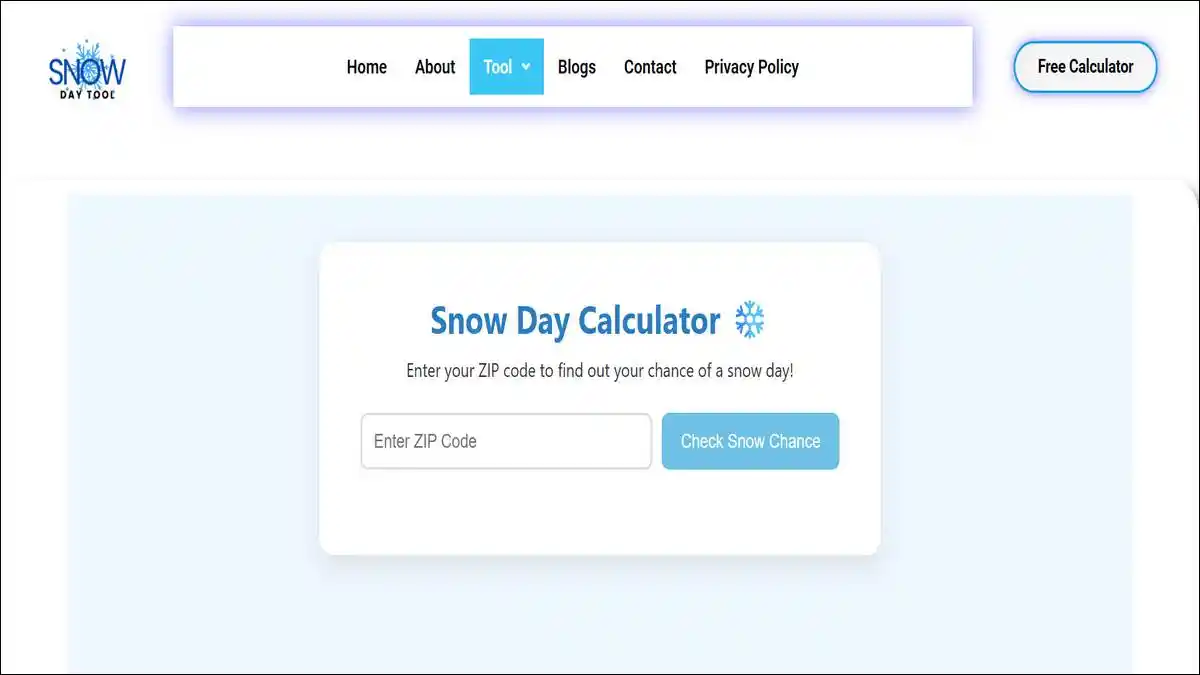
SnowDayTool.com provides hourly updates and a user-friendly interface. I appreciate its multi-district tracking. It’s ideal for parents with kids in different schools. Predictions are tailored and precise.
The “Snow Day Meter” offers last-minute checks. Its mobile design suits quick updates. It’s a strong choice for real-time planning.

Perry Weather Snow Day Calculator
Perry Weather emphasizes road conditions and local policies. It’s great for variable snowfall areas. I find its focus on safety useful. It boasts an 89-92% accuracy rate.
This newer tool is gaining traction. It’s worth trying for detailed, location-specific predictions. Check it for unique regional insights.
| Calculator | Key Features | Best For |
|---|---|---|
| SnowDayCalculator.com | Automated data, text alerts, apps | Students, parents, general use |
| SnowDayTool.com | Hourly updates, multi-district tracking | Parents with multiple schools |
| Perry Weather | Road condition focus, high accuracy | Areas with variable snow patterns |
This table compares leading calculators. Select one based on your needs. Each offers distinct advantages for winter planning.
Tips for Maximizing Snow Day Calculators
Check Updates Frequently
Weather shifts quickly. I check calculators after noon for current data. Tools like SnowDayTool.com update hourly. Regular checks keep you informed. Don’t rely on early predictions alone.
Cross-check with local news or school websites. This avoids outdated forecasts. Staying updated ensures accurate planning.
Know Your District’s Policies
Closure policies differ by district. Some close after 3 inches; others need 12. Northern areas require more snow than southern ones. I research my district’s thresholds. This clarifies calculator results.
Input accurate school details. Public, private, or rural schools have unique rules. Correct data boosts prediction reliability.
Also read: Örviri: Iceland’s Hidden Gem
Use Multiple Information Sources
Don’t depend on one calculator. I compare SnowDayCalculator.com and Perry Weather. Consistent predictions increase confidence. If they differ, check weather reports for clarity.
Social media platforms like X provide school updates. Combining calculators with official sources ensures you’re well-prepared. This approach minimizes errors.
Monitor Weather Trends
Track weather patterns for better context. Heavy snow overnight increases closure odds. I check radar apps alongside calculators. This helps interpret predictions accurately.
Local weather reports add detail. For example, icy roads might outweigh light snow. Understanding trends improves your planning.
Common Mistakes to Avoid
Assuming Predictions Are Certain
Calculators aren’t foolproof. Weather and school decisions are complex. I’ve seen predictions fail due to sudden changes. Treat percentages as guides, not facts. Always verify with school announcements.
This avoids missed assignments or scheduling issues. Use calculators as part of your planning, not the sole source.
Overlooking Local Conditions
Urban areas clear roads faster than rural ones. Calculators may miss microclimates or terrain challenges. I consider my area’s infrastructure. This refines prediction accuracy.
Check local news or talk to neighbors. These insights add context. They help you assess closure likelihood realistically.
Using Outdated Tools
Some calculators lack regular updates. I stick to trusted ones like snowdaycalculator.com. They use fresh data and user feedback. Avoid obscure sites without update schedules.
Check the site’s last update date. Recent updates ensure reliable predictions. This keeps your plans accurate.
Ignoring Timing of Snowfall
Snow timing affects closures. Overnight snow is more disruptive than daytime flurries. I factor this into predictions. Calculators may not always emphasize timing.
Check weather apps for snowfall schedules. This clarifies why a low prediction might still lead to a closure. Timing awareness improves your planning.
Why Snow Day Calculators Are Popular
Combining Science and Engagement
Calculators blend meteorology with fun. Their algorithms are complex, but the interface is simple. I enjoy checking predictions during storms. It engages both kids and adults.
Over 5 million users rely on them yearly. Their appeal lies in ease and excitement. They make winter planning less stressful.
Advancing with Technology
Since 2007, calculators have improved. They now use AI and machine learning. I’m impressed by their learning from user reports. This sharpens predictions annually.
Mobile apps and text alerts enhance usability. Future tools might include traffic data. They’re evolving to stay relevant in 2025.
Supporting Community Needs
Calculators serve diverse groups. Students, parents, and schools benefit. They provide quick insights during chaotic weather. I value their role in community planning.
They foster transparency. Schools use them to align with families. This reduces confusion and supports smooth winter operations.
Final Thoughts on Snow Day Calculators
Snow day calculators are practical tools. They predict school closures using weather data. You enter your ZIP code for quick results. I appreciate their simplicity. Always confirm with official sources for accuracy.
Try reliable calculators like snowdaycalculator.com or SnowDayTool.com. Use our tips to enhance their effectiveness. Stay prepared and enjoy winter with confidence. For more weather insights, check Weather.gov or local school websites.


