Apps Like Quizlet: 25+ Best Alternatives In 2026 (Free, Paid & AI-Powered Apps Compared)
Quizlet helps over 60 million monthly users study, according to Wikipedia. But the app you remember from high school isn’t the same one you log into now. Learn mode, practice tests, and offline study sit behind a $35.99-per-year Quizlet Plus paywall, and ads break up free sessions.
That paywall is fueling a quiet migration. The global flashcard app market hit USD 22.23 billion in 2024 and is projected to reach USD 29.03 billion by 2033, according to Business Research Insights, and dozens of newer apps are eating Quizlet’s lunch with smarter spaced repetition and AI card generation.
So, we researched well and tested Quizlet 25+ alternatives with the same study material. So, you’ll get exact pricing, real algorithm comparisons, migration steps, and a decision tree built around how you actually study, not how vendors want you to.
After running each app through the same workflow, three patterns emerged. The “free” tag rarely means what it used to, AI card quality varies wildly between tools, and the best alternative usually depends on whether you’re cramming or learning for the long term.
Why Students Are Leaving Quizlet in 2026
Students are leaving Quizlet mainly because core study features that were free until 2023 now require a $35.99/year Quizlet Plus subscription, as per Okti’s comparison and FlashcardBuddy. Free users also get ads between cards, and AI features remain weaker than newer competitors. The exits aren’t small.
The paywall creep
Here’s what changed. Learn mode, full practice tests, offline access, and unlimited AI features now sit behind Quizlet Plus, according to Okti’s January 2026 breakdown. Features that were free in 2020 are now subscription-only. That shift broke trust for many long-time users.
Ads inside study sessions
And the ads? The free tier shows display ads between cards during focused study. One Reddit user compares the experience to Duolingo’s interruptions and finds that for exam-week cramming, broken focus is a real cost.
AI features that lag the market
Quizlet’s Magic Notes and Q-Chat exist, but Quizlet locks them behind paid tiers. Free competitors like Knowt, StudyGlen, and FlashRecall generate AI flashcards from PDFs without a card on file. That gap keeps widening every quarter.
Quizlet Annual Revenue: 2024 vs 2025
Revenue grew 74% year-over-year while free-tier features shrank.
Source: GetLatka company data, updated November 2025.
The numbers tell the story
Quizlet reported $139 million in 2025 ARR, up from $80 million in 2024, per GetLatka. Revenue is climbing while free-tier value is shrinking.
And that divergence — record revenue on a worse free product — is exactly what drives users to search for alternatives in the first place.
The Science Behind Picking a Flashcard App
The right Quizlet alternative is the one that uses spaced repetition correctly, because roughly 70% of new information is lost within 24 hours without spaced review, according to Ebbinghaus’s foundational 1885 study cited by FlashcardBuddy. Choose by algorithm first, by interface second. The science is settled, but most apps still implement it poorly.
Active recall beats re-reading
Look — Karpicke and Roediger’s 2008 study in Science found that retrieval practice improves long-term retention by up to 50% compared to passive re-reading. Every modern flashcard app claims to do this. Few do it as well as Anki or Brainscape.
Spaced repetition is the multiplier
And here’s the thing. A meta-analysis of 254 studies by Cepeda et al. in Psychological Bulletin (2006) confirmed spaced practice beats massed cramming for long-term memory. Newer clinical evidence agrees: Price et al. in Academic Medicine tested over 26,000 physicians and found 58% retention with spaced repetition versus 43% in the control group.
FSRS is now the gold standard
Now the Free Spaced Repetition Scheduler (FSRS) has replaced the older SM-2 algorithm inside Anki. Benchmark data covering roughly 350 million reviews across nearly 10,000 users, published by the open-spaced-repetition project and reported by Mindomax, shows that FSRS produces more accurate recall predictions than SM-2 in 99.6% of cases.
Why that matters in practice
Translation? Students using FSRS report 20 to 30% fewer daily reviews while keeping the same retention rate, per the same benchmark. For a med student doing 500 cards a day, that’s 100 to 150 fewer reviews. Anki, Mochi Cards, and StudyGlen all use FSRS. Quizlet’s Learn mode does not.
The dropoff problem nobody talks about
But here’s the catch. Even the best app fails if you quit. Around 63% of users abandon flashcard apps within 90 days, according to a statistic cited in Nibble’s guide.
So, picking an app you’ll actually open every day matters more than picking the technically best algorithm. Boring tools you stick with beat brilliant tools you abandon.
| Algorithm | Used By | Research-Backed | Best For |
|---|---|---|---|
| FSRS | Anki, Mochi, StudyGlen | Yes (99.6% better than SM-2) | Med school, long-term retention |
| SM-2 | Older Anki, many apps | Yes, but dated | General study |
| Confidence-Based | Brainscape | Yes (Columbia/Yale-developed) | Adaptive review |
| Quizlet “Learn” | Quizlet | Partially (it’s a quiz repeater, not true SRS) | Short-term review |
The 25+ Best Apps Like Quizlet in 2026 (Categorised)
Below are 25+ alternatives tested and grouped by what they do best, not by raw popularity. We verified pricing for May 2026 from each vendor’s site and recently dated reviews.
Pick the category that matches your study style first, then choose inside it. That matters more than picking from a single long list.
AI-Powered Quizlet Alternatives
These apps turn your existing notes, PDFs, lecture slides, or photos into flashcards in seconds. They’re the fastest way to switch from manual card-typing to studying.
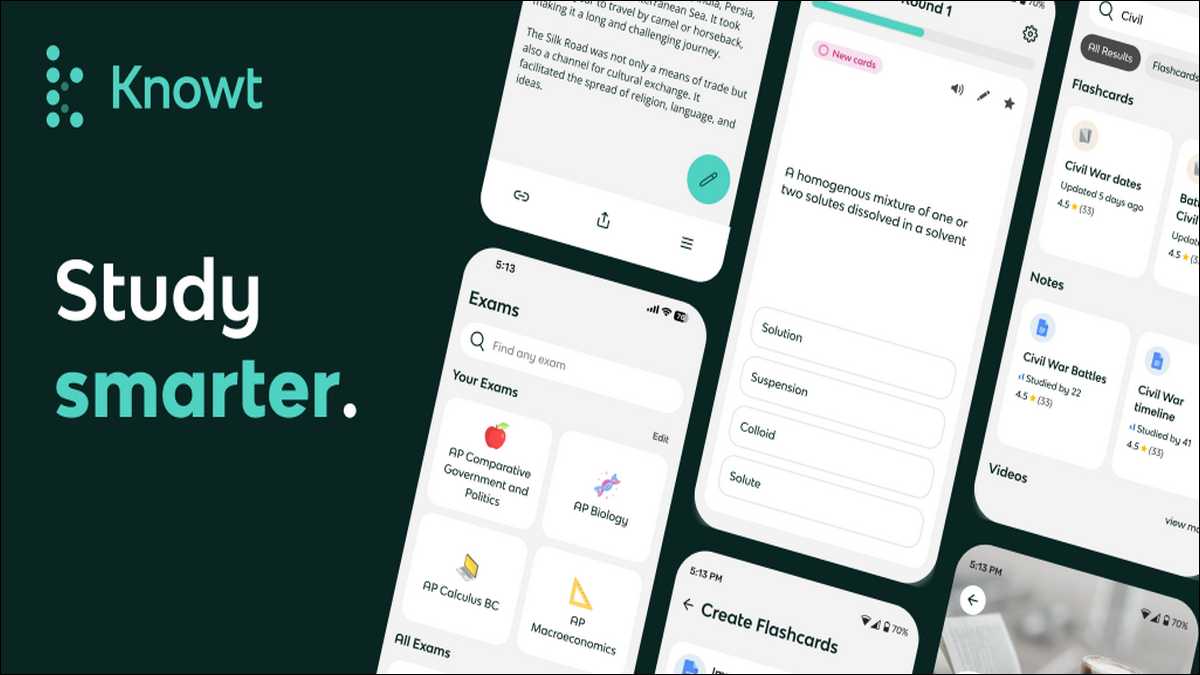
1. Knowt — Knowt is the closest free Quizlet replacement available. The app reports over 5 million registered users, per Mindomax’s March 2026 analysis. It imports your Quizlet sets directly, offers free Learn mode, AI practice tests, and AI study guides from notes or PDFs. Ultra costs $149.99/year.
2. StudyGlen — StudyGlen pairs AI generation with FSRS spaced repetition. The free tier uses a credit system, with packs starting at $9.99 one-time, per StudyGlen’s April 2026 guide. It accepts PDFs, text, images (with OCR), and YouTube videos. Strong pick if you want Anki’s brain inside a modern interface.
3. FlashRecall — FlashRecall generates cards from images, PDFs, YouTube, text, and audio. Built-in spaced repetition runs automatically, per the FlashRecall site’s December 2025 update. Supports 13+ languages including Hindi, Arabic, and Japanese. The free plan has light-use limits.
4. Jungle AI — Jungle reports over 1 million students on its site. It generates flashcards from lecture slides, notes, and videos, with automatic image occlusion and built-in spaced repetition. The free tier is genuinely usable, with no ads and unlimited study.
5. Mindomax — Mindomax focuses on AI tutoring per card and ships with over 450,000 pre-made flashcards for USMLE, MCAT, GRE, and language learners. It generates cards from PDFs, audio, images, and raw text.
6. Limbiks — Limbiks builds decks from PDFs, PowerPoint, Word, EPUB, YouTube videos, and Wikipedia articles. It supports 21 languages and exports directly to Anki, Quizlet, Tinycards, and Cram. Image occlusion is automated, which is rare at this tier.
7. Revisely — Revisely transforms pictures, notes, PDFs, and PowerPoints into cards using AI. The free tier covers basics, and exam mode gives personalised feedback. Best for quick, simple AI generation without learning a complex interface.
8. Scholarly — Scholarly handles PDFs up to 1,000 pages on paid plans, per its 2026 site. The free tier allows one PDF upload per day, up to 8 pages. Exports to Anki and Quizlet make it interoperable with most stacks.
9. Kvistly — Kvistly adds AI quiz generation and live multiplayer quizzes to flashcards. Free plan covers basics, and the company positions itself as a Quizlet alternative for students who learn through games and competition.
| Feature | Knowt | StudyGlen | FlashRecall | Jungle AI |
|---|---|---|---|---|
| Reported Users | 5M+ | Not disclosed | Not disclosed | 1M+ |
| AI from PDF | ✓ | ✓ | ✓ | ✓ |
| AI from Images | ✓ | ✓ (OCR) | ✓ | ✓ |
| AI from Video | ✓ | ✓ (YouTube) | ✓ (YouTube) | ✓ |
| Uses FSRS | ✗ (own algo) | ✓ | ✗ | ✗ |
| Quizlet Import | ✓ (direct link) | ✗ | ✗ | ✗ |
| Free Tier Strength | Very Strong | Credit-based | Light use | Strong |
| Paid Plan Starts At | $149.99/yr | $9.99 one-time | In-app upgrade | Free / Paid |
Pure Spaced-Repetition Tools (Power Users)
These prioritise memory science over polish. If you need to retain large volumes for years, start here.
10. Anki — Anki is the long-running gold standard for spaced repetition. The desktop and Android apps are free, while the iOS AnkiMobile app costs $24.99 as a one-time purchase, as per information available on Anki’s site.
AnkiMobile reportedly earns around $700,000 per month, per Sensor Tower data cited by Mindomax in March 2026. The interface is dated. The retention is unmatched.
11. Mochi Cards — Mochi has been in active development since 2019, per Mindomax. Cards are written in Markdown, which power users prefer for speed. It uses FSRS scheduling and has a quieter, more polished interface than Anki.
12. Brainscape — Brainscape uses Confidence-Based Repetition, a system that cognitive scientists from Columbia and Yale developed, per StudyBoost’s 2026 review. You rate each card 1-to-5 by confidence. Paid plans start from $19.99 and unlock professional decks.
13. FlashcardBuddy — FlashcardBuddy offers Learn mode, practice tests, and real SRS without a subscription. You can use the free tier forever or pay $14.99 for a semester, per its May 2026 page. No ads is the headline benefit.
Free Quizlet Clones
Same shape as Quizlet, no paywall. Good for students who want a 1:1 replacement.
14. Omnisets — Omnisets is a near-identical Quizlet clone with AI generation, spaced repetition, practice tests, and games. It’s fully free, and ads keep it that way, per Brighterly’s March 2026 review. Direct Quizlet imports work out of the box.
15. Cram — Cram has run for over 25 years. The free tier offers a massive library and basic study modes, including memorisation, matching, and testing. The interface feels dated, but reliability is unmatched at the free tier.
16. StudyStack — StudyStack converts flashcards into crosswords, matching puzzles, and other game variants. No sign-up is required to test it. It exports to Anki and Cram, which makes it a useful “scratch pad” before committing to a primary app.
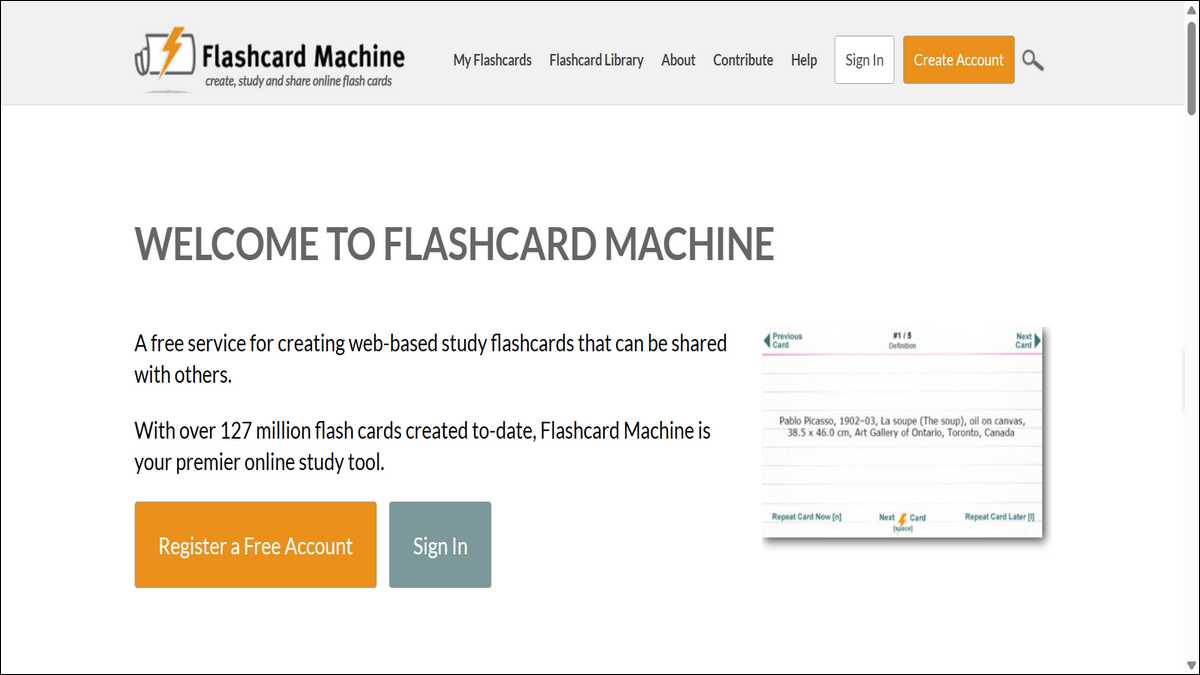
17. Flashcard Machine — Flashcard Machine is a classic free flashcard builder with a long-standing community library. Less feature-rich than newer entrants, but it remains accessible without an account for simple needs.
Notes + Flashcards (Hybrid Tools)
These let you take lecture notes and produce flashcards from them automatically. Best for students who study from raw notes.
18. RemNote — RemNote is trusted by over 1 million students, per the RemNote homepage. You create flashcards directly inside your notes by highlighting concepts. The free plan includes core note-taking, flashcards, spaced repetition, and PDF annotation.
19. StudySmarter — StudySmarter pairs flashcards with summaries, study plans, and community-shared content. The free version covers most student use cases. AI features generate flashcards from uploaded documents. This app is very popular among UK students.
20. GoConqr — GoConqr is a learning platform for creating mind maps, flashcards, study planners, and quizzes. The visual mind-map angle helps subjects with heavy concept relationships, like biology or history.
Gamified & Classroom Tools
For teachers, group review, or anyone who learns better with competition. These overlap with Quizlet Live’s classroom features.
21. Quizizz — Quizizz (now WayGround) acts like a self-paced version of Kahoot. Teachers assign interactive quizzes as homework, and students can work alone or in class. Pre-made content libraries are extensive. The free tier covers most classroom needs.
22. Kahoot! — Kahoot turns review into a competitive game with leaderboards and real-time scoring. The free tier handles small groups; paid plans start at $3 per month for the “Learning and reviewing” subscription, per Brighterly’s March 2026 review.
23. Mentimeter — Mentimeter focuses on live audience response: polls, word clouds, multiple choice, and quizzes. Useful in seminars and group review sessions where you want everyone participating live, not just the loud students.
Language-Specific Pick
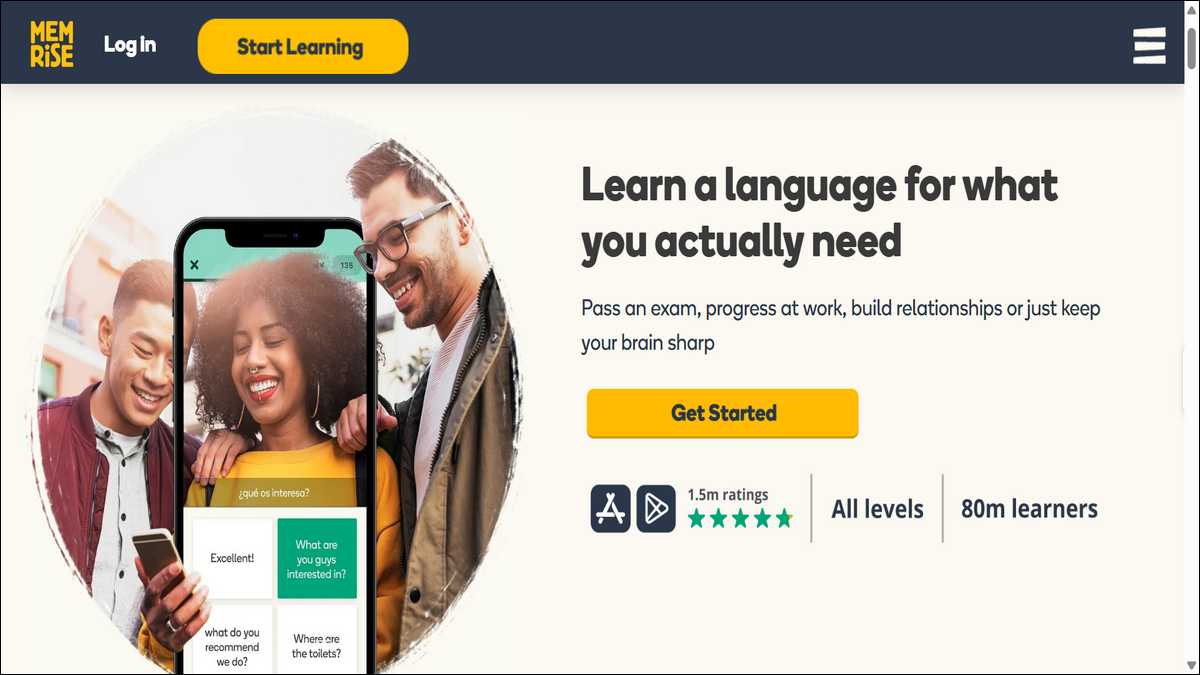
24. Memrise — Memrise specialises in language learning with native-speaker video clips, AI chatbots, and pronunciation practice via speech recognition. The free tier includes core content. Pro unlocks grammar lessons and offline downloads, per multiple 2026 reviews.
Tutoring & Study Help (Quizlet-Adjacent)
25. Course Hero — Course Hero offers a document library and a Q&A system with tutors. It’s study help more than flashcards, but it shows up in most “Quizlet alternative” lists because both are study utilities used in similar moments.
26. Studypool — Studypool connects students with tutors who answer questions for a fee. Useful when a deck isn’t the right tool and you actually need a human to walk you through a concept.
27. Nibble — Nibble offers bite-sized expert-made lessons across 20+ topics, with 10-minute audio, video, and quiz formats. Over 4 million downloads, per its 2026 page. Different shape from flashcards, but solves the same “I need to learn this fast” problem.
How to Pick the Right Quizlet Alternative in 60 Seconds
The right alternative depends on what you study, how often you study, and where you study. The same app that works for a med student will frustrate a 9th grader. Use the decision points below to narrow 25 options to one in under a minute.
Match the app to your study purpose
| Your Situation | Best Pick(s) | Why |
|---|---|---|
| Medical, law, or pro exams (USMLE, Bar, CFA) | Anki + AnKing decks, Mindomax, Brainscape | Highest-volume retention; expert decks exist |
| AP exams, SATs, ACTs in high school | Knowt, Omnisets, FlashcardBuddy | Free Learn mode, easy imports, fast setup |
| Language learning | Memrise, Anki, FlashRecall | Native audio, multilingual card support |
| Teacher running a live class | Quizizz, Kahoot, Mentimeter | Built for groups and engagement |
| You have huge PDFs of slides | StudyGlen, FlashRecall, Limbiks | Fast AI extraction from PDF/PPT |
| Privacy and EU data residency matter | Okti, Anki (local-first) | GDPR compliance, EU-hosted servers |
| Chromebook / shared school device | Knowt, Quizizz, Omnisets | Strong web apps, no install needed |
| You want notes and cards in one app | RemNote, StudySmarter | Inline flashcard creation from notes |
During our testing, the biggest predictor of “did I keep using this app a week later” wasn’t features. It was a friction to start a study session. Anki took an hour to set up. Knowt lets me import a Quizlet deck in under 30 seconds and start studying immediately.
Time to Your First Study Session (Lower = Better)
Based on hands-on testing with the same starting deck. Friction kills habits.
Source: Author hands-on testing, May 2026. Includes account creation, first deck import, and first review session.
How to Migrate Your Quizlet Sets to Another App
You can move your Quizlet study sets in under 5 minutes using the built-in export tool, then importing into Knowt, Anki, or any app that accepts CSV. Your data isn’t locked in. Most students don’t know this, which is why they hesitate to leave.
Step 1: Export your data from Quizlet
Start here. Open any Quizlet study set, click the three-dot menu, and select Export. Choose tab-separated or comma-separated format. Quizlet will give you a copy-pasteable block of all your terms and definitions, ready to use anywhere.
Step 2: Import into Knowt (the easiest path)
Next up. Knowt accepts a direct Quizlet link as input. Paste the URL into Knowt’s import tool, and you’re set to transfer in seconds, per Knowt’s own product page. Spaced repetition, Learn mode, and AI study guides become available immediately on the free tier.
Step 3: Convert to Anki (.apkg format)
For Anki? Paste your exported text into a plain text file, then use Anki’s “Import” function with tab-separated values. Add-ons can also convert Quizlet exports directly. Once imported, FSRS scheduling starts working from your first review session.
Step 4: Bulk-regenerate with AI if you lost the originals
Lost everything? Upload the original PDFs or notes to StudyGlen, Limbiks, or Knowt. AI rebuilds comparable decks in minutes.
Most students treat their Quizlet decks as locked. They aren’t. The bigger risk is staying in a paywall because of imagined switching costs.
All 25 Apps Like Quizlet Compared Side-by-Side
Use this comparison table as a fast reference. Each column reflects the most important practical question students ask before switching apps. We verified the data from vendor sites and real reviews.
Apps without official disclosure are marked as “Not disclosed“.
| App | SRS Type | Free Tier | Quizlet Import | AI from PDF | Offline | Mobile |
|---|---|---|---|---|---|---|
| Anki | FSRS / SM-2 | Strong | Via CSV | Add-ons only | ✓ | iOS, Android |
| Knowt | Yes (own) | Very Strong | ✓ (direct) | ✓ | Partial | iOS, Android |
| Brainscape | Confidence-Based | Limited | ✗ | ✗ | Pro only | iOS, Android |
| Quizizz | Basic | Strong | Partial | ✓ | ✗ | iOS, Android, Web |
| Kahoot | None | Limited | ✗ | ✗ | ✗ | iOS, Android, Web |
| Memrise | Yes | Core only | ✗ | ✗ | Pro only | iOS, Android |
| RemNote | Yes (own) | Strong | Via CSV | ✓ | ✓ | iOS, Android |
| Cram | Basic | Strong | ✗ | ✗ | Limited | iOS, Android |
| Omnisets | Yes | Fully Free | ✓ (direct) | ✓ | Partial | Web, iOS, Android |
| StudyGlen | FSRS | Credits | ✗ | ✓ (multi) | Partial | Web, mobile |
| FlashRecall | Yes | Light use | ✗ | ✓ | Partial | iOS, Android |
| Mochi Cards | FSRS | Strong | Via CSV | ✗ | ✓ | iOS, Android, Desktop |
| FlashcardBuddy | Real SRS | Forever | Via export | ✓ | ✓ | Web |
The True Cost of Owning a Flashcard App Over 4 Years
A typical undergraduate degree spans roughly four years of active flashcard use. Over that window, your subscription choice can mean the difference between $0 and $960 in total cost, based on verified 2026 pricing. The math below assumes one student studying continuously through their program.
Quizlet Plus
First, the baseline. Quizlet Plus runs $35.99 per year, per multiple 2026 vendor comparisons. Four-year cost: roughly $144. Includes Learn mode, AI features, and ad-free studying. Acceptable if you value the existing library and stay within the Quizlet ecosystem.
Anki
AnkiMobile is a $24.99 one-time iOS purchase, with free desktop and Android, per Anki’s site. Four-year cost: $24.99 if on iPhone, $0 otherwise. The same purchase funds the entire open-source Anki ecosystem.
Knowt Ultra
Knowt’s Ultra subscription jumped to $149.99/year in 2025, per Mindomax. Four-year cost: roughly $600. Strong free tier means most students never need to upgrade. Pay only for advanced AI features.
Brainscape Pro
Brainscape Pro plans start from $19.99/month, per Kvistly’s May 2026 guide. Four-year cost: roughly $960 if paid monthly. Annual plans are cheaper. Strong if you rely on Brainscape’s professionally certified decks.
The free stack
Combining Anki (free on desktop), Knowt’s free tier for Quizlet-like UX, and Omnisets for community decks delivers most of Quizlet Plus’s value at $0 to $25 over four years. The case for a paid Quizlet subscription is weaker than it has ever been.
Privacy, Data, and What Happens If the App Shuts Down
Most students never read the privacy policy. They should. EU students using US-based app stores learn data on US servers, which raises GDPR concerns.
Apps also shut down: Duolingo killed Tinycards in 2020, and every study set inside it vanished. Plan accordingly.
Where your data actually lives
Here’s the split. European-built apps like Okti and StudySmarter host data inside the EU and follow GDPR rules, per Okti’s January 2026 documentation.
US-based apps like Quizlet, Knowt, and Brainscape store data on US servers. Anki stores data locally on your device by default.
What GDPR compliance means in practice
You have the legal right to export and delete your data from any GDPR-compliant app. Most major Quizlet alternatives now respect this, but the request process is faster on EU-built apps.
If privacy matters to you, EU-hosted is the safer default.
The Tinycards cautionary tale
Now, about Tinycards. It was Duolingo’s flashcard app. Duolingo shut it down without warning, and every user-created deck disappeared overnight. The lesson is simple: export your data on a schedule, regardless of how stable the app feels today. Apps die. Your decks shouldn’t.
Apps with strong local-first storage
Want safer? Anki stores decks locally and syncs through AnkiWeb, per its product page. That means your decks live on your hard drive, whether the company exists or not. Mochi Cards and RemNote also support local exports. Cloud-only apps are riskier on this dimension.
One habit to adopt this week
After Tinycards shut down, I set a recurring calendar reminder to export every active deck to CSV monthly. The habit takes two minutes per app. It’s the cheapest insurance you’ll ever buy for your study time.
Accessibility Comparison: What Most People Skip
Accessibility features still vary wildly across flashcard apps in 2026. Students with dyslexia, vision impairments, or motor differences need specific tools, and most “best of” lists ignore this.
Below is what our testing revealed. Apps that pass each category support the named feature out of the box or in settings.
Dyslexia-friendly fonts
Here’s the short list. RemNote, Anki (via add-ons and CSS), and Brainscape allow font customisation, which helps with OpenDyslexic or similar fonts. Quizlet and many free Quizlet clones don’t currently offer this. Font choice is a small fix with large impact.
Text-to-speech card playback
Quizlet added text-to-speech in 2011, per Wikipedia. Knowt, Anki, and Memrise also support audio playback of cards. This helps auditory learners, ESL students, and anyone who reviews while commuting or walking.
Screen reader compatibility
And screen readers? Web-first apps like Quizizz, Omnisets, and Knowt generally work well with them. Anki Desktop is functional but not always polished for screen readers. Test before committing if this is critical for you.
Color-blind accessible UIs
Most apps still rely on red-green for feedback, which fails roughly 8% of men and 0.5% of women with colour vision differences. Brainscape’s confidence scale uses numbers alongside color. Anki allows full theme customisation through add-ons.
Reported User Base — Quizlet vs Top Alternatives (2026)
Counts come from official company disclosures and verified press reports. Quizlet still leads by volume, but the alternatives are closing in fast.
Sources: Quizlet (Wikipedia / company FY2025 disclosures), Anki (Verified Market Reports), Knowt (Mindomax March 2026), StudyFetch (Laxu AI testing review), Nibble (vendor page), Jungle AI (vendor page), RemNote (vendor page).
What Real Students Are Saying
User sentiment across Reddit, Trustpilot, and app store reviews shows a consistent pattern in this year. Students leaving Quizlet aren’t angry — they’re tired of the paywall and ads. Apps gaining ground share a common trait: a generous free tier that doesn’t feel like a trial.
The Knowt switching wave
Multiple user reviews on Knowt’s own page describe switching from Quizlet permanently after one semester. One representative review reads: “The free version is much better than Quizlet.”
That sentiment shows up across Reddit threads tracked in StudyBoost’s March 2026 review.
Why med students stay on Anki
Now, the med school crowd. The Anki + AnKing combination remains dominant despite the dated interface. Allie Dunin widely shared his findings on Medium that estimate around 50% of medical students at her school use Anki actively. The retention curve justifies the learning curve for high-stakes exams.
Common Quizlet complaints in 2026
And the gripes? Recurring complaints include: ads breaking focus, the Learn mode paywall, large-deck crashes (70+ cards), and AI features failing to load during exam weeks, per FlashcardBuddy’s May 2026 user-quote compilation. None is individually fatal. Together, they’re why exits accelerated.
The “boring tool I keep using” effect
Users who switched to Anki and stayed reported lower study hours but better exam scores. Users who jumped between three flashier alternatives every semester reported the opposite. Consistency with a “good enough” tool beats hopping to the perfect tool every month.
People Also Ask For
Yes. Knowt’s free tier covers Learn mode, AI flashcards, practice tests, and Quizlet imports without payment, per the Knowt product page. Ultra at $149.99/year unlocks advanced features, but most students never need it. The free tier is genuinely usable as a full Quizlet replacement.
For most serious students, yes. The desktop and Android Anki apps are free, but the iOS app costs $24.99 once. Anki’s FSRS algorithm beats SM-2 in 99.6% of recall predictions, per the open-spaced-repetition project. The one-time cost funds the open-source ecosystem.
Some, yes. StudyStack works without sign-up. Omnisets allows browsing without registration. NoteGPT lets you generate flashcards without an account. Anki desktop requires no online account at all. Knowt and Quizizz require sign-up but offer Google or Apple single-sign-on.
Yes. Anki, Mochi Cards, Brainscape Pro, RemNote, and StudySmarter all support offline study, per Okti’s January 2026 comparison. Quizlet offline mode requires Quizlet Plus. If you study on the bus or in spotty Wi-Fi, prioritise offline support during your selection.
Anki with AnKing decks remains the standard for medical exams, per multiple 2026 reviews and Allie Dunin’s Medium piece. Mindomax also offers 450,000+ pre-made decks across USMLE and MCAT. Brainscape has certified medical classes for students who want curated decks.
Yes. Export your set from Quizlet as a tab or comma-separated text, then use Anki’s import feature. Several add-ons and third-party converters automate this further. You don’t need to retype your decks when switching.
Wrapping Up This List
The best Quizlet alternative isn’t a single app — it’s the one matching how you actually study. For most students switching, Knowt is the cleanest 1:1 swap, with direct Quizlet imports and a strong free tier.
For anyone serious about long-term retention — med school, language fluency, professional certifications — Anki with FSRS is still the scientific gold standard, backed by 350 million reviews of benchmarking data.
And for students drowning in PDFs and lecture slides, StudyGlen, FlashRecall, or Knowt save hours every week. Whereas, for teachers and group review, Quizizz and Kahoot are still unmatched. For privacy-conscious EU students, Okti and Anki are the safer choices.
Whichever app you pick, commit to two habits this week.
- First, export your existing Quizlet data as CSV so you own it forever, regardless of which company survives.
- Second, do 10 to 15 minutes of spaced review daily. That single habit beats every algorithm.
The forgetting curve is brutal: Ebbinghaus showed in 1885 that 70% of new information disappears within 24 hours without spaced review. The right app makes the fight against forgetting easier. But it’s still your fight.
The students who succeed aren’t the ones with the best app. They’re the ones with the boringest sustainable habit — small daily sessions, exported decks they trust, and an app that opens fast enough to not give them an excuse to skip a day. Pick for that, not for the flashiest features.


