
What Is The Conservative Treehouse—And Why Does It Matter?
Learn what The Conservative Treehouse is, what it talks about, who reads it, and why it matters in today’s news and politics. Easy-to-follow and detailed.
We all search for media sources that resonate with our worldview. If you lean right, you may have come across The Conservative Treehouse, also known as The Last Refuge. But what exactly is it? And more importantly, why does it matter today?
In this article, we’ll take a closer look at the site’s origins, its content, and how it influences political discussion. Along the way, we’ll explore its reach, reputation, and the reasons it’s both praised and criticized.
Whether you’re a longtime reader or hearing about it for the first time, this guide will help you understand where The Conservative Treehouse fits into today’s complex media ecosystem.
1. Origins and Mission
To understand why The Conservative Treehouse matters, we need to start at the beginning.
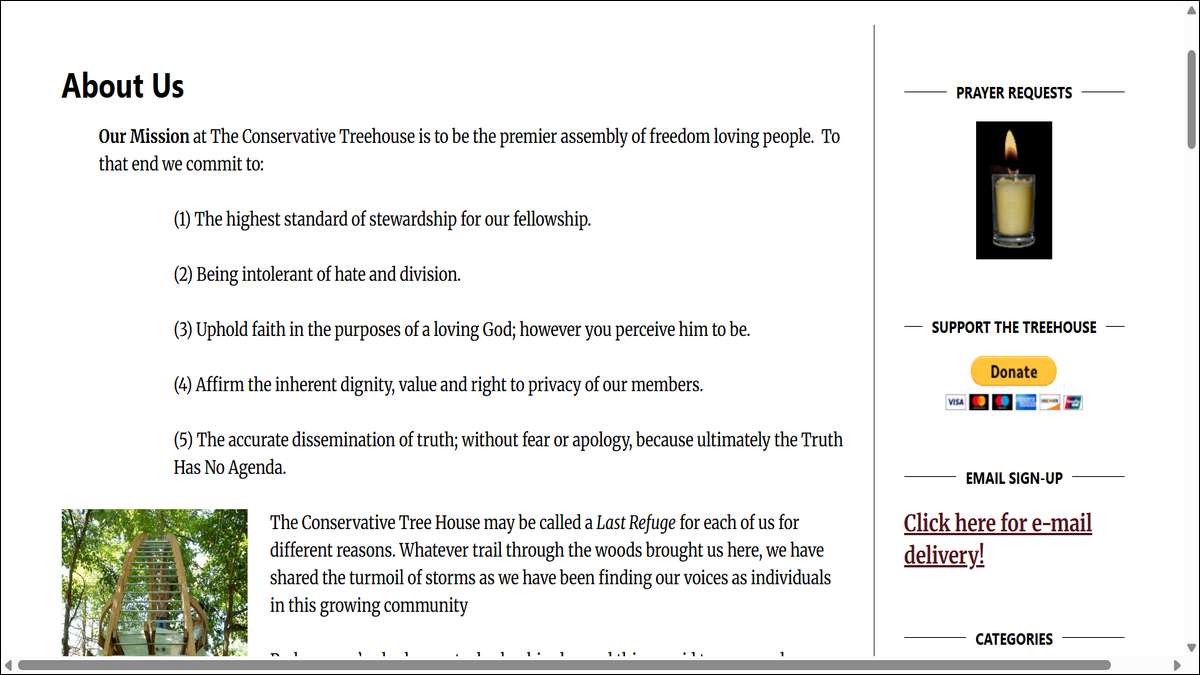
The site was launched in 2011 by an anonymous figure using the name Sundance. From the start, it aimed to be more than just another political blog. Instead, it presented itself as a refuge—a place for conservatives who felt ignored or misrepresented by the mainstream media.
On its “About” page, the site outlines its mission in deeply personal and ideological terms. It emphasizes faith, freedom, dignity, and stewardship. According to the site, conservatism is built on trust and self-reliance, while liberalism is driven by fear and dependency.
In other words, the Treehouse seeks to offer more than news—it aims to foster a shared identity rooted in traditional values.
Also read:
- SkipTheGames: What You Need to Know
- Doujindesu App Review: Is It the Best for Adult Manga Readers?
- Mangaku App — What It Offers and What It Lacks
2. Content Focus
Once you understand its mission, the type of content it produces makes more sense.
At its core, The Conservative Treehouse focuses on long-form investigations, political analysis, and narratives that challenge the mainstream media.
You’ll regularly see coverage of the FBI, DOJ, intelligence agencies, and political figures—especially those involved in the Trump-Russia probe, Hillary Clinton, or the Obama-era White House.
For example, many posts examine topics like:
- Alleged misconduct by government agencies (especially the FBI and DOJ)
- The idea of a “deep state” working against Trump-era policies
- Critiques of the mainstream media and so-called globalist agendas
- Conservative populist views on trade, immigration, and law enforcement
What’s unique is the tone. Unlike traditional news outlets, the Treehouse often presents its work as if it’s uncovering hidden truths.
Posts are lengthy, heavily analytical, and often include screenshots, transcripts, and links to original documents. This investigative tone is a key part of the site’s appeal.
3. Reach and Audience
Understanding who reads the Treehouse helps us understand its influence.
The site attracts a core audience of conservative readers who often feel alienated by traditional media. These individuals look for narratives that better reflect their values and lived experiences.
Many readers are highly engaged—returning daily, commenting regularly, and sharing posts across social media.
Although exact traffic figures aren’t public, The Conservative Treehouse publishes multiple posts per day and maintains an active comment section.
Its business model relies on donations, ads, and reader support, which keeps it relatively independent but also less transparent than larger media companies.
Over time, this audience has helped build the Treehouse into a digital gathering place, where news isn’t just consumed—it’s discussed, dissected, and debated.
4. Role in Conservative Media Ecosystem
Now that we know who reads the Treehouse, the next question is: where does it fit in the bigger picture?
The site is part of a broader right-wing media network, alongside others like Breitbart, Gateway Pundit, and The Daily Caller. Together, these outlets shape conservative narratives, especially during election cycles and major political events.
According to studies from Harvard’s Berkman Klein Center, right-wing digital media tends to be more unified and influential than its left-leaning counterparts.
This tight network allows stories from smaller blogs—like the Treehouse—to circulate quickly and widely, even influencing what gets covered by larger outlets (news.harvard.edu).
Let’s compare how The Conservative Treehouse stands out in this network:
| Feature | Description |
|---|---|
| Anonymous Author | Keeps focus on message, not personality |
| Investigative Tone | Analyzes complex documents and timelines |
| Community-Driven | Reader comments and shares create a viral effect |
| Populist Perspective | Frames elites as threats to everyday Americans |
In this ecosystem, The Conservative Treehouse isn’t just another voice—it’s a thought leader that shapes how stories are framed and understood.
5. Why It Matters
So why does all of this matter?
First, the Treehouse plays a key role in shaping public narratives—especially around government overreach, political scandals, and media bias. For instance, the site has provided detailed coverage of the Durham investigation, RussiaGate, and Clinton-related probes—often well before other outlets picked them up.
Second, it helps mobilize political energy. The comment section isn’t just background noise—it’s a hive of activity where readers organize ideas, echo shared beliefs, and even plan local activism.
Third, and perhaps most significantly, the site contributes to what scholars call the “attention economy” of digital media. It doesn’t just reflect public opinion—it actively shapes it, particularly on the right.
In short, The Conservative Treehouse is both a media outlet and a movement amplifier.
6. Criticism and Credibility
Of course, not everyone sees the Treehouse in a positive light.
Media watchdog groups, like Media Bias/Fact Check, rate the site as far-right biased with low factual reporting. They note frequent use of emotionally charged language, limited sourcing, and the occasional spread of unverified claims.
Common criticisms include:
- Strong pro-Trump framing
- Claims based on interpretation rather than verifiable data
- Little information about who owns or operates the site
On the other hand, supporters argue that these criticisms miss the point. They say the site simply fills a gap left by traditional media. In their view, the Treehouse challenges elite narratives and provides a voice for those ignored by mainstream platforms.
This debate—between truth and bias, watchdog and echo chamber—is central to how the site is perceived.

7. Style and Presentation
As you read through the Treehouse, you’ll notice something different.
The writing style is casual, urgent, and often conversational. Instead of a detached tone, the site uses phrases like “we see…” or “you know what they’re doing.” This makes readers feel like insiders, not just observers.
Additionally, posts often include:
- Highlighted sections
- Block quotes from documents
- Visuals like charts or tweets
- Long comment sections, sometimes with over 500 replies
This multi-layered presentation keeps readers engaged and gives the content an almost “research paper” feel—despite its partisan leanings.
Also read:
- Aiotechnical.com Health & Beauty: Revolutionizing Personal Wellness
- Getting Started with Chatiw: A Quick Start Guide
- G15Tools.com: Essential Tools for Digital Creators
8. Examples of Recent Coverage
To better understand the Treehouse’s approach, let’s look at two recent stories:
1. Durham Annex Declassified (July 31, 2025)
The site published a long analysis of a newly declassified annex to John Durham’s investigation. According to the article, the annex showed coordination between the FBI and Clinton campaign to undermine Trump.
The post included excerpts from official documents and commentary on how the story was being buried elsewhere.
2. Burn Bag Discovery at FBI Headquarters
Another recent post claimed that burn bags containing classified files were discovered inside the FBI’s main building.
The story framed this as evidence of internal cover-ups and suggested that hidden information could alter public understanding of key investigations.
In both cases, the Treehouse didn’t just report events—it interpreted them, often drawing conclusions that aligned with its political stance.
9. Community and Influence
It’s also important to recognize the role of the audience.
The Treehouse doesn’t just push out content—it fosters a digital community. Commenters interact like a tight-knit group, often referencing earlier posts or long-running site themes. This sense of community strengthens loyalty and ensures that posts are shared widely.
In fact, digital studies show that conservative content tends to travel further and faster on social platforms, especially when it triggers strong emotional responses. The Treehouse’s tone and subject matter make it a perfect fit for this environment.
Moreover, posts are often picked up by other right-leaning blogs and YouTube creators, creating a ripple effect across the broader media ecosystem.
10. Search Engine Strategy and Visibility
Ever wonder why Treehouse articles show up in your search results?
The site uses strategic SEO techniques—titles and keywords that match what people are already searching for. Terms like “Durham report”, “Clinton FBI files”, or “deep state exposure” are common.
Each post is rich in keywords, metadata, and community comments, all of which boost visibility. The site’s high posting frequency also improves its standing in Google’s algorithms.
| SEO Feature | Purpose |
|---|---|
| Long-form content | Increases session time, boosts ranking |
| Keywords in headers | Helps Google index topical relevance |
| Regular updates | Signals freshness and relevance |
| Active community comments | Adds content and engagement metrics |
So if you’re Googling anything related to Trump investigations, there’s a good chance the Treehouse will appear on the first page.
11. How You Should Read It
Finally, let’s talk about how to engage with the site as a reader.
First, approach each post with a critical mindset. Some stories are deeply researched with linked documents. Others rely heavily on interpretation, which may reflect bias.
Second, consider cross-referencing major claims with neutral or alternative sources. This doesn’t mean dismissing the site, but rather viewing it in context.
And third, recognize the site’s editorial stance. It’s not trying to be neutral. Instead, it’s offering a particular perspective for a particular audience. That’s not inherently bad—but it’s something we all need to be aware of.