The Best AI Song Maker for Independent Content Creators
The cursor blinks against a white field. Outside the studio window, the sun has long since set, leaving only the dull hum of a cooling fan to fill the silence. A deadline for a short-form documentary sits three hours away. The visual edit is locked, but the auditory space remains hollow. Opening a Digital Audio Workstation (DAW) feels like a heavy lift. Loading heavy sample libraries, routing MIDI channels, and agonizing over a four-bar loop for a background transition is a luxury that the current clock does not permit. This is the friction of modern production. The gap between an idea and its sonic realization is often a chasm of technical labor. This is where AI Song Maker through Musick.ai enters the frame, not as a replacement for the composer, but as a bypass for the mechanical fatigue of generation.
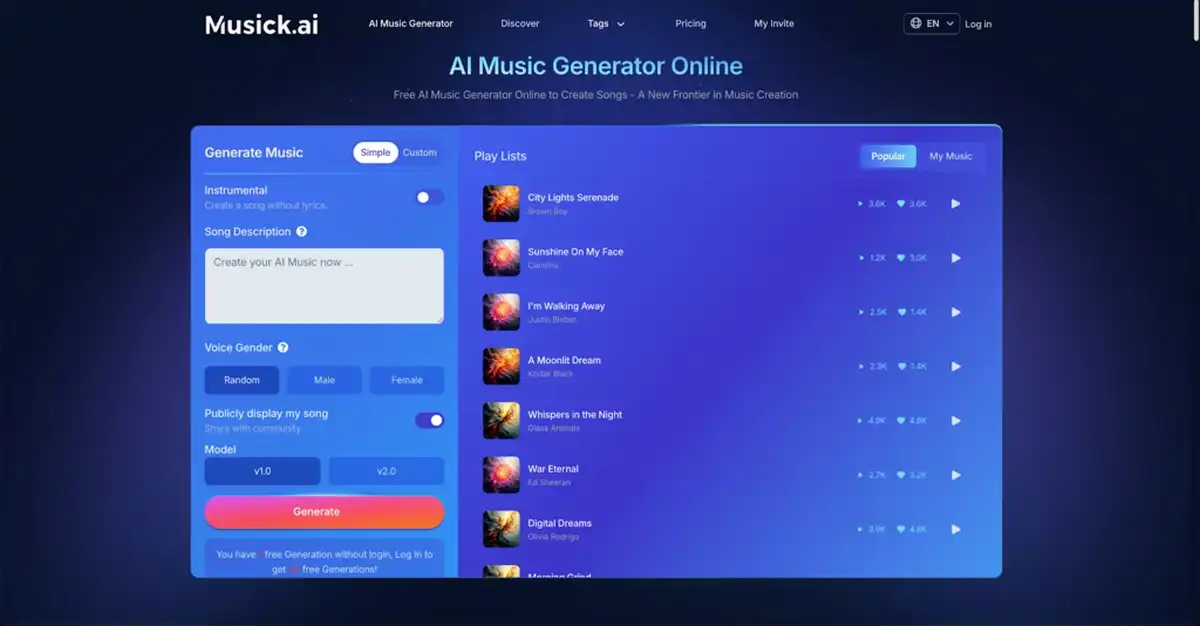
I. Why Traditional Tools Slow You Down
Traditional music creation is riddled with micro-barriers. The first is the psychological tax of the blank slate. Choosing a tempo, a key, and an initial instrument requires a series of definitive actions before a single note is heard. This leads to decision fatigue. Another friction is the “readiness” trap the feeling that one must be in a specific state of technical mastery to begin. Many creators delay projects because the audio component feels like a wall they are not yet prepared to climb. By removing the need to patch cables or balance levels from the first second, the barrier to entry is lowered.
II. What Musick.ai Actually Is
Musick.ai is not a replacement for musicians, nor is it a shortcut that skips creative intent. It sits in a much more specific place in the music creation process: the moment where ideas exist, but decisions feel slow or uncertain.
Traditionally, creating music means moving back and forth between inspiration, technical setup, and refinement. Musick.ai compresses that early and middle phase where creators are testing moods, structures, and directions into a faster, more flexible loop. Instead of starting from silence or pre-made templates, users begin with intent: a feeling, a concept, or a rough idea.
In that sense, Musick.ai functions less like a production studio and more like a creative decision tool. It helps creators explore possibilities, validate directions, and move forward with confidence while leaving the final polish and personal touch exactly where it belongs: in human hands.
III. What Musick.ai Can Do
Every piece starts with your input; the system follows, not guesses.
- Text to Music: The primary interface accepts descriptive prompts to dictate style and intent.
- Instrumental Focus: A toggle exists to strip away vocal layers, producing clean backing tracks.
- Structural Control: Users define the mood and the overarching genre through a system of tags.
- Vocal Variables: When lyrics are involved, the system allows for the selection of gender and specific vocal delivery styles.
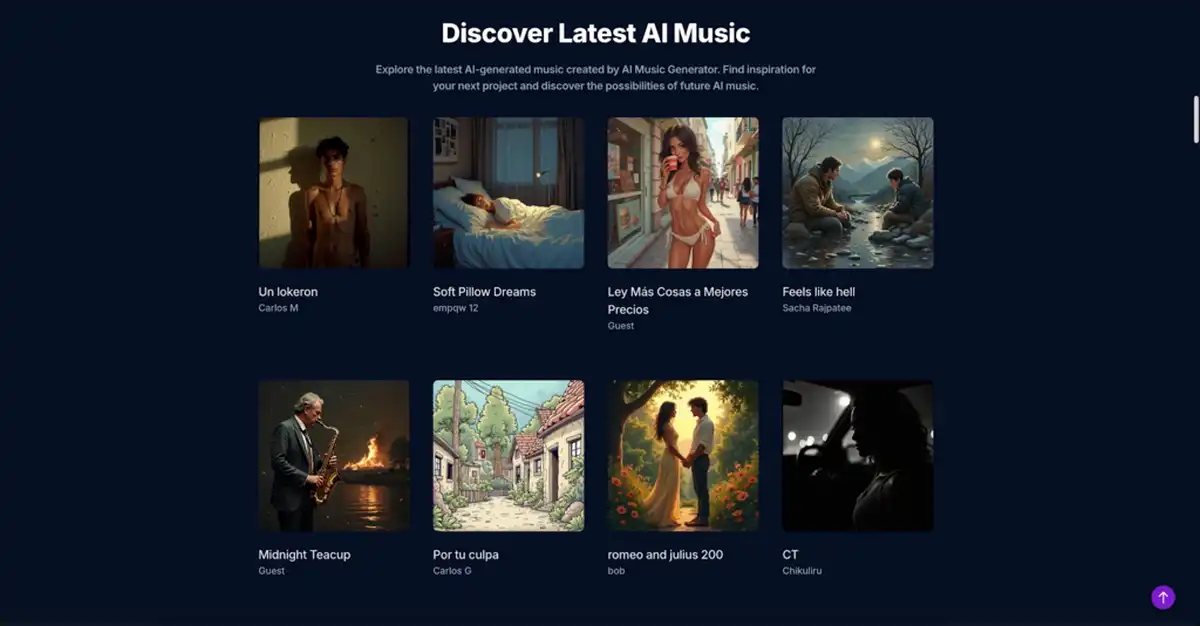
IV. Steps to Generate Music
Navigating the generation sequence requires four distinct movements. In this part, you can explore the AI Music Generator to see these steps in action.
Step 1: Inspiration Before committing to a prompt, users browse the public Play Lists on the right side of the dashboard. This provides a baseline for what the current models are capable of producing.
Step 2: Mode Selection The user chooses between Simple and Custom modes. This is the moment to decide if the output requires lyrics or if it should remain a pure instrumental.
Step 3: Setting Parameters Textual input is provided for lyrics. Below this, style tags are assigned. Entering descriptors such as “rawstyle” or “acoustic” narrows the algorithmic search space. The choice of voice gender is finalized here.
Step 4: Generation The user selects between Model v1.0 and v2.0. Once the process is triggered, the result is either kept private for internal review or shared directly to social channels.
V. Traditional Methods Compared to Musick.ai
| Dimension | Traditional Music Production | Musick.ai Model |
| Time-to-Market | Days or Weeks | Seconds or Minutes |
| Technical Barriers | High (Requires Theory/Software Knowledge) | Low (Requires Descriptive Literacy) |
| Creative Friction | High (Setup, Routing, Mixing) | Minimal (Prompting, Tagging) |
| Capital Investment | Expensive Hardware/Software | Subscription or Credit-based |
In an era defined by the velocity of content, “slow” production is becoming a structural disadvantage. When a creator needs to respond to a cultural moment within hours, the traditional three-week production cycle is a liability.
VI. What It Still Can’t Do
- Precision of emotional nuance The system can suggest mood and style, but it cannot fully capture the subtle emotional inflections a human performer might deliver.
- Personalized stylistic identity While tags allow for genre and instrument selection, Musick.ai cannot yet reproduce an individual’s unique signature or unconventional approach.
- Final judgment remains human Generated tracks are drafts. Deciding whether a piece is ready for public release or further refinement still depends entirely on the creator.
- Complex multi-layered arrangements The system handles single tracks and structured moods well, but intricate layering or experimental structures often require manual intervention.
VII. Who Should Not Use This
- Creators seeking full instrumental control Those who want to manually adjust every note, layer, or effect may find Musick.ai too constrained. The system favors guided decisions over exhaustive micro-management.
- Artists prioritizing unique stylistic signatures Musick.ai can follow genre or mood tags, but it cannot replicate the idiosyncratic traits that define an individual’s personal sound.
- Teams working on highly experimental structures Complex arrangements that defy conventional song structures often require hands-on composition beyond what the system generates.
- Users expecting fully polished final tracks The platform produces drafts that suggest direction, not finished recordings. Evaluation and refinement still rest with the human creator.
VIII. Conclusion
The future is defined by the death of the “blank slate.” The creative agony described earlier that frozen moment before a deadline is no longer an inevitable tax on production. By treating music as an iterative, prompt-driven asset, platforms like Musick.ai bridge the gap between having a vision and having a file. We are entering a phase where the technical “how” is secondary to the editorial “why.” The authority to finish a song has been decoupled from the years of labor required to master a DAW. In this new landscape, the most valuable instrument is no longer the synthesizer or the guitar; it is the clarity of the creator’s intent. The song is no longer a distant finish line, but an immediate response to the blinking cursor.