How PSA Nitrogen Generation Supports Industrial Purging
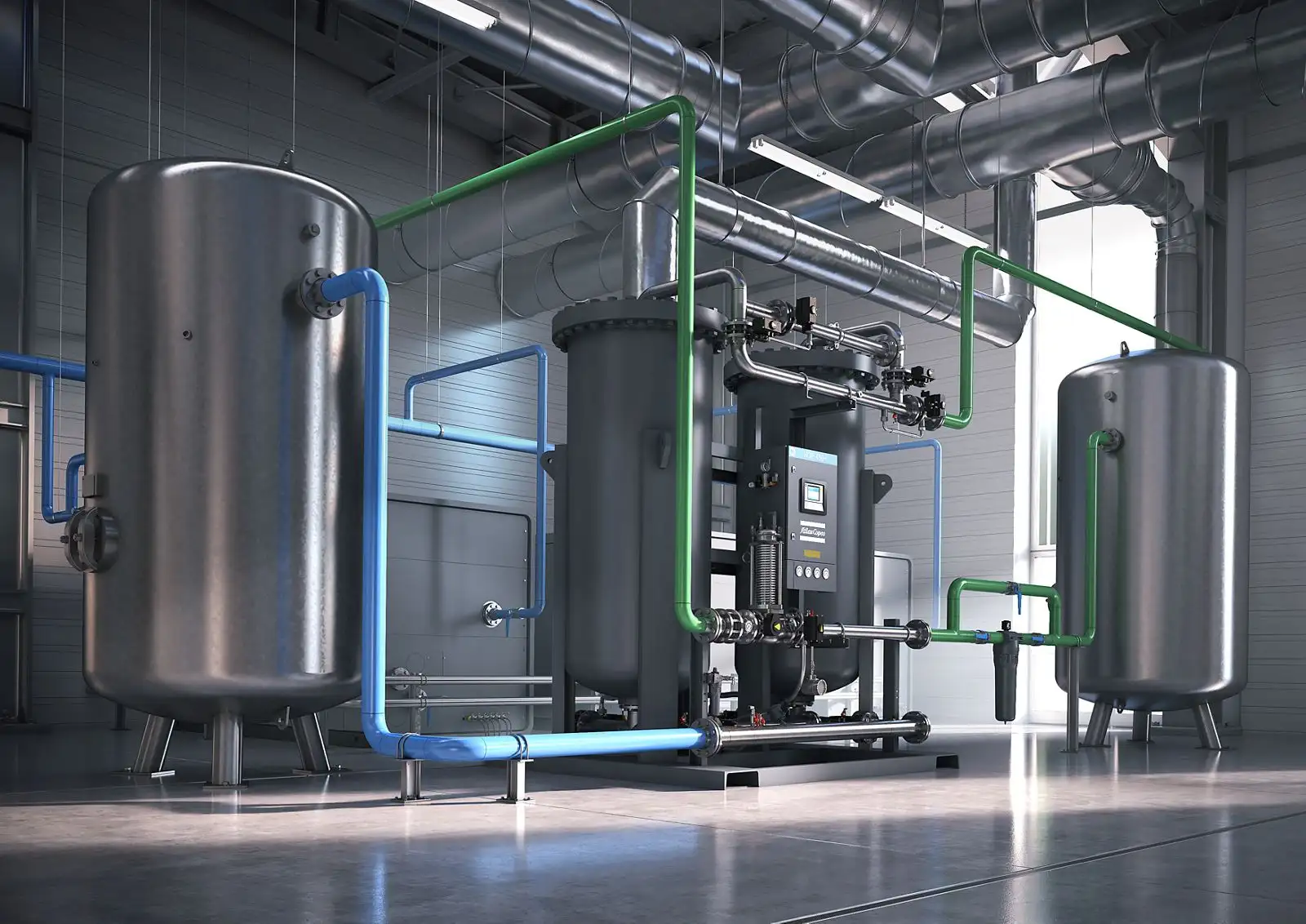
Industrial processes often require a controlled atmosphere to prevent oxidation, reduce moisture or prepare equipment for maintenance. Companies assessing Presscon’s psa nitrogen generator solutions usually want to know whether on-site generation can deliver the required purity, flow and pressure for these tasks.
Pressure Swing Adsorption, commonly called PSA, produces nitrogen directly from compressed air. This gives industrial users a continuous gas supply without depending entirely on cylinders, liquid nitrogen storage or scheduled deliveries.
How Does a PSA Nitrogen Generator Work?
A PSA generator separates nitrogen and oxygen using Carbon Molecular Sieve, or CMS. Clean and dry compressed air enters one of two adsorption vessels filled with this porous carbon material.
The CMS adsorbs oxygen molecules while nitrogen passes through the vessel. Once the CMS becomes saturated, the pressure falls and the captured oxygen is released. The second vessel continues nitrogen production while the first regenerates.
By alternating between both vessels, the generator produces a stable nitrogen flow. The nitrogen can enter the process directly or be stored in a buffer vessel to accommodate temporary demand peaks.
Presscon applies High-Performance Pressure Swing Adsorption in its N-Gen systems. According to its technical documentation, the design uses optimised airflow and a patented CMS compression system. These features are intended to reduce compressed-air consumption and support consistent nitrogen quality.
Why Compressed-Air Quality Matters
The quality of the inlet air has a direct effect on generator performance. Moisture, oil and particles can contaminate the CMS and reduce its adsorption capacity.
A complete installation therefore normally includes:
- An air compressor
- Filtration for particles and oil
- An air dryer
- The PSA generator
- A nitrogen buffer vessel
- Purity and pressure monitoring
Correct air treatment helps stabilise nitrogen purity and protects the adsorption material. The required dryer and filtration configuration depends on the compressor, ambient conditions and process specifications.
Selecting the Required Nitrogen Purity
PSA systems can produce nitrogen at different purity levels. Presscon’s N-Gen can be configured for purities between 95% and 99.9999%, depending on the required residual oxygen concentration.
Higher purity is not automatically better. Producing extremely pure nitrogen generally requires more compressed air and therefore more energy. The specification should be based on the lowest purity that safely meets the process requirements.
For example, a general tank-blanketing application may accept more residual oxygen than a sensitive chemical process. Purging requirements can also vary between commissioning, product changeovers and maintenance preparation.
Flow, pressure and duration must be considered alongside purity. A short purge with high peak demand may require a different configuration from a continuous low-flow application.
Using On-Site Nitrogen for Purging
A reliable gas supply is essential when nitrogen removes oxygen, moisture or process vapours from equipment. An on-site generator can support a nitrogen purge by supplying gas at a controlled purity and flow.
Several purging methods are available. Displacement purging introduces nitrogen at one end of a pipeline or vessel and pushes the existing atmosphere towards an outlet. It is most effective in equipment with simple geometry and limited internal mixing.
Dilution purging allows nitrogen to mix with the existing atmosphere. The mixed gas is then vented while nitrogen continues to enter. This method is suitable for vessels, reactors and equipment with complex internal structures.
Pressure-cycle purging repeatedly pressurises and vents a closed system. Each cycle lowers the concentration of oxygen or unwanted vapours. Sweep purging uses a continuous low-pressure flow to maintain an inert atmosphere or remove contaminants gradually.
The correct method depends on equipment geometry, available connections, target oxygen concentration and permitted pressure. Oxygen measurements should confirm that the required condition has been reached.
Nitrogen Safety Requires Active Control
Nitrogen is non-combustible and generally non-reactive, but it can displace breathable oxygen. This risk is particularly important around tanks, enclosed equipment and confined spaces.
The OSHA standard for permit-required confined spaces explains that inerting with nitrogen can create an immediately dangerous oxygen-deficient atmosphere. Purging procedures should therefore include suitable ventilation, gas monitoring, access controls and worker training.
Nitrogen cannot be detected by smell or sight. Oxygen sensors and clearly defined work procedures are necessary wherever released nitrogen could accumulate.
Matching Production to Actual Demand
A nitrogen generator should be sized using actual process data rather than estimated maximum consumption alone. Relevant parameters include:
- Required flow and purity
- Minimum process pressure
- Purge frequency and duration
- Peak consumption
- Available compressed-air capacity
- Required redundancy
- Expected future expansion
Presscon builds its N-Gen as a modular system. Individual units can operate according to measured pressure or flow, allowing the system to respond to changing nitrogen demand. Additional modules can provide extra capacity or redundancy.
According to Presscon, its HP-PSA system requires less than two cubic metres of compressed air to produce one cubic metre of nitrogen at 95% purity. The company also reports energy savings of up to 40% to 50% compared with conventional PSA or membrane systems under suitable conditions.
The generators are designed and assembled in the Netherlands. Presscon can configure them horizontally, vertically, on frames or against walls. Its modular construction also allows individual units to be serviced or replaced without necessarily stopping the entire nitrogen supply.
A Controlled Supply for Stable Processes
PSA nitrogen generation connects gas production directly to process demand. It gives industrial users control over purity, flow and pressure while reducing dependence on external deliveries.
For purging applications, the generator must be combined with correct air treatment, suitable buffer capacity and reliable oxygen monitoring. When these elements are engineered as one system, on-site nitrogen can support repeatable purging, stable process conditions and planned future expansion.